VW-Uber Launch AV Minibus Tests in LA
💡VW-Uber AV tests signal 2026 robotaxi rollout—key for embodied AI builders.
⚡ 30-Second TL;DR
What Changed
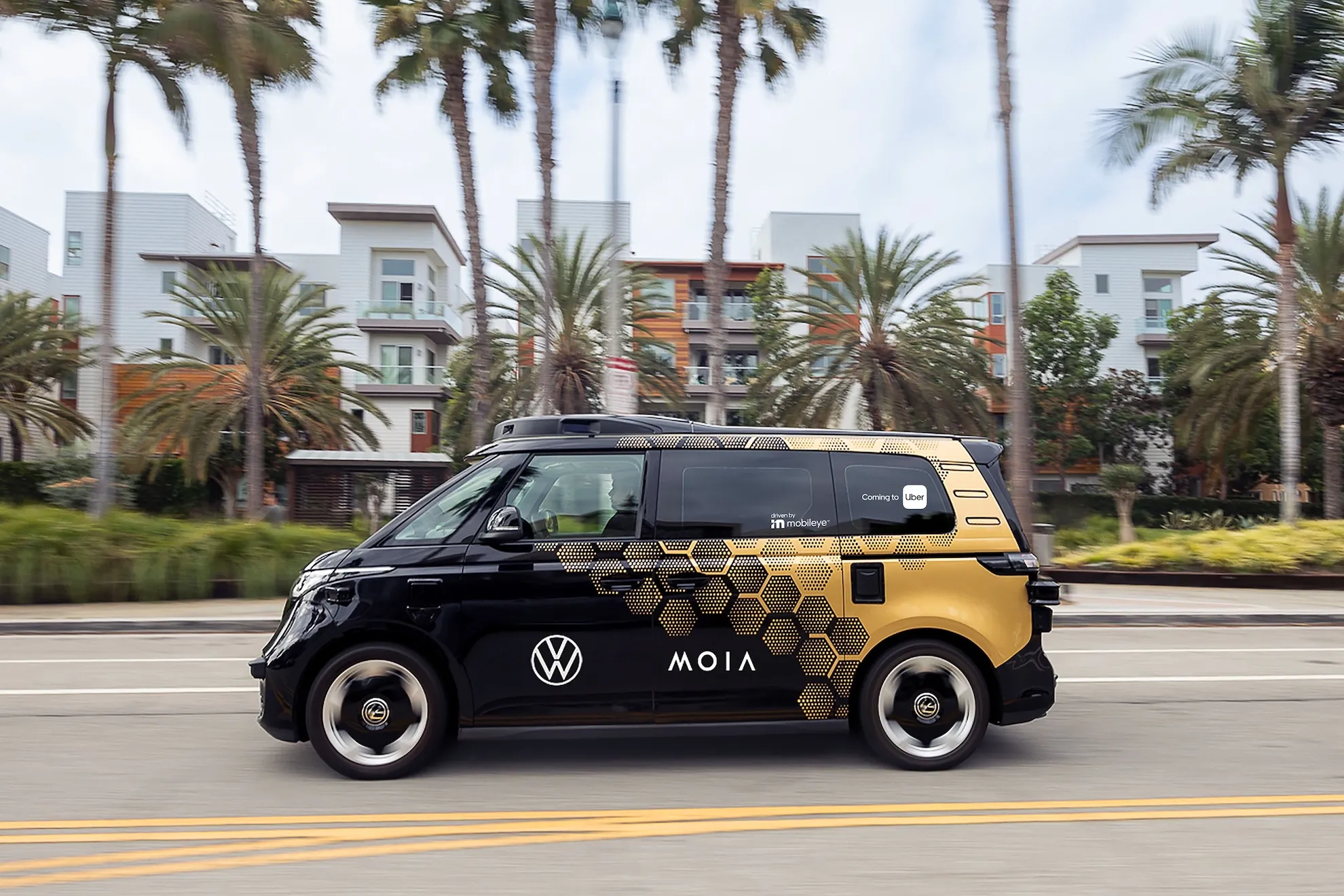
MOIA America and Uber initiate AV ID. Buzz minibus tests in Los Angeles
Why It Matters
Advances commercial AV ride-hailing, intensifying competition with Waymo and Cruise. Creates opportunities for AI devs in AV data labeling and simulation tools for urban environments.
What To Do Next
Benchmark your AV perception models using nuScenes LA dataset for urban testing.
Key Points
- •MOIA America and Uber initiate AV ID. Buzz minibus tests in Los Angeles
- •Commercial robotaxi service targeted for launch by end of 2026
- •Los Angeles as first pilot, with multi-city US rollout over 10 years
- •Built on electric ID. Buzz van platform
🧠 Deep Insight
AI-generated analysis for this event — not the original article.
🔑 Enhanced Key Takeaways
- •The partnership utilizes Volkswagen's proprietary 'ADMT' (Autonomous Driving Mobility Technology) stack, which integrates sensor data from LiDAR, radar, and cameras to achieve SAE Level 4 autonomy.
- •The ID. Buzz AD (Autonomous Driving) variant features a modified roof-mounted sensor suite and redundant braking and steering systems specifically engineered for driverless operation.
- •MOIA America is leveraging its previous experience operating high-capacity ride-pooling services in Hamburg and Hanover to optimize the routing algorithms for the Los Angeles pilot.
📊 Competitor Analysis▸ Show
| Feature | VW/MOIA (ID. Buzz) | Waymo (Jaguar I-PACE) | Zoox (Purpose-Built) |
|---|---|---|---|
| Vehicle Type | Minibus (High Capacity) | SUV (4-Passenger) | Carriage (4-Passenger) |
| Primary Use Case | Shared Ride-Pooling | Individual/Group Ride-hail | Individual/Group Ride-hail |
| Autonomy Level | SAE Level 4 | SAE Level 4 | SAE Level 4 |
| Market Focus | Urban Transit/Shuttles | General Ride-hailing | General Ride-hailing |
🛠️ Technical Deep Dive
- Vehicle Platform: MEB (Modular Electric Drive Matrix) architecture adapted for autonomous integration.
- Sensor Suite: Multi-modal sensor fusion utilizing long-range LiDAR, 360-degree radar, and high-resolution cameras.
- Redundancy: Dual-redundant systems for steering, braking, and power supply to ensure safe operation in the event of a primary system failure.
- Compute: High-performance centralized computer unit capable of processing sensor data in real-time for path planning and obstacle avoidance.
🔮 Future ImplicationsAI analysis grounded in cited sources
⏳ Timeline
Weekly AI Recap
Read this week's curated digest of top AI events →
👉Related Updates
AI-curated news aggregator. All content rights belong to original publishers.
Original source: cnBeta (Full RSS) ↗
This is a summary, not the original. Read the source, or get the weekly briefing.
The weekly digest
One email a week. Unsubscribe anytime.