Vocus positions for role in Meta's Project Waterworth
💡Meta's massive subsea infrastructure expansion is a leading indicator for future AI data center capacity and latency.
⚡ 30-Second TL;DR
What Changed
Vocus is targeting a strategic partnership with Meta for subsea infrastructure.
Why It Matters
Enhanced subsea connectivity is critical for the low-latency data transmission required by large-scale AI model training and inference across global regions.
What To Do Next
Monitor subsea cable capacity updates in the APAC region to optimize your infrastructure deployment for distributed AI workloads.
Key Points
- •Vocus is targeting a strategic partnership with Meta for subsea infrastructure.
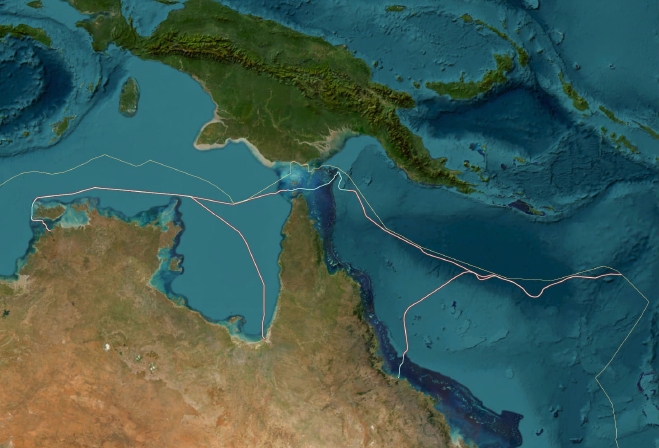
- •Project Waterworth focuses on expanding connectivity via a new eastward route from Darwin.
- •The initiative highlights the ongoing expansion of data center and subsea cable capacity to support AI-driven traffic.
🧠 Deep Insight
AI-generated analysis for this event — not the original article.
🔑 Enhanced Key Takeaways
- •Project Waterworth is specifically designed to create a high-capacity subsea link connecting Darwin, Australia, to the United States, bypassing traditional routes through Singapore or Japan.
- •The initiative is part of a broader trend of 'hyperscaler-led' subsea cable development, where companies like Meta bypass traditional telecommunications carriers to secure dedicated bandwidth for AI and metaverse workloads.
- •Vocus has been actively upgrading its 'Darwin-Jakarta-Singapore' (DJSC) cable system, which serves as a critical terrestrial and subsea backbone that complements the proposed eastward Waterworth route.
- •The Australian government has shown increased interest in Darwin as a digital hub, providing regulatory and strategic support for projects that enhance Northern Australia's connectivity to the Indo-Pacific.
- •Meta's investment in Waterworth is driven by the need to reduce latency for AI model training and inference, which requires massive, low-latency data transfers between global data center clusters.
📊 Competitor Analysis▸ Show
| Competitor | Infrastructure Focus | Strategic Advantage |
|---|---|---|
| Telstra | Existing subsea cable dominance | Extensive legacy network and established landing stations |
| Google (Indigo/Topaz) | Private subsea cable networks | Direct control over trans-Pacific capacity |
| SubPartners (APX) | Regional connectivity | Established routes in the Asia-Pacific corridor |
🛠️ Technical Deep Dive
- The project utilizes high-fiber-count subsea cable technology, likely employing Space Division Multiplexing (SDM) to maximize capacity per fiber pair.
- Infrastructure design focuses on low-latency paths to support real-time AI processing and distributed computing requirements.
- Integration with Vocus's existing terrestrial fiber network in Australia allows for seamless backhaul from the Darwin landing station to major Australian capital cities.
- The route is engineered to provide geographic diversity, reducing reliance on the congested and geopolitically sensitive South China Sea routes.
🔮 Future ImplicationsAI analysis grounded in cited sources
⏳ Timeline
Weekly AI Recap
Read this week's curated digest of top AI events →
👉Related Updates
AI-curated news aggregator. All content rights belong to original publishers.
Original source: iTNews Australia ↗
This is a summary, not the original. Read the source, or get the weekly briefing.
The weekly digest
One email a week. Unsubscribe anytime.