vivo X Fold6 Launches with AI-Powered Multitasking
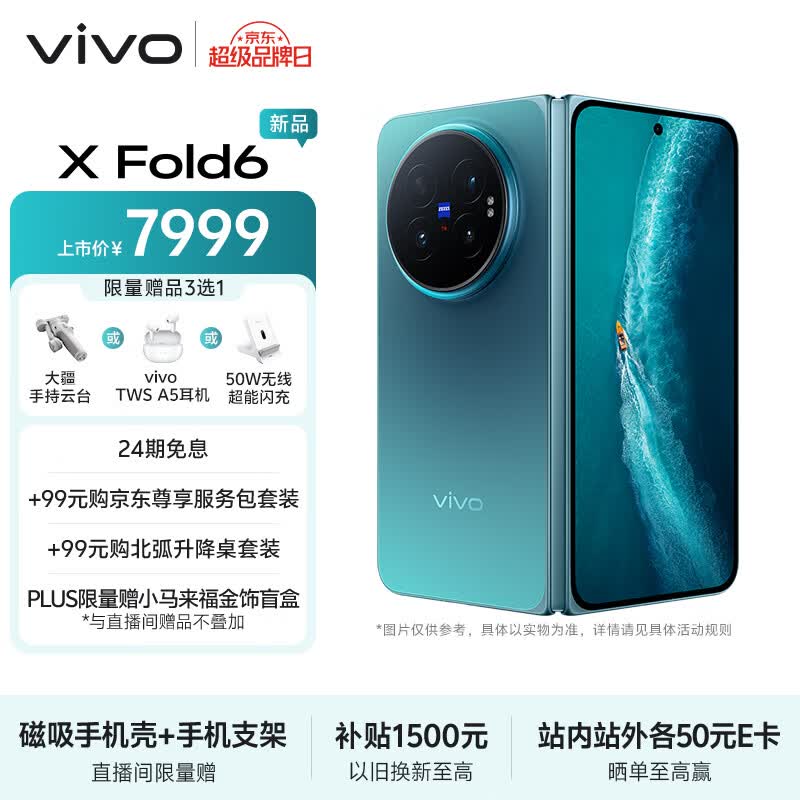
💡Discover how vivo uses AI-native OS features to redefine multitasking on foldable devices.
⚡ 30-Second TL;DR
What Changed
Powered by MediaTek Dimensity 9500 chipset
Why It Matters
The integration of AI-native features into foldable OS workflows demonstrates a shift toward AI-first mobile productivity.
What To Do Next
Explore how to implement cross-app AI data transfer in your mobile applications to improve user workflow efficiency.
Key Points
- •Powered by MediaTek Dimensity 9500 chipset
- •Features AI-driven cross-window drag-and-drop for text, images, and tables
- •Includes a 200MP Zeiss main camera and V3+ imaging chip
- •Equipped with a 7000mAh battery using silicon-negative electrode technology
🧠 Deep Insight
AI-generated analysis for this event — not the original article.
🔑 Enhanced Key Takeaways
- •The device utilizes a new 'Blue River' AI model architecture integrated directly into the kernel to reduce latency during cross-window operations.
- •The display panel features a proprietary 'Titan-Glass' substrate, claiming a 40% increase in drop resistance compared to the previous generation.
- •The device supports 120W wired and 80W wireless charging, marking a significant increase in wireless charging efficiency for the X Fold series.
- •The hinge mechanism has been redesigned to a 'Carbon-Fiber Floating Hinge' that reduces the device weight to 215 grams despite the larger battery.
- •The OriginOS 6 Fold introduces a 'Desktop-Level' browser mode that allows users to run full-scale web applications with mouse and keyboard support.
📊 Competitor Analysis▸ Show
| Feature | vivo X Fold6 | Samsung Galaxy Z Fold7 | Honor Magic V4 |
|---|---|---|---|
| Chipset | Dimensity 9500 | Snapdragon 8 Gen 5 | Snapdragon 8 Gen 5 |
| Battery | 7000mAh | 4800mAh | 5500mAh |
| Main Camera | 200MP Zeiss | 50MP | 108MP |
| Weight | 215g | 230g | 210g |
🛠️ Technical Deep Dive
- Chipset: MediaTek Dimensity 9500 utilizes a 2nm process node with a 1+4+3 core architecture focusing on NPU efficiency for on-device AI.
- Imaging: The V3+ chip employs a dedicated ISP pipeline that supports 4K HDR video recording at 120fps with real-time AI noise reduction.
- Battery: The 7000mAh capacity is achieved through a silicon-carbon anode density of 850Wh/L, allowing for a thinner physical profile.
- Display: The inner screen uses LTPO 4.0 technology with a variable refresh rate ranging from 1Hz to 144Hz.
🔮 Future ImplicationsAI analysis grounded in cited sources
⏳ Timeline
Weekly AI Recap
Read this week's curated digest of top AI events →
👉Related Updates
AI-curated news aggregator. All content rights belong to original publishers.
Original source: IT之家 ↗
This is a summary, not the original. Read the source, or get the weekly briefing.
The weekly digest
One email a week. Unsubscribe anytime.