Visa’s AI Harness Patches Code Before Human Review
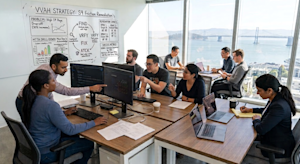
💡Visa’s open-source harness can find, patch, and adversarially test vulnerabilities before human review.
⚡ 30-Second TL;DR
What Changed
VVAH combines vulnerability discovery, verification, remediation, validation, and adversarial testing in an 11-stage pipeline.
Why It Matters
VVAH could reduce the time between discovering and remediating vulnerabilities, especially for organizations with limited security staffing. However, automatic production-code changes raise governance, authorization, rollback, and false-positive risks that teams must control outside the model.
What To Do Next
Clone the Visa Vulnerability Agentic Harness and run it in detection-only mode against a non-production repository before enabling automated remediation.
Key Points
- •VVAH combines vulnerability discovery, verification, remediation, validation, and adversarial testing in an 11-stage pipeline.
- •The default workflow modifies source files in the target repository before a human reviews the proposed fix.
- •Operators can cap the harness at detection mode instead of allowing automatic remediation.
- •The open-source project grew from 595 GitHub stars in July to more than 2,300 by August 25.
- •Visa says the harness originated through Anthropic’s Project Glasswing and Claude Mythos security testing.
🧠 Deep Insight
Background and context from public sources — not the original article. 5 sources cited.
🔑 Enhanced Key Takeaways
- •Visa has joined NVIDIA’s Open Secure AI Alliance, positioning VVAH as a standardized framework for secure AI development practices.
- •The framework is model-agnostic, allowing organizations to swap between Anthropic, OpenAI, and other LLMs via configuration files without modifying the underlying source code.
- •Visa Consulting & Analytics (VCA) has launched three dedicated advisory services specifically built around VVAH, including maturity assessments and risk prioritization roadmaps.
- •The tool has achieved a significant reduction in 'Mean Time to Adapt,' shrinking the resolution cycle for vulnerabilities from weeks to hours in internal deployments.
- •Visa is collaborating with IBM and Red Hat on 'Project Lightwell,' an initiative that integrates VVAH-style automated security workflows into broader enterprise infrastructure.
📊 Competitor Analysis▸ Show
| Feature | Visa VVAH | GitHub Copilot Autofix | Snyk DeepCode AI |
|---|---|---|---|
| Primary Focus | Agentic remediation/testing | IDE-based code suggestions | Vulnerability scanning/fix suggestions |
| Autonomy | High (11-stage pipeline) | Medium (Developer-led) | Medium (Guided remediation) |
| Adversarial Testing | Built-in | No | No |
| Pricing | Open Source | Subscription | Freemium/Enterprise |
🛠️ Technical Deep Dive
- Architecture: Model-agnostic design supporting plug-and-play integration for Anthropic, OpenAI, and other LLM backends.
- Workflow: 11-stage pipeline encompassing discovery, verification, remediation, validation, and adversarial testing.
- Feedback Loop: Implements closed-loop remediation, allowing for iterative refinement of patches without restarting the full pipeline.
- Integration: Designed for direct repository interaction with optional real-time progress tracking and automated source file editing capabilities.
🔮 Future ImplicationsAI analysis grounded in cited sources
⏳ Timeline
📎 Sources (5)
Factual claims are grounded in the sources below. Forward-looking analysis is AI-generated interpretation.
Weekly AI Recap
Read this week's curated digest of top AI events →
👉Related Updates
AI-curated news aggregator. All content rights belong to original publishers.
Original source: VentureBeat ↗
This is a summary, not the original. Read the source, or get the weekly briefing.
Weekly AI briefing
One email a week. Unsubscribe anytime.