Virtual Cell Startups Enter a Funding Boom
💡A funding surge could reshape the next wave of AI-driven biology and drug discovery.
⚡ 30-Second TL;DR
What Changed
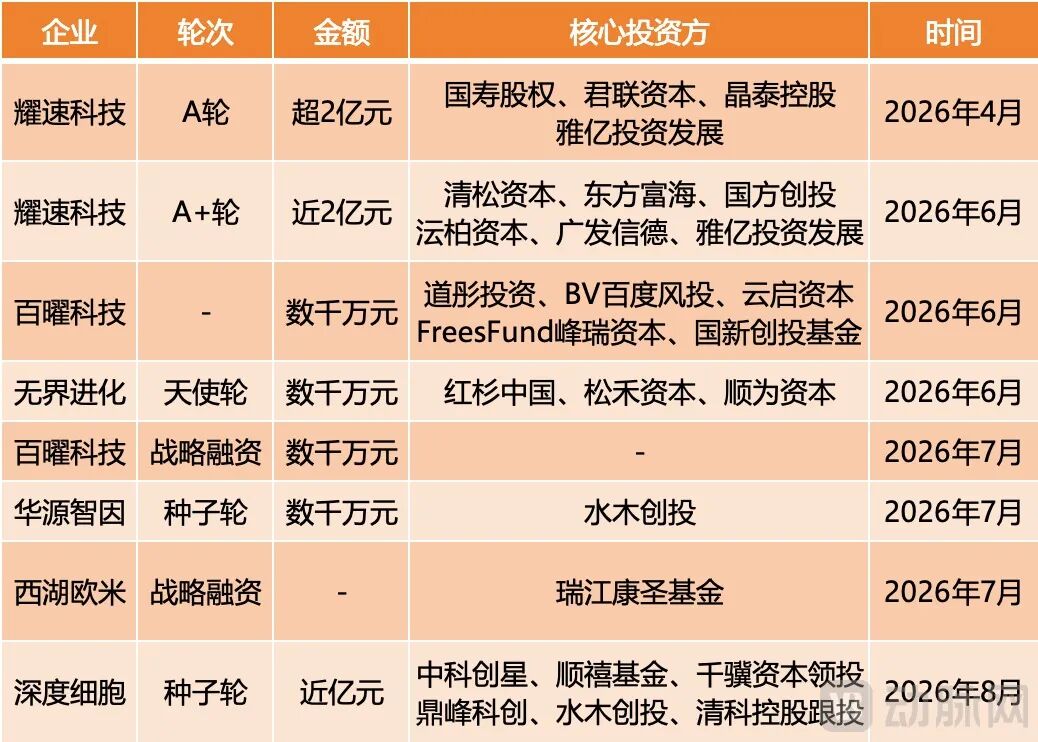
Virtual-cell companies are attracting substantial investment.
Why It Matters
Increased funding could accelerate foundation models, simulation platforms, and data infrastructure for biology. AI founders and researchers may see more opportunities for partnerships, hiring, and commercialization in computational life sciences.
What To Do Next
Use scvi-tools to prototype a reproducible single-cell perturbation benchmark before evaluating virtual-cell vendors or investment opportunities.
Key Points
- •Virtual-cell companies are attracting substantial investment.
- •The sector reportedly began the year with approximately $1 billion in funding.
- •The funding trend signals growing confidence in computational biology and AI-enabled drug discovery.
🧠 Deep Insight
Background and context from public sources — not the original article. 13 sources cited.
🔑 Enhanced Key Takeaways
- •The virtual cell sector is shifting from reductionist protein-target modeling to holistic systems biology, utilizing multi-omics data to simulate entire cellular behaviors.
- •The 2026 funding surge is heavily concentrated in China, with nearly 10 financing events recorded in the sector since April 2026.
- •Infrastructure support from major entities like NVIDIA and the Chan Zuckerberg Initiative is accelerating the development of open biological datasets necessary for training large-scale cellular models.
- •Startups are prioritizing rapid commercialization, with companies like Huayuan Zhiyin initiating clinical collaborations with hospitals within two months of their founding.
- •The industry is moving toward 'world models' of cells, exemplified by systems like GenBio AI's AIDO Cell, which aims to simulate human cells across their full biological hierarchy.
📊 Competitor Analysis▸ Show
| Company | Model/System | Key Benchmark | Focus |
|---|---|---|---|
| Xaira Therapeutics | X-Cell | 0.31 Pearson (Tahoe-100M) | AI-driven drug discovery |
| GenBio AI | AIDO Cell | Full hierarchy simulation | Systems biology world models |
| STATE (Legacy) | STATE | 0.22 Pearson (Tahoe-100M) | Baseline comparison |
🛠️ Technical Deep Dive
- X-Cell Architecture: A 4.9-billion-parameter model designed for predictive cellular simulation.
- Performance Metric: Utilizes Pearson correlation coefficient on the Tahoe-100M dataset to measure predictive accuracy against biological ground truth.
- Integration: Models incorporate multi-omics data and biophysical simulations to move beyond single-protein target identification.
- Infrastructure: Relies on high-performance computing clusters and standardized open biological datasets to facilitate large-scale training.
🔮 Future ImplicationsAI analysis grounded in cited sources
⏳ Timeline
📎 Sources (13)
Factual claims are grounded in the sources below. Forward-looking analysis is AI-generated interpretation.
Weekly AI Recap
Read this week's curated digest of top AI events →
👉Related Updates


AI-curated news aggregator. All content rights belong to original publishers.
Original source: 钛媒体 ↗
This is a summary, not the original. Read the source, or get the weekly briefing.
Weekly AI briefing
One email a week. Unsubscribe anytime.