Vercel Agent: An AI agent for production environments
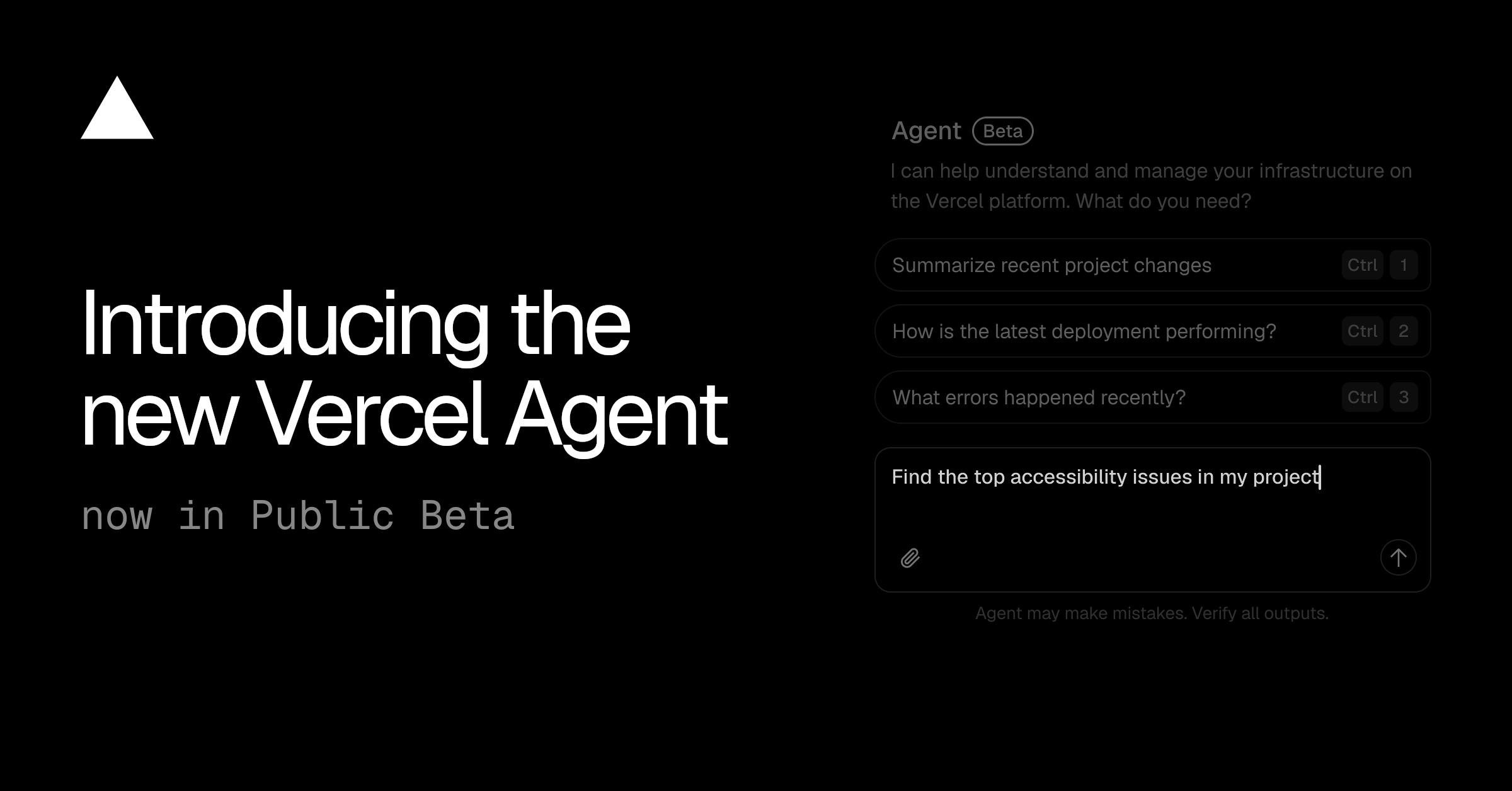
💡Learn how Vercel built a secure, production-ready AI agent that avoids the 'full-permission' trap of typical LLM tools.
⚡ 30-Second TL;DR
What Changed
Autonomous investigation of production logs, metrics, and deployments to identify root causes.
Why It Matters
This tool significantly reduces the mean time to mitigation (MTTM) for production incidents by automating the initial investigation phase. It sets a new standard for 'safe' AI agents by decoupling agent identity from user permissions.
What To Do Next
Explore the Vercel Dashboard to enable Vercel Agent and test its ability to triage your existing deployment logs.
Key Points
- •Autonomous investigation of production logs, metrics, and deployments to identify root causes.
- •Implements a secure, 'read-only by default' permissions model that prevents unauthorized changes.
- •Requires explicit human approval for specific actions like rollbacks, config changes, or cache clearing.
- •Operates as its own principal identity rather than inheriting the user's full permissions.
🧠 Deep Insight
AI-generated analysis for this event — not the original article.
🔑 Enhanced Key Takeaways
- •Vercel Agent utilizes a specialized RAG (Retrieval-Augmented Generation) pipeline that indexes Vercel's proprietary infrastructure logs and deployment metadata to reduce hallucination rates during root cause analysis.
- •The agent is built on a multi-modal architecture capable of interpreting visual snapshots of deployment previews alongside structured telemetry data from Vercel Web Analytics.
- •Integration with Vercel's 'Preview Deployments' allows the agent to automatically spin up isolated environments to verify proposed fixes before they are merged into the production branch.
- •The system employs a 'Human-in-the-loop' (HITL) verification layer that utilizes cryptographic signing to ensure that every action taken by the agent is auditable and linked to a specific approval token.
- •Vercel Agent is designed to support custom 'Knowledge Bases' where teams can upload internal runbooks and incident response documentation to tailor the agent's troubleshooting logic to their specific tech stack.
📊 Competitor Analysis▸ Show
| Feature | Vercel Agent | Datadog Bits AI | New Relic Grok |
|---|---|---|---|
| Primary Focus | Deployment & Edge Lifecycle | Infrastructure Monitoring | Full-Stack Observability |
| Permissions | Read-only by default | Role-based access | Role-based access |
| Fix Execution | Direct (with approval) | Advisory/Query-based | Advisory/Query-based |
| Pricing | Usage-based (Add-on) | Included in Pro/Ent | Included in Pro/Ent |
🛠️ Technical Deep Dive
- Architecture: Utilizes a custom-tuned LLM optimized for DevOps workflows and infrastructure-as-code (IaC) syntax.
- Security Model: Implements a 'Principal Identity' isolation layer, ensuring the agent operates within a restricted sandbox environment separate from the user's session.
- Data Processing: Employs an asynchronous event-driven pipeline to ingest real-time telemetry from Vercel's Edge Network.
- Verification: Uses a deterministic 'Dry Run' engine that simulates configuration changes against the current production state to predict potential regressions before human approval.
🔮 Future ImplicationsAI analysis grounded in cited sources
⏳ Timeline
Weekly AI Recap
Read this week's curated digest of top AI events →
👉Related Updates
AI-curated news aggregator. All content rights belong to original publishers.
Original source: Vercel News ↗
This is a summary, not the original. Read the source, or get the weekly briefing.
The weekly digest
One email a week. Unsubscribe anytime.