U.S. Report Warns Chinese AI Is Closing the Gap
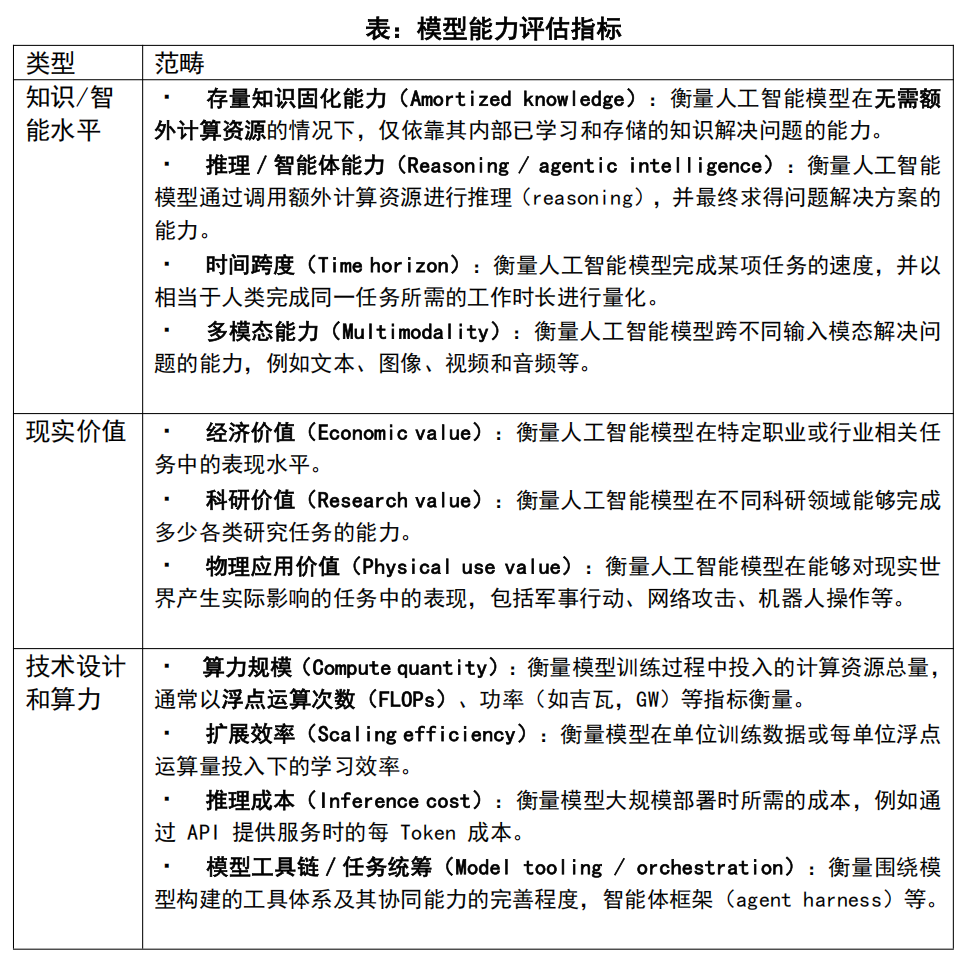
💡Benchmark gaps are narrowing, while proposed 72-hour reviews could reshape access to Chinese AI models.
⚡ 30-Second TL;DR
What Changed
The report identifies Alibaba, ByteDance, DeepSeek, MiniMax, Moonshot AI, Tencent, and Zhipu as leading Chinese AI developers.
Why It Matters
For AI builders, the report signals that model competitiveness is increasingly being evaluated through software agents, coding ability, and deployability rather than chat quality alone. Its proposed review measures could also increase compliance, distribution, and geopolitical risk for teams using or commercializing Chinese models internationally.
What To Do Next
Run SWE-Bench Pro and Terminal-Bench 2.0 evaluations on any Chinese model you plan to deploy, then document latency, data-residency, and export-control risks.
Key Points
- •The report identifies Alibaba, ByteDance, DeepSeek, MiniMax, Moonshot AI, Tencent, and Zhipu as leading Chinese AI developers.
- •Chinese models reportedly achieved about 50% accuracy on SWE-Bench Pro, while Kimi K2.5 and GLM-5 scored 50.8% and 56.2% on Terminal-Bench 2.0.
- •The report sees near-term military value in intelligence fusion, target-list generation, logistics tracking, decision support, and battle-damage assessment.
- •Deployment remains constrained by energy consumption, inference latency, connectivity, electronic interference, unreliable sensors, and integration with existing command systems.
- •The report recommends a rapid 72-hour review process for new Chinese AI models to limit their potential global spread.
🧠 Deep Insight
Background and context from public sources — not the original article. 6 sources cited.
🔑 Enhanced Key Takeaways
- •The performance gap between U.S. and Chinese leading AI models narrowed from a range of 17.5%–31.6% in 2023 to just 2.7% by March 2026.
- •Chinese AI models currently offer a cost advantage of up to 90% lower inference costs compared to leading U.S. alternatives, driving significant market adoption.
- •Despite the performance convergence, U.S. private AI investment in 2025 was $285.9 billion, roughly 23 times the $12.4 billion invested in China.
- •U.S. legislative efforts, specifically the 'Open-Source AI Leadership Act' (H.R. 10152), are targeting China's influence in the open-weight model ecosystem.
- •Platform data from OpenRouter indicates a shift in user preference, with American labs' share of total workload dropping from 70% in 2025 to 30% in 2026.
📊 Competitor Analysis▸ Show
| Feature | U.S. Leading Models (OpenAI/Anthropic/Google) | Chinese Leading Models (DeepSeek/Zhipu/Kimi) |
|---|---|---|
| Performance Gap | Baseline (Leading) | ~2.7% behind (as of March 2026) |
| Inference Cost | High | Up to 90% cheaper |
| Investment | $285.9B (2025) | $12.4B (2025) |
| Market Strategy | Proprietary/Closed | Open-source/Open-weight dominance |
🔮 Future ImplicationsAI analysis grounded in cited sources
⏳ Timeline
📎 Sources (6)
Factual claims are grounded in the sources below. Forward-looking analysis is AI-generated interpretation.
Weekly AI Recap
Read this week's curated digest of top AI events →
👉Related Updates

AI-curated news aggregator. All content rights belong to original publishers.
Original source: 虎嗅 ↗
This is a summary, not the original. Read the source, or get the weekly briefing.
Weekly AI briefing
One email a week. Unsubscribe anytime.