US Pushes Allies to Choose an AI Ecosystem
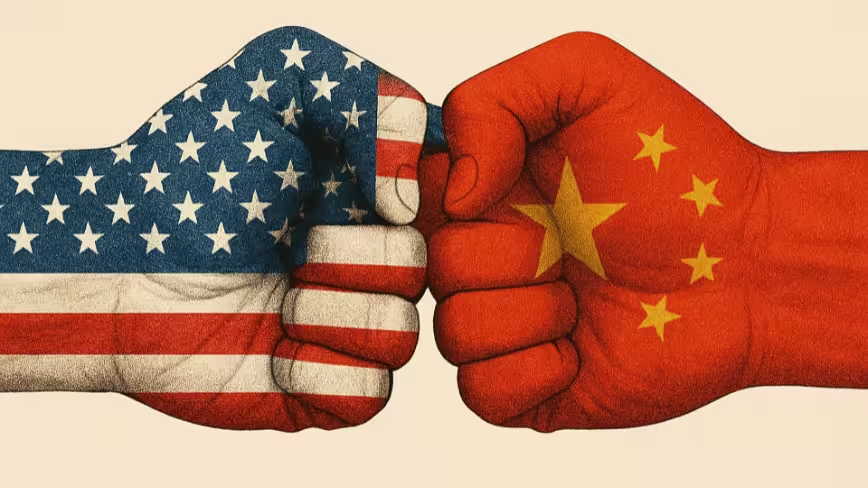
💡A possible US-China AI split could reshape access to models, chips, clouds, and developer tools.
⚡ 30-Second TL;DR
What Changed
A draft US State Department letter reportedly outlines the proposed ultimatum.
Why It Matters
A formal split could increase compliance costs and limit cross-border access to models, chips, cloud platforms, and developer tools. AI companies operating globally may need separate technical and commercial strategies for each ecosystem.
What To Do Next
Map your production AI stack by provider, country, cloud region, model, and dependency so you can identify possible US-China ecosystem conflicts.
Key Points
- •A draft US State Department letter reportedly outlines the proposed ultimatum.
- •Allied nations may be asked to align with either the American or Chinese AI ecosystem.
- •The policy could affect AI infrastructure, model access, cloud partnerships, and technology standards.
🧠 Deep Insight
AI-generated analysis for this event.
🔑 Enhanced Key Takeaways
- •The US strategy leverages export controls on high-end AI accelerators, such as NVIDIA's H100 and Blackwell series, as a primary enforcement mechanism to force ecosystem alignment.
- •The initiative is closely tied to the 'Clean Network' program's evolution, expanding from 5G telecommunications infrastructure to include AI model weights, training datasets, and cloud service providers.
- •European Union officials have expressed concerns that this ultimatum could conflict with the EU AI Act's emphasis on strategic autonomy and open-source AI development.
- •The policy specifically targets the interoperability of AI-driven military and intelligence systems, aiming to prevent 'dual-use' technology leakage to Chinese state-backed entities.
- •Major cloud providers (hyperscalers) are being pressured to implement 'geofencing' protocols that restrict access to advanced AI training clusters based on the geopolitical alignment of the host nation.
🔮 Future ImplicationsAI analysis grounded in cited sources
⏳ Timeline
Weekly AI Recap
Read this week's curated digest of top AI events →
👉Related Updates
AI-curated news aggregator. All content rights belong to original publishers.
Original source: The Next Web (TNW) ↗