US Public Sentiment on AI Remains Skeptical
💡Understand the growing public trust gap to better position your AI product for long-term adoption.
⚡ 30-Second TL;DR
What Changed
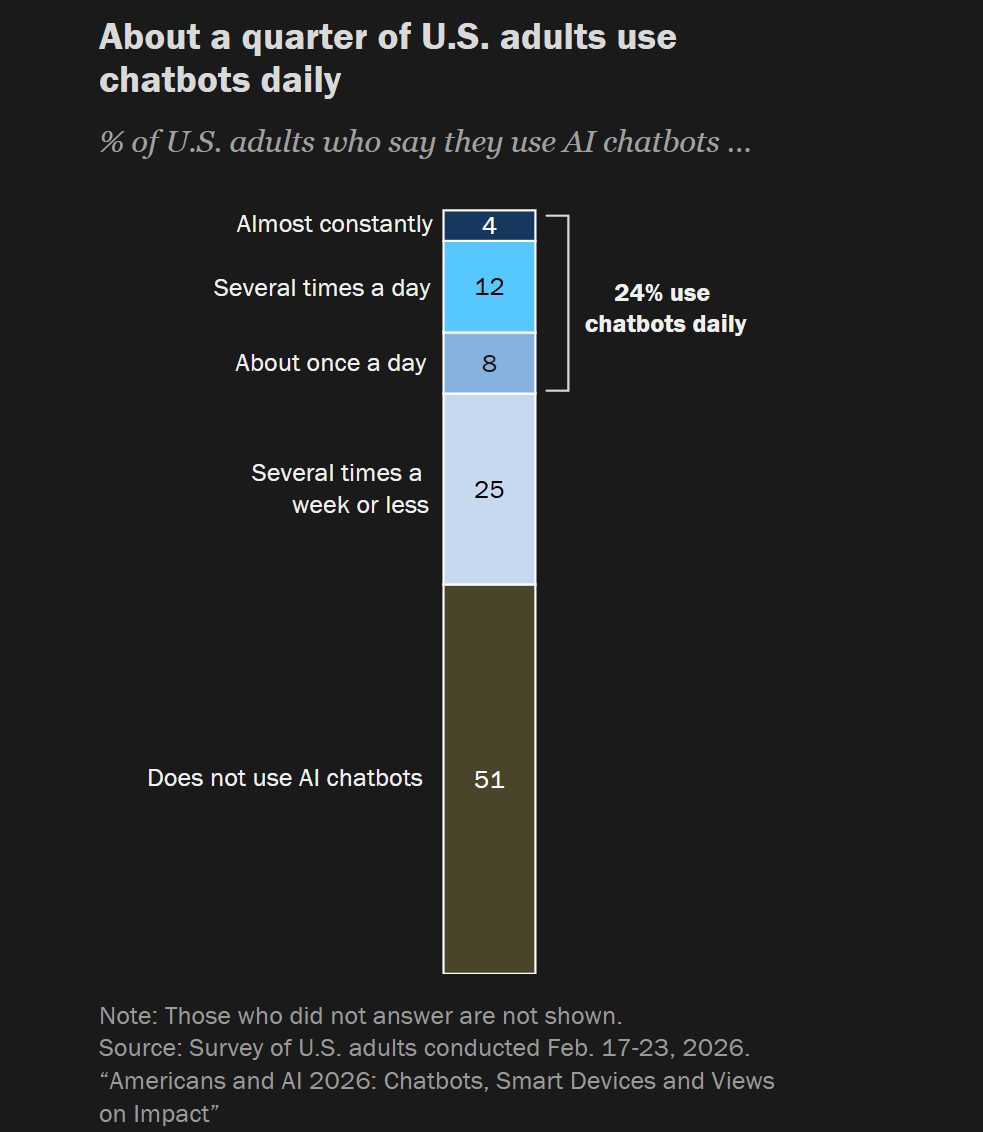
Chatbot adoption in the US reached 49% of adults.
Why It Matters
The growing gap between adoption and public trust suggests a need for more transparent AI development and better communication regarding safety and societal benefits.
What To Do Next
Incorporate user-centric safety features and clear ethical guidelines into your product to address growing public skepticism.
Key Points
- •Chatbot adoption in the US reached 49% of adults.
- •Only 16% of respondents view AI's long-term societal impact as positive.
- •40% of respondents expect AI to have a negative impact on society.
🧠 Deep Insight
AI-generated analysis for this event — not the original article.
🔑 Enhanced Key Takeaways
- •Public skepticism is heavily correlated with demographic factors, with younger adults (18-29) showing higher adoption rates but similar levels of long-term apprehension compared to older cohorts.
- •The primary drivers of negative sentiment include concerns over job displacement, the erosion of data privacy, and the potential for AI-generated misinformation to destabilize democratic processes.
- •Despite low long-term optimism, a majority of users report that AI tools have already improved their personal productivity in specific tasks like writing, coding, and information synthesis.
🔮 Future ImplicationsAI analysis grounded in cited sources
⏳ Timeline
Weekly AI Recap
Read this week's curated digest of top AI events →
👉Related Updates




AI-curated news aggregator. All content rights belong to original publishers.
Original source: cnBeta (Full RSS) ↗
This is a summary, not the original. Read the source, or get the weekly briefing.
Weekly AI briefing
One email a week. Unsubscribe anytime.