US Private Micro-Reactor Achieves First Criticality
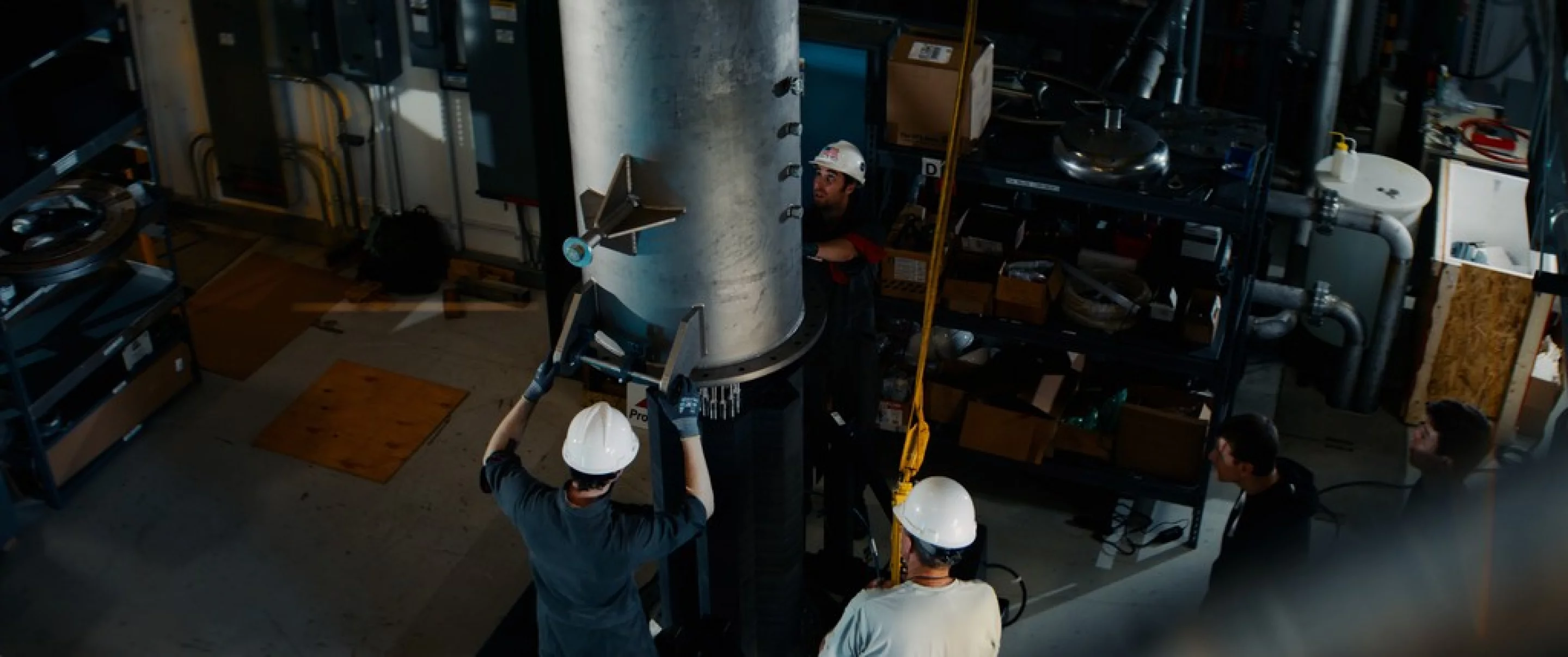
💡Modular nuclear power is the key to solving the energy crisis for future large-scale AI compute clusters.
⚡ 30-Second TL;DR
What Changed
Antares Nuclear Mark-0 is the first private non-light-water micro-reactor to achieve criticality in 40 years.
Why It Matters
Advancements in modular nuclear energy are critical for powering the massive energy requirements of future AI data centers.
What To Do Next
Monitor the development of modular nuclear energy as a potential sustainable power source for large-scale AI training clusters.
Key Points
- •Antares Nuclear Mark-0 is the first private non-light-water micro-reactor to achieve criticality in 40 years.
- •The project is part of the U.S. Department of Energy's Reactor Pilot Program.
- •This milestone represents a significant advancement in modular nuclear energy technology.
🧠 Deep Insight
Background and context from public sources — not the original article. 14 sources cited.
🔑 Enhanced Key Takeaways
- •The Antares Nuclear Mark-0 achieved criticality approximately one month ahead of the July 4, 2026, deadline established by President Trump's Executive Order 14301, which mandated a streamlined pathway for at least three advanced test reactors to reach criticality.
- •Antares Nuclear, founded in 2023, has secured over $140 million in private capital funding to support its microreactor development.
- •The Mark-0 is a zero-power demonstration reactor designed to validate reactor physics and core performance for the company's planned commercial R1 design, and as such, it did not generate electricity.
- •The reactor utilizes high-assay low-enriched uranium (HALEU) TRISO fuel, manufactured by BWX Technologies, and incorporates a high-temperature sodium heat-pipe cooling system.
- •Antares Nuclear is a key vendor for the U.S. Army's Janus Program and was selected under the Advanced Nuclear Power for Installations (ANPI) program, with a stated goal to deploy electricity-producing microreactors for military installations by September 30, 2028.
🛠️ Technical Deep Dive
- The Mark-0 is a high-temperature sodium heat-pipe reactor, employing entirely passive, redundant liquid metal heat pipes for heat transfer, eliminating the need for high-pressure liquid pumps.
- Its core incorporates graphite and boron carbide control drums, actuated by independent motors, drawing inspiration from historical space reactor designs.
- The reactor operates on high-assay low-enriched uranium (HALEU), with enrichment levels just under 20% U-235.
- It uses Tristructural Isotropic (TRISO) coated particle fuel, encased within a prismatic graphite core, a design feature intended to inherently prevent meltdown scenarios.
- The Mark-0 is specifically configured for zero-power criticality testing and, therefore, does not include a power conversion loop or heat-sink systems.
- The planned commercial Mark-1 microreactor is designed to offer scalable electrical output ranging from 100 kWe to 1 MWe.
- The Mark-1 will integrate a simple, recuperated Nitrogen (N2) closed Brayton cycle, operating at low pressures to ensure high reliability and minimal corrosion risk.
- The commercial design is optimized for continuous operation on a single fuel core for 4 to 6 years without requiring on-site refuelling.
- Antares is also involved in developing kilowatt-class space-fission propulsion systems and hardware for NASA's Fission Surface Power initiative, aiming to place a 100 kWe reactor on the Moon.
🔮 Future ImplicationsAI analysis grounded in cited sources
⏳ Timeline
📎 Sources (14)
Factual claims are grounded in the sources below. Forward-looking analysis is AI-generated interpretation.
Weekly AI Recap
Read this week's curated digest of top AI events →
👉Related Updates
AI-curated news aggregator. All content rights belong to original publishers.
Original source: cnBeta (Full RSS) ↗
This is a summary, not the original. Read the source, or get the weekly briefing.
The weekly digest
One email a week. Unsubscribe anytime.