U.S. Pressures Allies to Choose an AI Bloc
💡AI alignment may soon shape which models, chips, clouds, and partnerships your company can access.
⚡ 30-Second TL;DR
What Changed
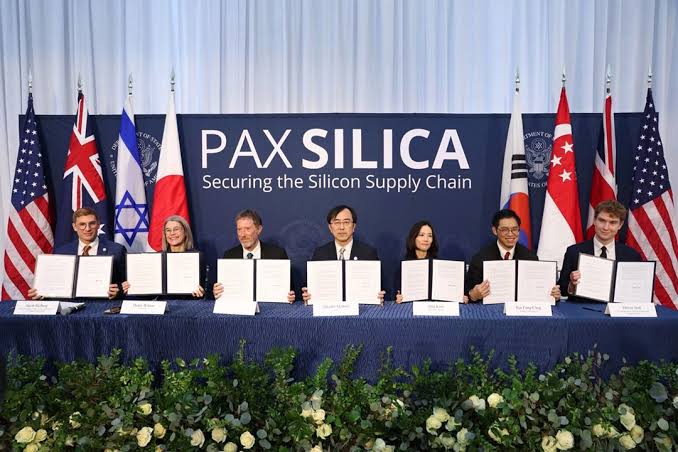
The U.S. is considering pressure on dozens of countries over their AI partnerships.
Why It Matters
A more polarized AI ecosystem could affect access to models, cloud infrastructure, chips, research partnerships, and cross-border deployments. Companies operating internationally may need to assess geopolitical exposure alongside technical and commercial risks.
What To Do Next
Map your AI stack’s dependence on U.S. and China-linked models, cloud providers, chips, and research partners, then identify one viable alternative for each critical dependency.
Key Points
- •The U.S. is considering pressure on dozens of countries over their AI partnerships.
- •Countries joining competing China-led AI frameworks could lose access to a U.S.-led alliance.
- •The policy would make international AI alignment a strategic consideration for governments and companies.
🧠 Deep Insight
AI-generated analysis for this event.
🔑 Enhanced Key Takeaways
- •The U.S. strategy reportedly leverages the 'AI Safety and Security' framework as a primary mechanism to restrict technology transfers to nations maintaining deep AI integration with Chinese infrastructure.
- •Diplomatic efforts are focused on the 'Five Eyes' intelligence alliance and key Indo-Pacific partners to establish a unified standard for AI hardware export controls, specifically targeting high-end GPU access.
- •Internal policy drafts suggest the creation of a 'Trusted AI Ecosystem' certification, which would serve as a prerequisite for countries seeking access to U.S.-funded AI research grants and collaborative cloud computing resources.
- •China has responded by accelerating the 'Digital Silk Road' initiative, offering subsidized AI model training and infrastructure deployment to Global South nations to counter U.S. exclusion tactics.
- •Industry analysts note that this bifurcation policy is driving a 'sovereign AI' trend, where middle-power nations are increasingly investing in domestic, smaller-scale LLMs to avoid dependency on either U.S. or Chinese foundational models.
🔮 Future ImplicationsAI analysis grounded in cited sources
⏳ Timeline
Weekly AI Recap
Read this week's curated digest of top AI events →
👉Related Updates

AI-curated news aggregator. All content rights belong to original publishers.
Original source: cnBeta (Full RSS) ↗