US opens second federal investigation into deadly Tesla crash
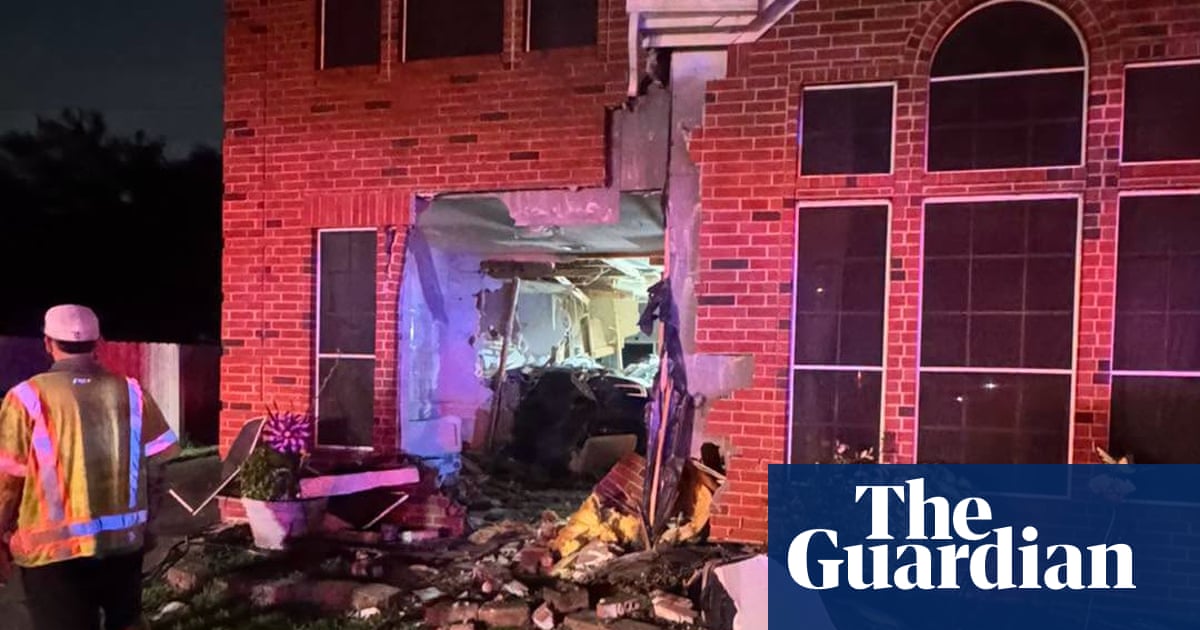
Regulatory scrutiny on Tesla's ADAS is intensifying; critical for developers building safety-critical AI systems.
30-Second TL;DR
What Changed
Federal authorities are investigating a Tesla crash involving driver-assistance systems.
Why It Matters
This investigation increases regulatory pressure on Tesla's autonomous driving stack and may lead to stricter safety requirements for ADAS deployment.
What To Do Next
Review your autonomous system's fail-safe protocols and edge-case handling to ensure compliance with emerging safety standards.
Key Points
- •Federal authorities are investigating a Tesla crash involving driver-assistance systems.
- •The incident resulted in the death of 76-year-old Martha Avila.
- •The victim's family has filed a lawsuit against Tesla.
- •This marks the second federal probe into this specific crash event.
Deep Insight
AI-generated analysis for this event — not the original article.
Enhanced Key Takeaways
- •The National Highway Traffic Safety Administration (NHTSA) is specifically examining whether Tesla's Autopilot or Full Self-Driving (FSD) software failed to detect stationary objects in low-visibility conditions.
- •The lawsuit filed by the Avila family alleges that Tesla's marketing of its driver-assistance systems as 'Full Self-Driving' creates a dangerous 'automation bias' that leads drivers to over-rely on the system.
- •This investigation is part of a broader, multi-year NHTSA probe into Tesla's advanced driver-assistance systems (ADAS) that has encompassed hundreds of thousands of vehicles across multiple model years.
- •Tesla has consistently maintained that its driver-assistance systems require active driver supervision and that the responsibility for safe operation remains with the human operator at all times.
- •The incident has reignited congressional calls for stricter federal oversight and standardized safety testing protocols for Level 2 autonomous driving systems.
Competitor Analysis
- Tesla (Autopilot/FSD)
- Level 2 ADAS
- Waymo (Driverless)
- Level 4 Autonomous
- GM (Super Cruise)
- Level 2 ADAS
- Tesla (Autopilot/FSD)
- Camera-only (Tesla Vision)
- Waymo (Driverless)
- LiDAR, Radar, Cameras
- GM (Super Cruise)
- Cameras, Radar, LiDAR (map-based)
- Tesla (Autopilot/FSD)
- Any road (with supervision)
- Waymo (Driverless)
- Geofenced urban areas
- GM (Super Cruise)
- Pre-mapped highways
- Tesla (Autopilot/FSD)
- Upfront/Subscription
- Waymo (Driverless)
- Per-ride (Robotaxi)
- GM (Super Cruise)
- Subscription/Included
| Feature | Tesla (Autopilot/FSD) | Waymo (Driverless) | GM (Super Cruise) |
|---|---|---|---|
| System Type | Level 2 ADAS | Level 4 Autonomous | Level 2 ADAS |
| Sensor Suite | Camera-only (Tesla Vision) | LiDAR, Radar, Cameras | Cameras, Radar, LiDAR (map-based) |
| Operational Domain | Any road (with supervision) | Geofenced urban areas | Pre-mapped highways |
| Pricing Model | Upfront/Subscription | Per-ride (Robotaxi) | Subscription/Included |
Technical Deep Dive
- Tesla Vision architecture relies exclusively on a suite of external cameras and neural network processing, eschewing LiDAR and ultrasonic sensors used by many competitors.
- The system utilizes occupancy networks to predict the 3D geometry of the environment, which is intended to identify obstacles even if they are not explicitly classified by the object detection model.
- Data logs from the vehicle's Event Data Recorder (EDR) are central to the investigation, specifically looking at the latency between sensor input, object classification, and brake actuation.
- The investigation focuses on the 'vision-based' decision-making pipeline, specifically how the system handles edge cases where lighting or road debris obscures the camera's field of view.
Future ImplicationsAI analysis grounded in cited sources
Timeline
- 2021-08NHTSA opens initial formal investigation into Tesla Autopilot after multiple collisions with emergency vehicles.
- 2023-02Tesla issues a recall for over 360,000 vehicles to address FSD Beta software concerns regarding intersection behavior.
- 2023-12Tesla recalls nearly all vehicles sold in the US to install new safeguards for its Autopilot system.
- 2026-04The fatal crash involving Martha Avila occurs, triggering the secondary federal probe.
Weekly AI Recap
Read this week's curated digest of top AI events →
AI-curated news aggregator. All content rights belong to original publishers.
Original source: The Guardian Technology ↗
This is a summary, not the original. Read the source, or get the weekly briefing.
The weekly digest
One email a week. Unsubscribe anytime.