US military space exercise aims to accelerate satellite deployment
Learn how rapid satellite deployment cycles are creating new demand for AI-driven orbital logistics.
30-Second TL;DR
What Changed
Space Force exercise tests rapid satellite deployment capabilities
Why It Matters
This shift toward rapid satellite deployment could revolutionize how space-based AI and data processing infrastructure are updated and maintained.
What To Do Next
Research the Space Force's 'Tactically Responsive Space' (TacRS) initiatives to identify potential opportunities for AI-driven orbital logistics.
Key Points
- •Space Force exercise tests rapid satellite deployment capabilities
- •Objective is to shift from multi-year to rapid-response timelines
- •Focus on operational agility in space-based infrastructure
Deep Insight
AI-generated analysis for this event — not the original article.
Enhanced Key Takeaways
- •The exercise, known as 'Victus Haze,' specifically tests the ability to launch a responsive space mission with less than 24 hours of notice.
- •The initiative leverages the Tactically Responsive Space (TacRS) framework, which integrates commercial launch providers and satellite manufacturers into a rapid-response supply chain.
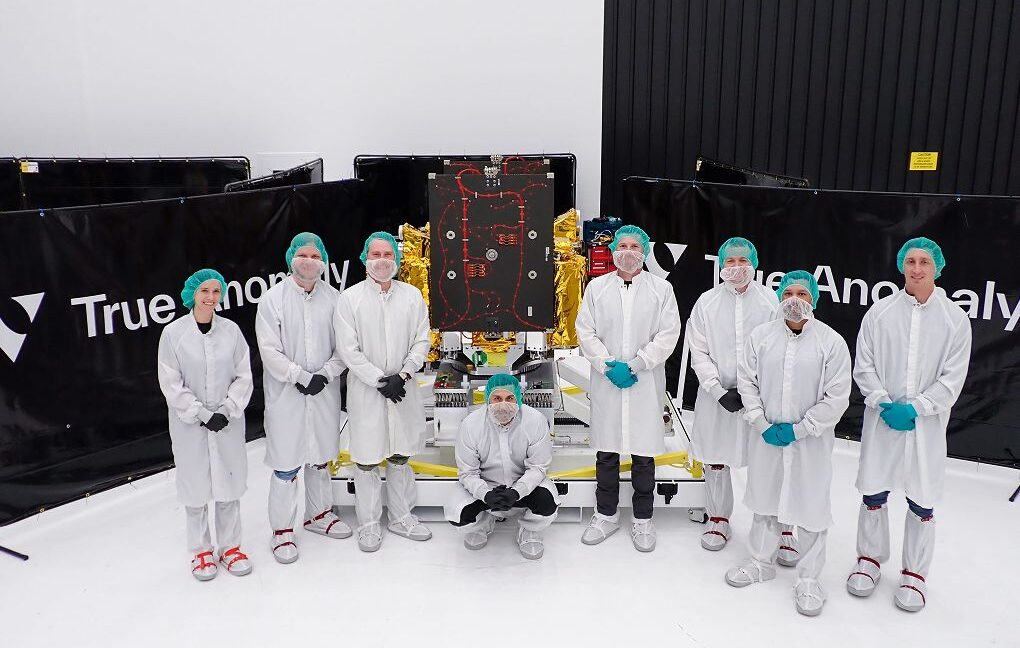
- •Key commercial partners involved in these rapid-deployment exercises include companies like Rocket Lab and True Anomaly, which provide the launch vehicles and space domain awareness vehicles respectively.
- •The program addresses the 'Space Domain Awareness' gap, allowing the US military to maneuver assets to counter adversarial threats in orbit in real-time.
- •These exercises utilize 'hot-standby' satellites that are kept in storage and integrated with launch vehicles only when a mission requirement is triggered.
Competitor Analysis
- US Space Force (TacRS)
- Resilience & Deterrence
- China (Rapid Launch)
- Counter-space capability
- Russia (Responsive Space)
- Strategic parity
- US Space Force (TacRS)
- Hours/Days (Target)
- China (Rapid Launch)
- Weeks/Months
- Russia (Responsive Space)
- Months/Years
- US Space Force (TacRS)
- High (Public-Private)
- China (Rapid Launch)
- State-Directed
- Russia (Responsive Space)
- State-Directed
| Feature | US Space Force (TacRS) | China (Rapid Launch) | Russia (Responsive Space) |
|---|---|---|---|
| Primary Goal | Resilience & Deterrence | Counter-space capability | Strategic parity |
| Launch Cadence | Hours/Days (Target) | Weeks/Months | Months/Years |
| Commercial Integration | High (Public-Private) | State-Directed | State-Directed |
Technical Deep Dive
- Utilization of modular satellite bus architectures that allow for rapid payload integration.
- Implementation of automated mission planning software to bypass traditional multi-month launch integration cycles.
- Use of small-launch vehicles (e.g., Electron) capable of rapid pad integration and short-notice fueling.
- Integration of 'Space Domain Awareness' (SDA) sensors to provide real-time orbital telemetry for rapid maneuvering.
- Development of standardized interfaces to ensure plug-and-play compatibility between different satellite buses and launch fairings.
Future ImplicationsAI analysis grounded in cited sources
Timeline
- 2021-05US Space Force establishes the Space Systems Command (SSC) to oversee rapid acquisition.
- 2023-09Victus Nox mission successfully demonstrates rapid satellite deployment in under 60 hours.
- 2024-04Victus Haze exercise announced to test multi-provider responsive space capabilities.
- 2025-02Expansion of the TacRS program to include more commercial launch and satellite bus vendors.
Weekly AI Recap
Read this week's curated digest of top AI events →
AI-curated news aggregator. All content rights belong to original publishers.
Original source: Ars Technica ↗
This is a summary, not the original. Read the source, or get the weekly briefing.
The weekly digest
One email a week. Unsubscribe anytime.