US government website redesign sparks surveillance and privacy concerns
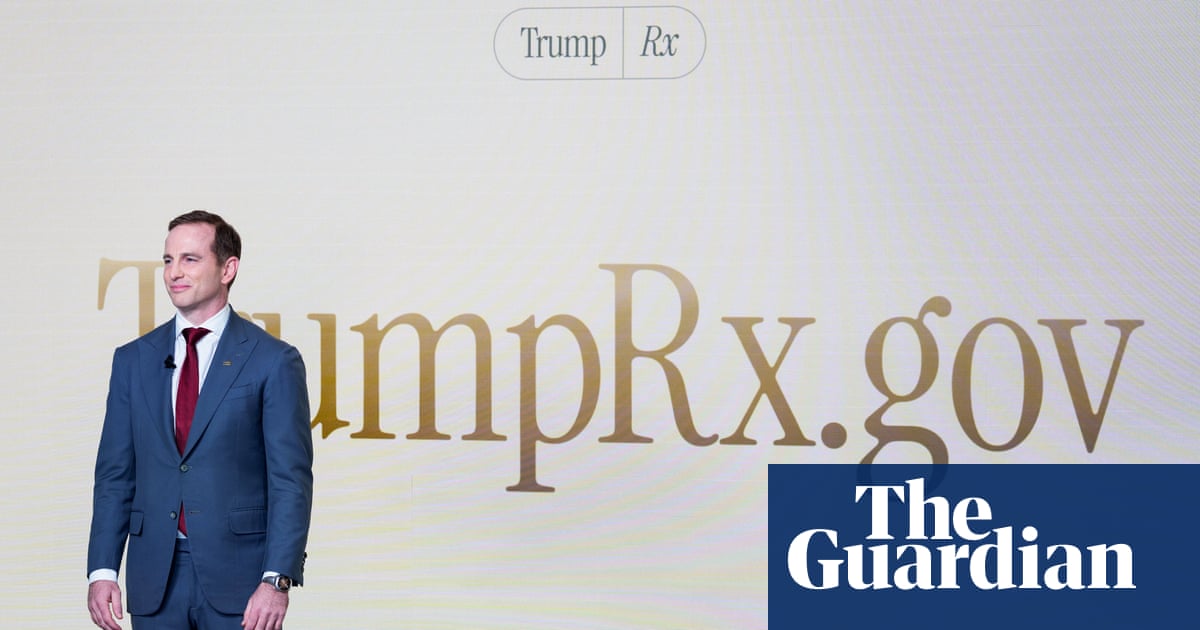
Understand the privacy risks and ethical implications of integrating tracking software into critical digital infrastruct
30-Second TL;DR
What Changed
The National Design Studio (NDS) was established via executive order and staffed by Elon Musk’s 'Doge' veterans.
Why It Matters
This development highlights the growing tension between government digital transformation and user privacy. It serves as a cautionary tale for AI practitioners regarding the ethical implementation of tracking and data collection in public-facing infrastructure.
What To Do Next
Audit your own data collection pipelines to ensure compliance with privacy regulations when integrating third-party tracking or analytics tools.
Key Points
- •The National Design Studio (NDS) was established via executive order and staffed by Elon Musk’s 'Doge' veterans.
- •Redesigned sites include sensitive portals for passport applications, voter registration, and prescription drug pricing.
- •Implementation of visitor-tracking software on federal infrastructure has raised significant legal and ethical concerns.
- •Critics warn that the opaque nature of these changes threatens data privacy and government transparency.
Deep Insight
AI-generated analysis for this event — not the original article.
Enhanced Key Takeaways
- •The Department of Justice (DOJ) has reportedly opened a preliminary inquiry into whether the NDS-implemented tracking scripts violate the Privacy Act of 1974 by collecting PII without explicit user consent.
- •Internal memos leaked from the National Design Studio suggest the tracking software utilizes 'session replay' technology, which records mouse movements, keystrokes, and scroll depth on federal portals.
- •Several civil liberties organizations, including the ACLU and EFF, have filed a joint Freedom of Information Act (FOIA) request seeking the specific contracts and data-sharing agreements between the NDS and third-party analytics providers.
- •The Office of Management and Budget (OMB) issued a memo in early 2026 clarifying that federal websites must maintain 'neutral' data collection policies, a directive that critics claim the NDS redesign explicitly contradicts.
- •Technical audits conducted by independent cybersecurity researchers identified that the tracking scripts were configured to bypass standard browser 'Do Not Track' (DNT) signals.
Technical Deep Dive
- The tracking implementation involves a proprietary JavaScript bundle injected into the header of federal web pages.
- Data exfiltration occurs via asynchronous POST requests to third-party endpoints, often disguised as legitimate telemetry traffic.
- The session replay mechanism utilizes DOM mutation observers to capture real-time user interactions and reconstruct them on external servers.
- Security researchers noted the absence of robust Content Security Policy (CSP) headers, allowing the injected scripts to execute with elevated privileges within the user's browser context.
Future ImplicationsAI analysis grounded in cited sources
Timeline
- 2025-02Executive Order establishes the National Design Studio (NDS) to modernize federal digital services.
- 2025-08NDS begins the rollout of redesigned interfaces for high-traffic federal portals.
- 2026-03Independent security researchers first report the presence of unauthorized tracking scripts on government domains.
- 2026-05The Guardian publishes an investigation detailing the extent of data collection by NDS-led redesigns.
Weekly AI Recap
Read this week's curated digest of top AI events →
Related Updates

AI-curated news aggregator. All content rights belong to original publishers.
Original source: The Guardian Technology ↗
This is a summary, not the original. Read the source, or get the weekly briefing.
The weekly digest
One email a week. Unsubscribe anytime.