US government halts dismantling of ocean observation network
💡Crucial climate data infrastructure is saved, ensuring continued access for AI-driven environmental research.
⚡ 30-Second TL;DR
What Changed
Federal government reverses plan to scrap the $350M OOI network
Why It Matters
The preservation of this data infrastructure ensures the continuity of high-quality climate datasets, which are essential for training AI models focused on environmental modeling and predictive meteorology.
What To Do Next
If you are working on climate-focused AI models, integrate OOI's open data streams into your training pipelines to improve predictive accuracy.
Key Points
- •Federal government reverses plan to scrap the $350M OOI network
- •System provides critical data for climate change tracking and weather forecasting
- •Widespread opposition from scientific and industry stakeholders forced the reversal
🧠 Deep Insight
AI-generated analysis for this event — not the original article.
🔑 Enhanced Key Takeaways
- •The OOI is primarily funded by the National Science Foundation (NSF) and serves as a long-term, multi-scale ocean observing network designed to provide real-time data to the public.
- •The network consists of five distinct arrays, including coastal, regional, and global sites, utilizing over 800 instruments to monitor physical, chemical, geological, and biological variables.
- •The proposed dismantling was largely driven by budgetary constraints within the NSF's Division of Ocean Sciences, which sought to reallocate funds toward other emerging research priorities.
- •Data from the OOI is integrated into global ocean models, significantly improving the accuracy of hurricane intensity predictions and long-term climate projections.
- •The reversal includes a commitment to a multi-year funding stabilization plan, aiming to modernize aging sensor infrastructure that has faced maintenance challenges since the network's inception.
🛠️ Technical Deep Dive
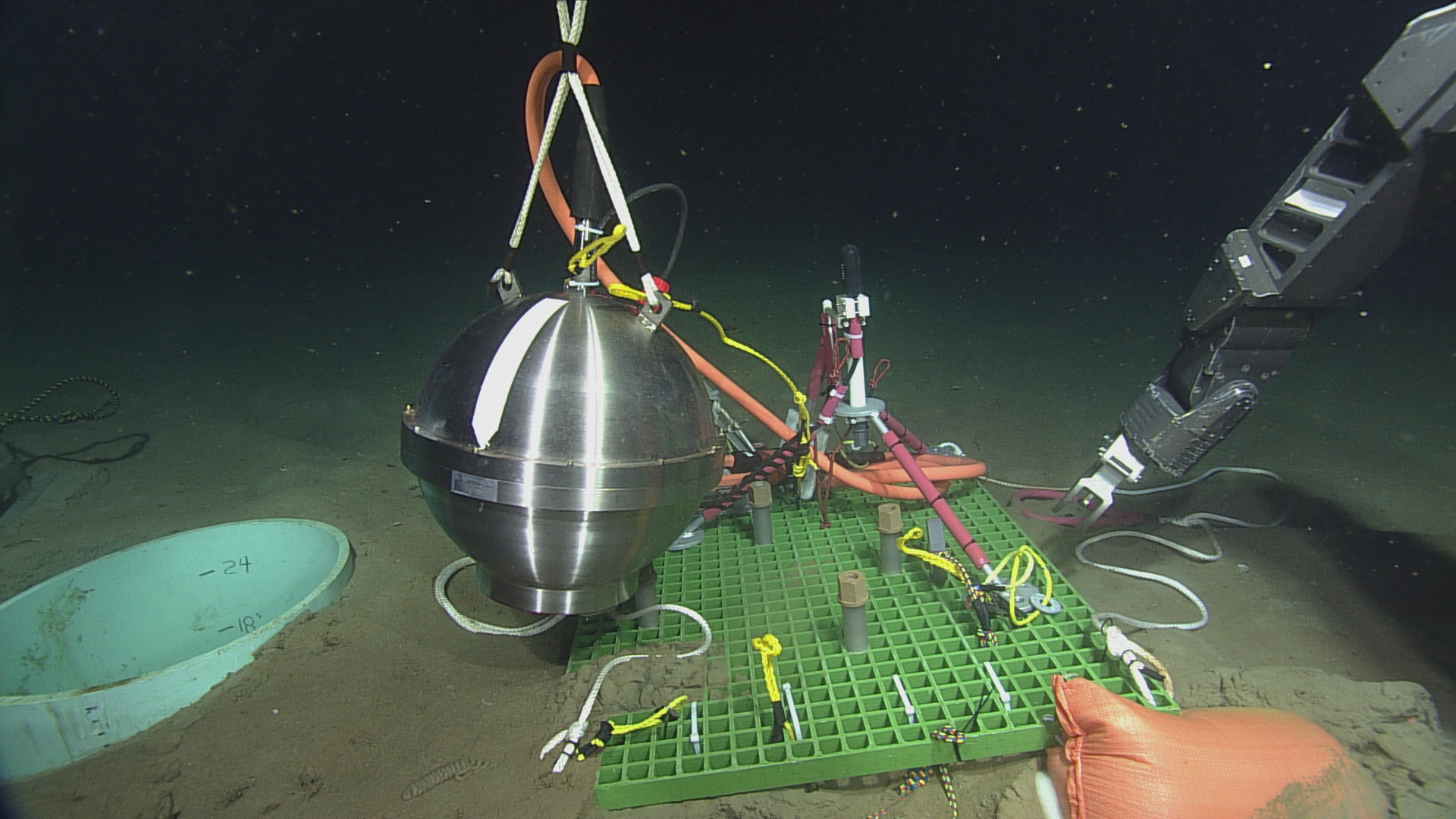
- The OOI infrastructure utilizes a combination of cabled seafloor observatories, moored buoys, and autonomous underwater vehicles (AUVs) to collect data.
- Cabled arrays, such as the Regional Cabled Array (RCA), provide high-bandwidth, high-power connectivity to the seafloor, enabling real-time data transmission via fiber-optic cables.
- Global and coastal arrays rely on satellite telemetry and acoustic modems to transmit data from moored platforms to shore stations.
- The system architecture supports a wide array of sensors, including CTD (conductivity, temperature, depth) profilers, hydrophones, seismometers, and chemical sensors for pH and dissolved oxygen monitoring.
- Data is processed and distributed through the OOI Cyberinfrastructure (CI), which provides open-access data streams and visualization tools for the global research community.
🔮 Future ImplicationsAI analysis grounded in cited sources
⏳ Timeline
Weekly AI Recap
Read this week's curated digest of top AI events →
👉Related Updates



AI-curated news aggregator. All content rights belong to original publishers.
Original source: cnBeta (Full RSS) ↗
This is a summary, not the original. Read the source, or get the weekly briefing.
Weekly AI briefing
One email a week. Unsubscribe anytime.