US Bill Aligns Allies on China Chip Curbs
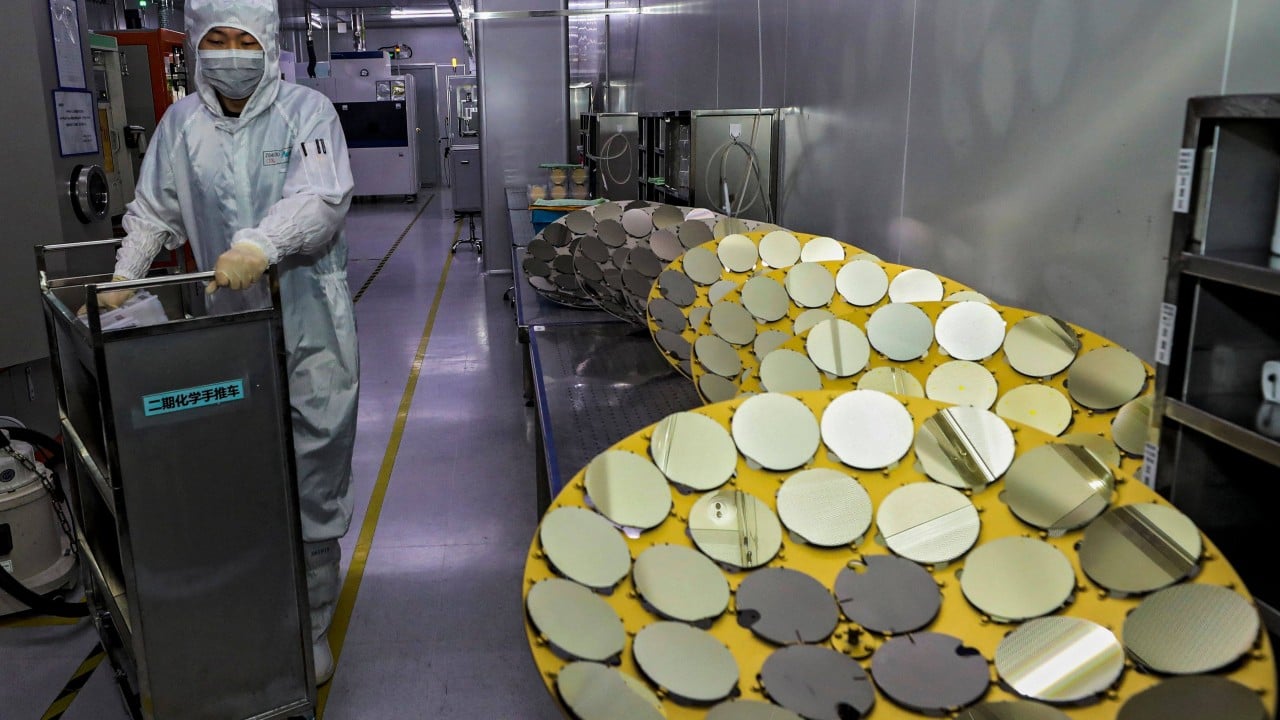
💡US escalates chip curbs on China with allies—critical for AI hardware supply risks.
⚡ 30-Second TL;DR
What Changed
Republican Rep. Michael Baumgartner introduced the Multilateral Alignment of Technology Controls in Hardware (Match) Act last week
Why It Matters
This policy could tighten global AI chip supply chains, raising costs and delays for hardware procurement. AI firms may need to explore alternative suppliers outside restricted ecosystems.
What To Do Next
Assess your GPU supply chain for exposure to Dutch/Japanese chip tools and plan diversification.
Key Points
- •Republican Rep. Michael Baumgartner introduced the Multilateral Alignment of Technology Controls in Hardware (Match) Act last week
- •Targets critical gaps in export controls on advanced chipmaking equipment
- •Pushes allies Netherlands and Japan to match US restrictions on China
- •Escalates Washington's efforts to curb China's semiconductor ambitions
🧠 Deep Insight
AI-generated analysis for this event — not the original article.
🔑 Enhanced Key Takeaways
- •The Match Act proposes the creation of a 'Multilateral Technology Control Fund' to provide financial incentives or compensation to allied firms in the Netherlands and Japan that suffer revenue losses due to compliance with US-led export restrictions.
- •The legislation specifically targets 'legacy' or 'mature' node semiconductor equipment (above 28nm), aiming to close loopholes that allowed Chinese firms to bypass restrictions on advanced nodes by repurposing older equipment for high-volume production.
- •The bill includes a 'secondary sanctions' provision that would authorize the US Treasury to restrict access to the US financial system for foreign entities that knowingly facilitate the transfer of restricted chipmaking technology to Chinese military-linked firms.
🔮 Future ImplicationsAI analysis grounded in cited sources
⏳ Timeline
Weekly AI Recap
Read this week's curated digest of top AI events →
👉Related Updates

AI-curated news aggregator. All content rights belong to original publishers.
Original source: SCMP Technology ↗
This is a summary, not the original. Read the source, or get the weekly briefing.
The weekly digest
One email a week. Unsubscribe anytime.