US ban on Chinese AI models could cost $12B annually
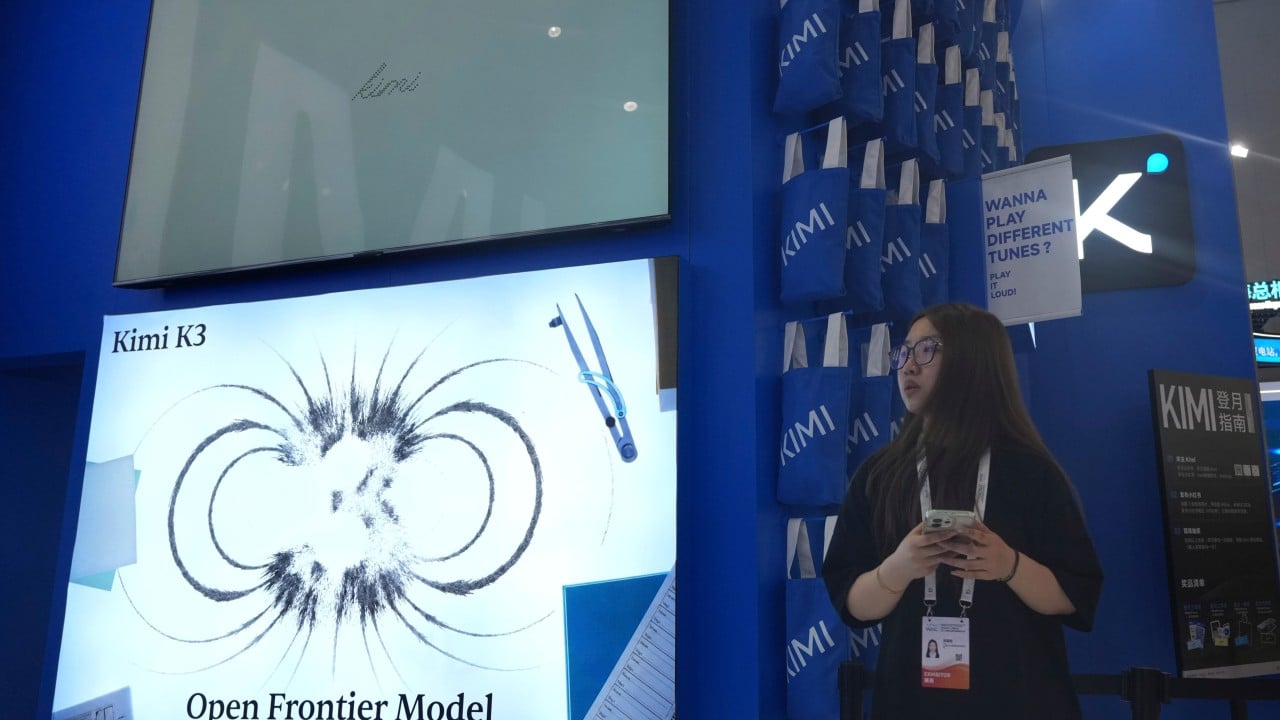
Understand the economic risks of relying on Chinese AI models amidst potential US regulatory shifts.
30-Second TL;DR
What Changed
Potential US ban on Chinese AI models estimated to cost $12 billion per year.
Why It Matters
Regulatory uncertainty regarding Chinese AI models could force US companies to diversify their model infrastructure to avoid sudden service disruptions.
What To Do Next
Diversify your model provider strategy by integrating non-Chinese alternatives into your fallback logic to mitigate regulatory risk.
Key Points
- •Potential US ban on Chinese AI models estimated to cost $12 billion per year.
- •US businesses are increasingly adopting cost-efficient Chinese LLMs for production.
- •Usage data from OpenRouter indicates significant integration of Chinese models in US workflows.
Deep Insight
AI-generated analysis for this event — not the original article.
Enhanced Key Takeaways
- •The proposed restrictions are reportedly part of a broader US Department of Commerce initiative to tighten export controls on dual-use AI technologies, specifically targeting models with capabilities exceeding certain compute thresholds.
- •Industry analysts note that Chinese models like Qwen (Alibaba) and DeepSeek have gained traction due to their high performance-to-cost ratio, often outperforming similarly sized Western open-weight models in coding and mathematical benchmarks.
- •The $12 billion figure accounts for both the direct costs of switching to more expensive US-based proprietary APIs and the indirect productivity losses associated with retraining workflows optimized for Chinese model architectures.
- •OpenRouter data suggests that a significant portion of the US-based traffic to Chinese models originates from startups and independent developers who lack the capital to access high-end enterprise-grade US models.
- •Legal experts warn that enforcing a ban on open-weight models is technically complex, as these models can be distributed via decentralized platforms and peer-to-peer networks, making traditional IP-based enforcement difficult.
Competitor Analysis
- Chinese Open-Weight (e.g., Qwen/DeepSeek)
- Extremely Low (High efficiency)
- US Proprietary (e.g., GPT-4o/Claude 3.5)
- High (Per-token pricing)
- US Open-Weight (e.g., Llama 3.1)
- Moderate (Hosting costs)
- Chinese Open-Weight (e.g., Qwen/DeepSeek)
- Open-weights / Self-hostable
- US Proprietary (e.g., GPT-4o/Claude 3.5)
- API-only (Closed)
- US Open-Weight (e.g., Llama 3.1)
- Open-weights / Self-hostable
- Chinese Open-Weight (e.g., Qwen/DeepSeek)
- Competitive in Math/Coding
- US Proprietary (e.g., GPT-4o/Claude 3.5)
- State-of-the-art (General)
- US Open-Weight (e.g., Llama 3.1)
- State-of-the-art (General)
- Chinese Open-Weight (e.g., Qwen/DeepSeek)
- High regulatory risk in US
- US Proprietary (e.g., GPT-4o/Claude 3.5)
- Fully compliant
- US Open-Weight (e.g., Llama 3.1)
- Fully compliant
| Feature | Chinese Open-Weight (e.g., Qwen/DeepSeek) | US Proprietary (e.g., GPT-4o/Claude 3.5) | US Open-Weight (e.g., Llama 3.1) |
|---|---|---|---|
| Cost | Extremely Low (High efficiency) | High (Per-token pricing) | Moderate (Hosting costs) |
| Accessibility | Open-weights / Self-hostable | API-only (Closed) | Open-weights / Self-hostable |
| Performance | Competitive in Math/Coding | State-of-the-art (General) | State-of-the-art (General) |
| Compliance | High regulatory risk in US | Fully compliant | Fully compliant |
Technical Deep Dive
- Chinese models like Qwen-Max and DeepSeek-V3 utilize Mixture-of-Experts (MoE) architectures to optimize inference costs while maintaining high parameter counts.
- Many of these models are trained using specialized hardware optimization techniques that allow for efficient execution on consumer-grade GPUs, facilitating their popularity among independent developers.
- Integration typically occurs via API gateways like OpenRouter, which normalize requests across diverse model backends, masking the origin of the model from the end-user application.
- The models often employ unique tokenization strategies optimized for multilingual support, which sometimes leads to higher efficiency in non-English coding tasks compared to standard Western tokenizers.
Future ImplicationsAI analysis grounded in cited sources
Timeline
- 2024-03Alibaba releases Qwen1.5, significantly increasing the visibility of Chinese open-weight models in global developer communities.
- 2024-12DeepSeek-V3 gains widespread attention for achieving state-of-the-art performance benchmarks at a fraction of the cost of US-based models.
- 2025-05US Department of Commerce begins formal inquiries into the security implications of foreign-developed open-weight AI models.
- 2026-02Industry reports highlight a 40% increase in US-based traffic to Chinese AI model endpoints via third-party aggregators.
Weekly AI Recap
Read this week's curated digest of top AI events →
Related Updates



AI-curated news aggregator. All content rights belong to original publishers.
Original source: SCMP Technology ↗
This is a summary, not the original. Read the source, or get the weekly briefing.
The weekly digest
One email a week. Unsubscribe anytime.