U.S. Automakers Seek Permanent China Car Ban
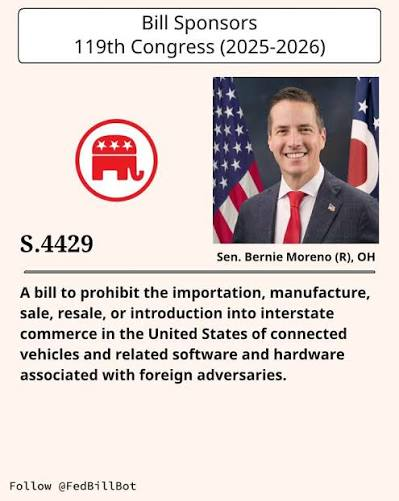
💡A potential U.S. ban could redefine compliance requirements for autonomous-driving and connected-vehicle AI systems.
⚡ 30-Second TL;DR
What Changed
The Alliance for Automotive Innovation asked Congress to enact a permanent ban before the 119th Congress ends.
Why It Matters
A permanent ban would reshape the automotive software and hardware supply chain, especially for autonomous-driving, vehicle telemetry, cloud services, and over-the-air update providers. AI companies serving automotive customers may need to prove vendor ownership, data handling, and remote-access controls to remain eligible for the U.S. market.
What To Do Next
Audit your automotive AI stack for China- or Russia-linked software, hardware, cloud, telemetry, and remote-control dependencies before supporting U.S. vehicle deployments.
Key Points
- •The Alliance for Automotive Innovation asked Congress to enact a permanent ban before the 119th Congress ends.
- •The proposed restrictions cover connected-vehicle software, communications hardware, autonomous-driving software, and manufacturers linked to China or Russia.
- •The alliance cites national security, subsidies, unfair trade, supply-chain control, and possible access to sensitive vehicle and consumer data.
- •The article highlights a gap between technical capability or potential risk and publicly verified evidence of data transmission.
- •Existing U.S. Commerce Department rules begin restricting affected connected-vehicle systems from model year 2027.
Weekly AI Recap
Read this week's curated digest of top AI events →
👉Related Updates



AI-curated news aggregator. All content rights belong to original publishers.
Original source: 虎嗅 ↗
This is a summary, not the original. Read the source, or get the weekly briefing.
Weekly AI briefing
One email a week. Unsubscribe anytime.