US Accuses China of Massive AI Distillation
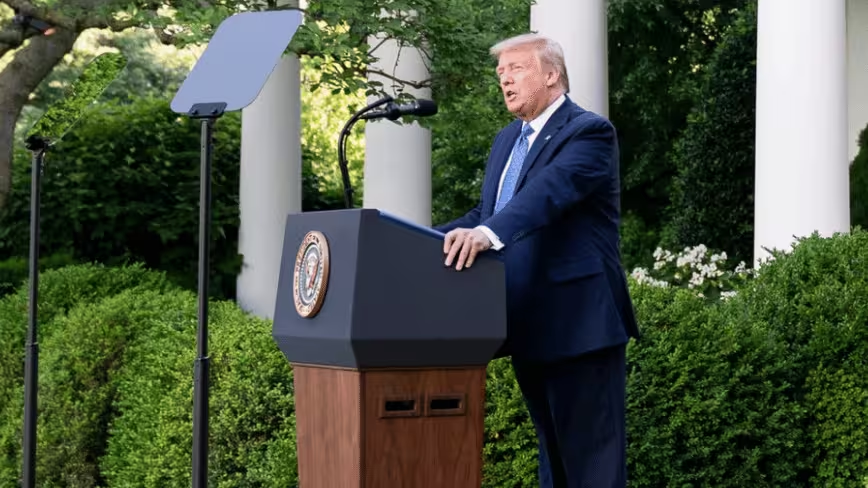
💡US intel sharing vs China distillation threats—protect your models now
⚡ 30-Second TL;DR
What Changed
White House accuses China of industrial-scale model distillation
Why It Matters
Escalates US-China AI tensions, prompting protective measures for model IP. US AI firms gain intel edge, but practitioners face rising scrutiny on model access and distillation risks.
What To Do Next
Implement rate-limiting and anomaly detection on your API to block distillation attempts.
Key Points
- •White House accuses China of industrial-scale model distillation
- •Intelligence sharing with OpenAI, Anthropic, Google
- •OpenAI accused DeepSeek of distillation in February
- •Anthropic: 24K fake accounts generated 16M+ tokens
- •Exploring accountability measures
🧠 Deep Insight
AI-generated analysis for this event — not the original article.
🔑 Enhanced Key Takeaways
- •The White House OSTP memo specifically identifies 'model distillation' as a national security threat, framing the unauthorized extraction of weights and training data as a form of intellectual property theft that undermines US AI leadership.
- •The intelligence-sharing framework, dubbed the 'AI Security Information Exchange,' establishes a formal pipeline for private AI labs to report anomalous API usage patterns directly to the Department of Commerce and the FBI.
- •Industry experts note that the 16 million tokens generated by Anthropic's flagged accounts were specifically designed to probe the model's 'system prompt' and safety guardrails, suggesting an intent to reverse-engineer proprietary alignment techniques.
🔮 Future ImplicationsAI analysis grounded in cited sources
⏳ Timeline
Weekly AI Recap
Read this week's curated digest of top AI events →
👉Related Updates
AI-curated news aggregator. All content rights belong to original publishers.
Original source: The Next Web (TNW) ↗
This is a summary, not the original. Read the source, or get the weekly briefing.
The weekly digest
One email a week. Unsubscribe anytime.