Unitree’s Humanoid Valuation Sparks Investor Frenzy
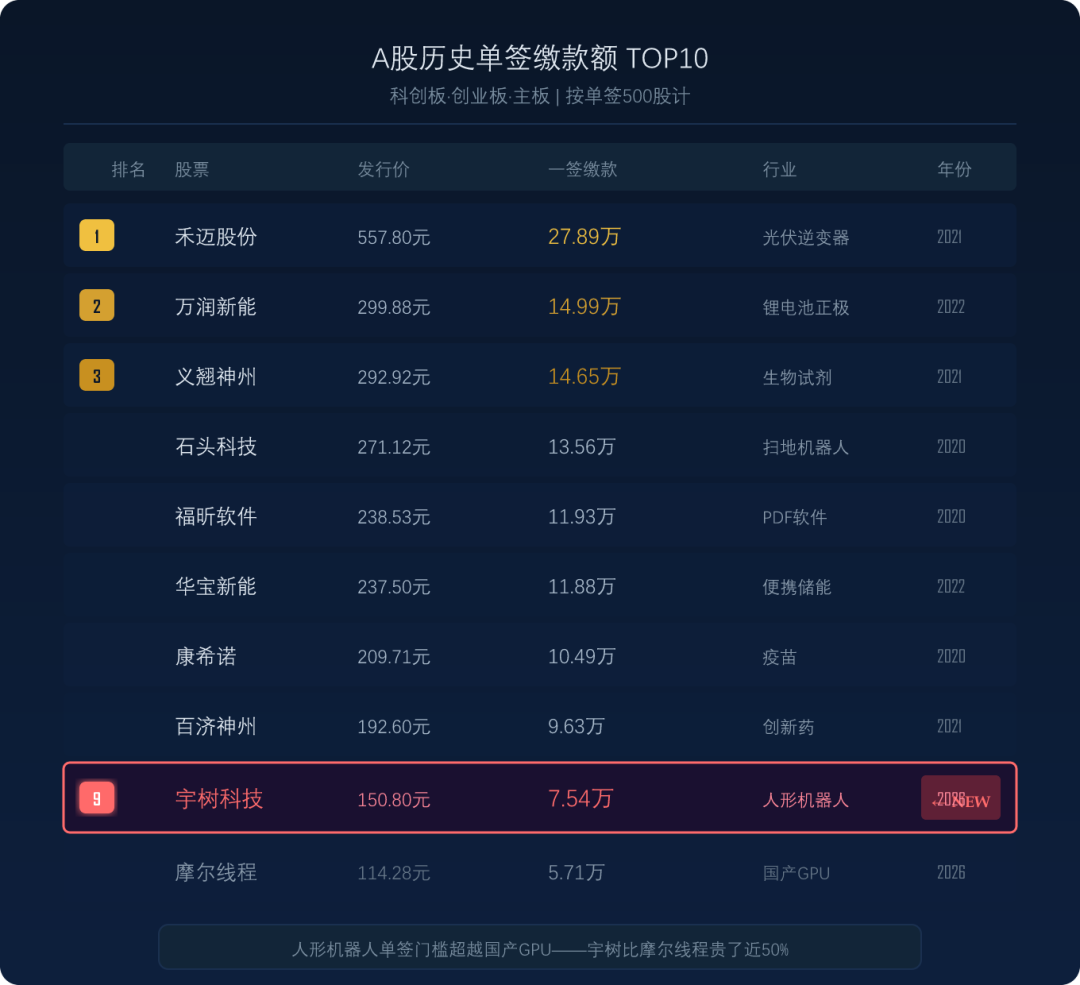
Unitree’s reported valuation shows why humanoid robots are becoming a central AI investment battleground.
30-Second TL;DR
What Changed
Institutional investors are reportedly competing for access to Unitree Technology.
Why It Matters
Strong funding demand could accelerate Unitree’s hardware development, manufacturing scale, and embodied-AI deployment. For AI founders, it also signals that competition may increasingly center on physical agents and robot data, not only GPUs and language models.
What To Do Next
Benchmark Unitree’s available robot SDK and teleoperation interfaces before choosing a humanoid platform for embodied-AI experiments.
Key Points
- •Institutional investors are reportedly competing for access to Unitree Technology.
- •A single investment allocation is described as costing 75,000 yuan.
- •The reported valuation reaches 60.9 billion yuan, underscoring strong market expectations for humanoid robotics.
Deep Insight
AI-generated analysis for this event — not the original article.
Enhanced Key Takeaways
- •Unitree's valuation surge is largely driven by the commercial success of its G1 and H1 humanoid models, which are positioned as affordable, mass-producible solutions compared to legacy research platforms.
- •The company has successfully transitioned from a quadruped-focused robotics firm to a leader in embodied AI, leveraging its proprietary joint motor technology to reduce hardware costs significantly.
- •Unitree has established strategic partnerships with major Chinese manufacturing and automotive firms to pilot humanoid robots in factory assembly lines, moving beyond lab environments.
- •The 60.9 billion yuan valuation reflects a shift in investor sentiment toward 'hardware-as-a-service' models, where Unitree provides both the robot and the underlying AI training platform.
- •Despite the high valuation, industry analysts note that Unitree faces significant challenges in scaling production and achieving long-term reliability in unstructured real-world environments.
Competitor Analysis
- Unitree (G1/H1)
- Cost-effective mass production
- Tesla (Optimus)
- Full autonomy/FSD integration
- Figure AI
- General-purpose labor
- Sanctuary AI
- Teleoperation/AI training
- Unitree (G1/H1)
- Accessible/Developer-friendly
- Tesla (Optimus)
- Consumer/Industrial scale
- Figure AI
- Industrial/Commercial
- Sanctuary AI
- Industrial/Logistics
- Unitree (G1/H1)
- Proprietary low-cost actuators
- Tesla (Optimus)
- Massive data/compute scale
- Figure AI
- OpenAI partnership
- Sanctuary AI
- Human-in-the-loop training
| Feature | Unitree (G1/H1) | Tesla (Optimus) | Figure AI | Sanctuary AI |
|---|---|---|---|---|
| Primary Focus | Cost-effective mass production | Full autonomy/FSD integration | General-purpose labor | Teleoperation/AI training |
| Market Positioning | Accessible/Developer-friendly | Consumer/Industrial scale | Industrial/Commercial | Industrial/Logistics |
| Key Advantage | Proprietary low-cost actuators | Massive data/compute scale | OpenAI partnership | Human-in-the-loop training |
Technical Deep Dive
- Actuator Technology: Utilizes high-torque-density joint motors developed in-house, enabling high-speed movement and impact resistance.
- Control Architecture: Employs reinforcement learning (RL) combined with traditional whole-body control (WBC) to handle complex terrain and dynamic balancing.
- Sensing Suite: Integrates 3D LiDAR and depth cameras for real-time SLAM and obstacle avoidance, optimized for low-latency processing.
- Embodied AI: The platform supports integration with large multimodal models (LMMs) to enable natural language instruction following and task planning.
Future ImplicationsAI analysis grounded in cited sources
Timeline
- 2017-08Unitree Robotics is founded by Wang Xingxing, focusing initially on quadruped robots.
- 2023-08Unitree officially unveils the H1, its first general-purpose humanoid robot.
- 2024-05Unitree releases the G1 humanoid, targeting a lower price point for mass-market adoption.
- 2025-03Unitree announces significant funding rounds to expand its humanoid production capacity.
Event Coverage
Weekly AI Recap
Read this week's curated digest of top AI events →
AI-curated news aggregator. All content rights belong to original publishers.
Original source: 钛媒体 ↗
This is a summary, not the original. Read the source, or get the weekly briefing.
The weekly digest
One email a week. Unsubscribe anytime.