Unitree IPO with 1:10 Voting Rights
💡Robotics leader Unitree locks founder control via voting rights—key for AI IPOs
⚡ 30-Second TL;DR
What Changed
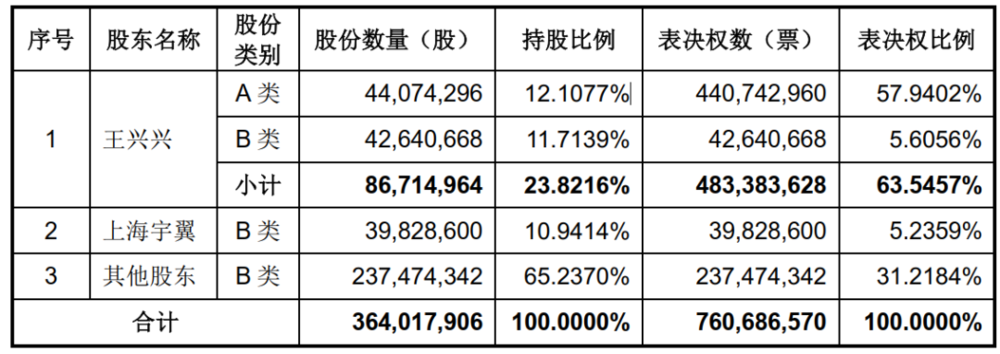
Wang holds 24% shares but 68% votes pre-IPO via A-shares and affiliates
Why It Matters
Enables long-term focus in capital-intensive robotics amid dilution; model for AI/robotics founders balancing control and fundraising.
What To Do Next
Review Unitree's prospectus for dual-class lessons before your robotics startup IPO.
Key Points
- •Wang holds 24% shares but 68% votes pre-IPO via A-shares and affiliates
- •A-shares: 10x votes except charters/independent directors; no new issuance post-IPO
- •Converts to B-shares on death/resignation/control change; annual 10% dividend promise
🧠 Deep Insight
AI-generated analysis for this event — not the original article.
🔑 Enhanced Key Takeaways
- •Unitree's IPO strategy mirrors the 'Weighted Voting Rights' (WVR) structures commonly utilized by Chinese tech firms listed in Hong Kong, designed to protect founder-led long-term R&D cycles in capital-intensive sectors.
- •The 10% annual dividend promise for A-share holders is a rare governance mechanism intended to mitigate potential agency costs arising from the significant wedge between Wang Xingxing's voting power and economic interest.
- •Market analysts suggest this structure is a direct response to the intense capital requirements of scaling humanoid robotics production, aiming to prevent short-term investor pressure from derailing the company's 'Embodied AI' roadmap.
📊 Competitor Analysis▸ Show
| Feature | Unitree (G1/H1) | Boston Dynamics (Atlas) | Tesla (Optimus) |
|---|---|---|---|
| Primary Market | Commercial/Industrial | R&D/Industrial | Internal/Automotive |
| Pricing Strategy | Aggressive/Low-cost | Premium/High-end | N/A (Internal) |
| Key Benchmark | High torque-to-weight ratio | Hydraulic/Electric hybrid | AI-first integration |
🛠️ Technical Deep Dive
- •Unitree's core architecture utilizes proprietary high-torque density joint motors, enabling high-frequency dynamic balance control.
- •The control stack integrates Reinforcement Learning (RL) for locomotion, transitioning toward end-to-end 'Embodied AI' models for manipulation tasks.
- •Hardware design emphasizes modularity, allowing for rapid iteration between the G1 (general-purpose) and H1 (industrial) platforms.
- •The software ecosystem supports a simulation-to-reality (Sim2Real) pipeline, significantly reducing the time required for training new motor skills.
🔮 Future ImplicationsAI analysis grounded in cited sources
⏳ Timeline
📰 Event Coverage
Weekly AI Recap
Read this week's curated digest of top AI events →
👉Related Updates

AI-curated news aggregator. All content rights belong to original publishers.
Original source: 虎嗅 ↗
This is a summary, not the original. Read the source, or get the weekly briefing.
Weekly AI briefing
One email a week. Unsubscribe anytime.