Uni Cuts 16 Majors for AI Education Shift
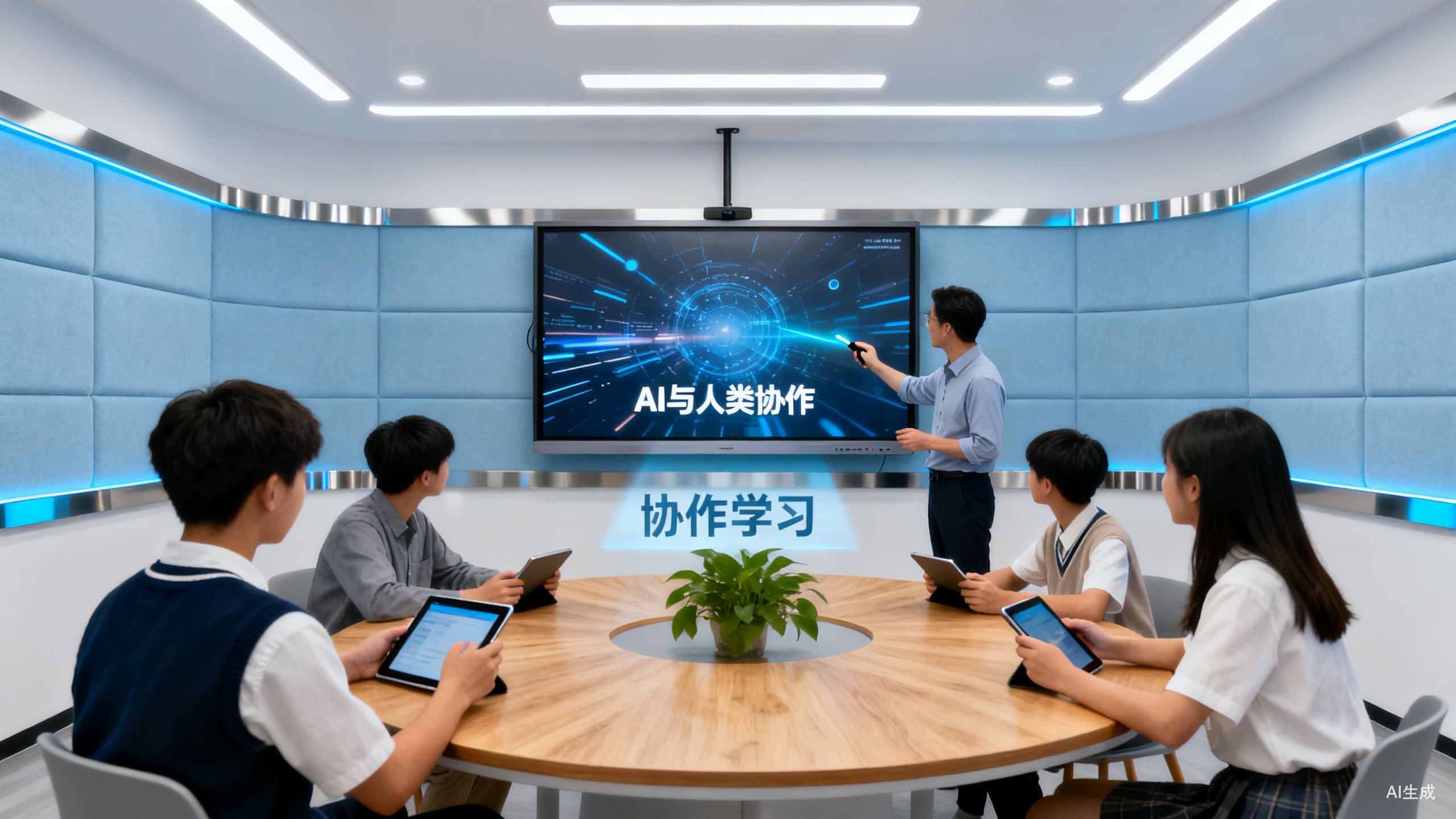
💡Reveals AI-driven curriculum overhaul; rethink your team's skill training now
⚡ 30-Second TL;DR
What Changed
Cuts majors vulnerable to AI automation to reallocate resources.
Why It Matters
Accelerates global education reform, prioritizing human-AI synergy over obsolete skills training.
What To Do Next
Design a media course integrating AI tools for cultural translation challenges.
Key Points
- •Cuts majors vulnerable to AI automation to reallocate resources.
- •Shifts teaching from skills to AI collaboration and problem-solving.
- •Redefines teachers as facilitators in project-based, AI-augmented learning.
🧠 Deep Insight
Background and context from public sources — not the original article. 5 sources cited.
🔑 Enhanced Key Takeaways
- •China's higher education system is undergoing a nationwide, systematic overhaul through the '101 Plan' (launched 2021 for computer science, expanded to 9 disciplines by 2025) that prioritizes AI, mathematics, physics, and chemistry alongside vocational education reforms, with universities already cutting thousands of underperforming programs while creating new ones in strategic fields like integrated circuits, humanoid robotics, and autonomous driving.[1][4][5]
- •Primary and secondary schools across China have mandated AI education as core curriculum—students as young as six learn AI literacy with a laddered approach (10+ hours annually), while high school students design AI systems and intelligent agents, reflecting a policy-backed nationwide strategy adopted by Beijing and Guangdong provinces since 2024.[3]
- •Leading universities including Tsinghua, Fudan, and Zhejiang have established interdisciplinary AI programs with integrated 'AI+X' curricula across all majors; Zhejiang created China's first interdisciplinary AI program in 2019 and published 27 'AI+X' textbooks, while Fudan made AI literacy a requirement across all undergraduate and postgraduate disciplines.[1][2]
- •China's digital education development ranking surged from 24th globally in 2023 to 6th in 2025, driven by a national e-platform offering 1,000+ AI courses and training 500,000 teachers and students from 2,000 universities, with 1.31 million undergraduate graduates completing comprehensive AI application training.[2]
- •The ministry's three-year higher education reform (announced early 2026) includes building a national big data platform to track real-time labor market demand and align university programs with emerging sectors, addressing the long-standing gap between existing degree programs and workforce needs.[4]
🔮 Future ImplicationsAI analysis grounded in cited sources
⏳ Timeline
📎 Sources (5)
Factual claims are grounded in the sources below. Forward-looking analysis is AI-generated interpretation.
Weekly AI Recap
Read this week's curated digest of top AI events →
👉Related Updates
AI-curated news aggregator. All content rights belong to original publishers.
Original source: 虎嗅 ↗
This is a summary, not the original. Read the source, or get the weekly briefing.
Weekly AI briefing
One email a week. Unsubscribe anytime.