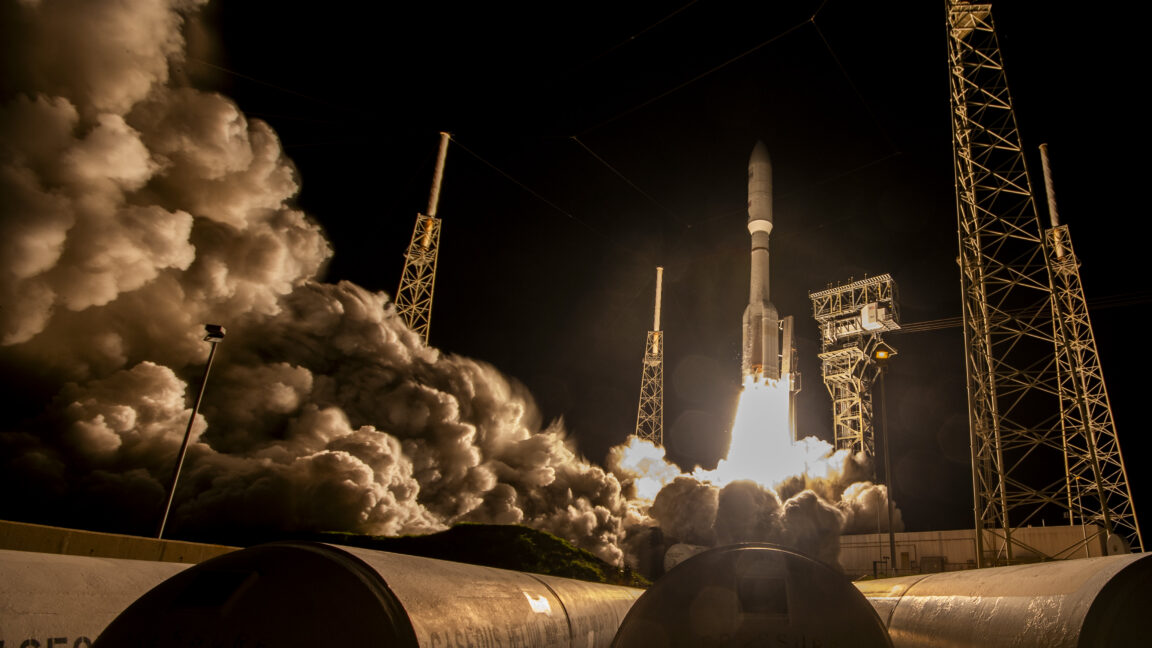
ULA's Atlas V restricted to Boeing Starliner missions
💡Understand how launch vehicle supply constraints impact the deployment of satellite-based AI and broadband infrastructur
⚡ 30-Second TL;DR
What Changed
ULA has only six Atlas V rockets remaining in its inventory.
Why It Matters
The reduction in available launch capacity for non-Starliner payloads may force satellite operators to seek alternative launch providers. This highlights the tightening supply chain for heavy-lift launch vehicles in the aerospace sector.
What To Do Next
If you are building space-based AI infrastructure, re-evaluate your launch manifest and consider diversifying launch providers to mitigate supply chain risks.
Key Points
- •ULA has only six Atlas V rockets remaining in its inventory.
- •These final units are contractually and operationally dedicated to Boeing's Starliner program.
- •The restriction prevents these rockets from being utilized for other commercial satellite launches.
🧠 Deep Insight
AI-generated analysis for this event — not the original article.
🔑 Enhanced Key Takeaways
- •The Atlas V retirement marks the end of the RD-180 engine era for ULA, as the company transitions entirely to the Vulcan Centaur launch vehicle.
- •Boeing's Starliner program has faced significant delays and cost overruns, necessitating the extension of the Atlas V manifest to ensure the completion of crewed flight test objectives.
- •ULA ceased selling Atlas V launches to commercial customers years ago, focusing instead on fulfilling existing national security and NASA contracts.
- •The final six Atlas V rockets are specifically configured with the dual-engine Centaur upper stage, which is required for the human-rating safety profile of the Starliner spacecraft.
- •The transition to Vulcan Centaur is critical for ULA's long-term competitiveness, as the Atlas V's reliance on Russian-made engines became a geopolitical and supply chain liability.
📊 Competitor Analysis▸ Show
| Feature | ULA Atlas V | SpaceX Falcon 9 | Blue Origin New Glenn |
|---|---|---|---|
| Reusability | None | First Stage / Fairings | First Stage (Planned) |
| Engine | RD-180 (Russian) | Merlin 1D | BE-4 |
| Status | Retiring | Operational | Operational/Testing |
| Primary Market | Gov/National Security | Commercial/Gov/Starlink | Commercial/Gov |
🛠️ Technical Deep Dive
- Launch Vehicle: Atlas V (412 or 422 configuration typically used for Starliner).
- Propulsion: RD-180 liquid-fueled rocket engine (first stage) burning RP-1 and liquid oxygen.
- Upper Stage: Centaur with RL10 engines, providing high-energy performance for orbital insertion.
- Human Rating: Includes Emergency Detection System (EDS) to monitor vehicle health and trigger abort sequences.
- Payload Fairing: Not utilized for Starliner; replaced by the spacecraft adapter and aerodynamic aeroshell.
🔮 Future ImplicationsAI analysis grounded in cited sources
⏳ Timeline
Weekly AI Recap
Read this week's curated digest of top AI events →
👉Related Updates


AI-curated news aggregator. All content rights belong to original publishers.
Original source: Ars Technica ↗
This is a summary, not the original. Read the source, or get the weekly briefing.
Weekly AI briefing
One email a week. Unsubscribe anytime.