EU and US tax changes disrupt cross-border logistics
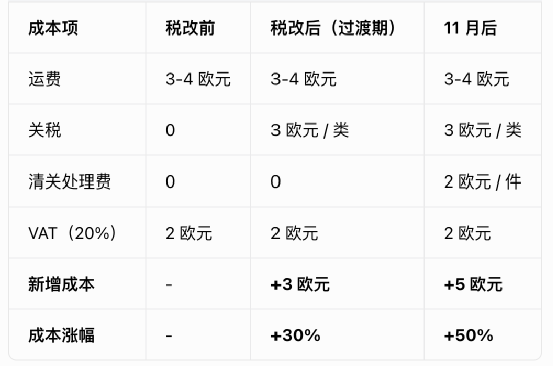
💡Learn how regulatory shifts are forcing a massive infrastructure pivot in the global e-commerce logistics industry.
⚡ 30-Second TL;DR
What Changed
EU eliminated tax exemptions for packages under 150 EUR; US closed T86 tax-free channels.
Why It Matters
The industry is undergoing a structural shift where compliance and local fulfillment capabilities are becoming the primary competitive moats.
What To Do Next
If developing supply chain AI, prioritize building modules for automated regulatory compliance and real-time tariff calculation.
Key Points
- •EU eliminated tax exemptions for packages under 150 EUR; US closed T86 tax-free channels.
- •Logistics strategy is shifting from direct mail (low cost) to overseas warehousing (high compliance/efficiency).
- •Major platforms like Temu, Shein, and AliExpress are aggressively expanding overseas warehouse capacity.
- •Logistics providers are upgrading systems for automated tax calculation and HS code matching to ensure compliance.
🧠 Deep Insight
AI-generated analysis for this event — not the original article.
🔑 Enhanced Key Takeaways
- •The EU's 'Import One-Stop Shop' (IOSS) system has been updated to mandate stricter VAT collection at the point of sale for all e-commerce imports, effectively removing the administrative loophole previously used by low-value consignments.
- •US Customs and Border Protection (CBP) has implemented 'Section 321' data-sharing requirements that force logistics providers to provide granular item-level data, significantly increasing the cost of processing individual direct-mail parcels.
- •Logistics providers are increasingly adopting 'bonded warehouse' models in the US to defer duty payments until the final sale, mitigating the cash flow impact of the new tax environment.
- •The shift toward overseas warehousing is driving a surge in demand for 'last-mile' delivery partnerships with local carriers like USPS, UPS, and FedEx, as cross-border providers seek to leverage existing domestic networks.
- •AI-driven 'HS Code Classification Engines' are now being integrated into ERP systems to reduce the risk of customs penalties, which have risen by an estimated 30% for non-compliant cross-border shipments since 2025.
📊 Competitor Analysis▸ Show
| Feature | Direct Mail (Legacy) | Overseas Warehousing (Current) | Compliance-Heavy Systems |
|---|---|---|---|
| Cost Structure | Low (Tax Exempt) | High (Storage/Labor) | Moderate (Tech/Fees) |
| Delivery Speed | 10-15 Days | 1-3 Days | 2-5 Days |
| Compliance Risk | Very High | Low | Very Low |
| Scalability | Limited by Customs | High | High |
🛠️ Technical Deep Dive
- Implementation of Automated HS Code Classification: Uses Natural Language Processing (NLP) to analyze product descriptions and images against the Harmonized System database to ensure accurate duty assessment.
- API-First Customs Integration: Logistics providers are deploying RESTful APIs that connect directly to government customs portals (e.g., EU's IOSS, US ACE) to facilitate real-time duty calculation and payment.
- Predictive Inventory Placement: Machine learning models analyze regional demand patterns to optimize stock distribution across multiple overseas warehouses, reducing last-mile transit times and costs.
- Blockchain for Provenance: Some high-end logistics providers are testing distributed ledger technology to provide immutable audit trails for origin verification, which is increasingly required for tariff compliance.
🔮 Future ImplicationsAI analysis grounded in cited sources
⏳ Timeline
Weekly AI Recap
Read this week's curated digest of top AI events →
👉Related Updates


AI-curated news aggregator. All content rights belong to original publishers.
Original source: 虎嗅 ↗
This is a summary, not the original. Read the source, or get the weekly briefing.
The weekly digest
One email a week. Unsubscribe anytime.