Ukraine Speeds Up Battlefield Robot Deployment
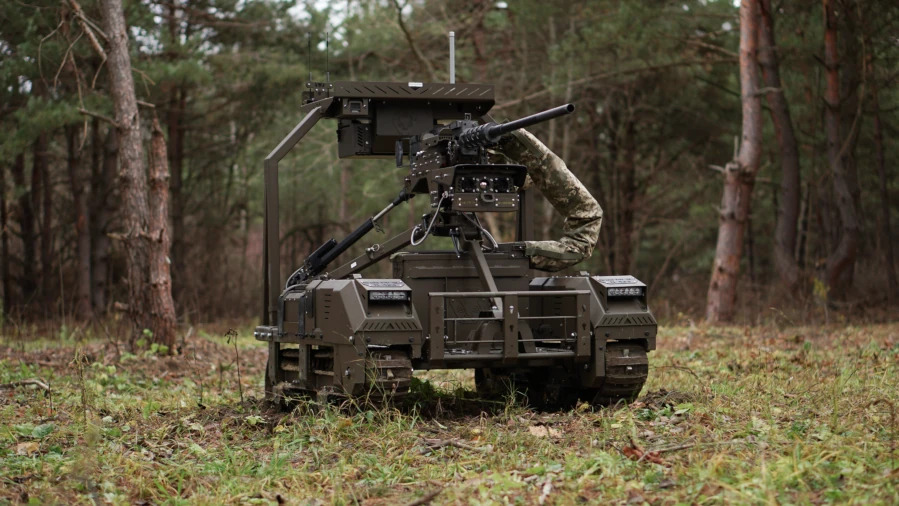
Ukraine's robot warfare debut: key lessons for embodied AI in high-risk ops
30-Second TL;DR
What Changed
Acceleration of ground robot deployment by Ukrainian army
Why It Matters
Advances embodied AI in combat, offering data for global militaries on robot-drone swarms. Could accelerate civilian robotics for hazardous environments like disaster response.
What To Do Next
Simulate robot-drone coordination in ROS2 for autonomous navigation testing.
Key Points
- •Acceleration of ground robot deployment by Ukrainian army
- •Human-robot hybrid to reduce drone risks to soldiers
- •Zelensky's claim: robots/drones forced Russian surrenders (unverified)
- •Provides real-world sample for dangerous task automation
Deep Insight
AI-generated analysis for this event — not the original article.
Enhanced Key Takeaways
- •The deployment focuses on multi-purpose UGV (Unmanned Ground Vehicle) platforms, such as the 'Ratel S' and 'Ironclad', which are increasingly integrated with Starlink terminals for low-latency remote operation.
- •Ukrainian defense startups are shifting from prototype testing to mass production, utilizing modular chassis designs that allow for rapid swapping of payloads between mine-laying, casualty evacuation, and direct-fire weapon systems.
- •The integration of AI-driven target recognition software is being tested to assist operators in identifying enemy positions, aiming to overcome signal interference and electronic warfare (EW) jamming common in the theater.
Technical Deep Dive
- •Platform Architecture: Modular, tracked or wheeled chassis designed for high-mobility off-road navigation.
- •Communication: Dual-link systems combining encrypted radio frequency (RF) for short-range and Starlink/LTE for long-range, high-bandwidth data transmission.
- •Payload Versatility: Systems support interchangeable modules including anti-tank mines, remote-controlled machine gun turrets (e.g., Shablya), and medical stretchers for CASEVAC.
- •Autonomy Levels: Currently operating at Level 2-3 (Remote control with basic waypoint navigation and obstacle avoidance), with ongoing R&D into autonomous swarm coordination.
Future ImplicationsAI analysis grounded in cited sources
Timeline
- 2023-05Initial deployment of Ratel S kamikaze ground drones for anti-tank operations.
- 2023-12Official introduction of the Ironclad UGV equipped with a remote-controlled turret.
- 2024-04Establishment of the Brave1 defense cluster to accelerate the procurement and testing of robotic systems.
- 2025-09First documented large-scale integration of UGVs into infantry platoons for combined-arms maneuvers.
Weekly AI Recap
Read this week's curated digest of top AI events →
Related Updates

AI-curated news aggregator. All content rights belong to original publishers.
Original source: cnBeta (Full RSS) ↗
This is a summary, not the original. Read the source, or get the weekly briefing.
The weekly digest
One email a week. Unsubscribe anytime.