UK Navy pivots to autonomous drone-command fleet
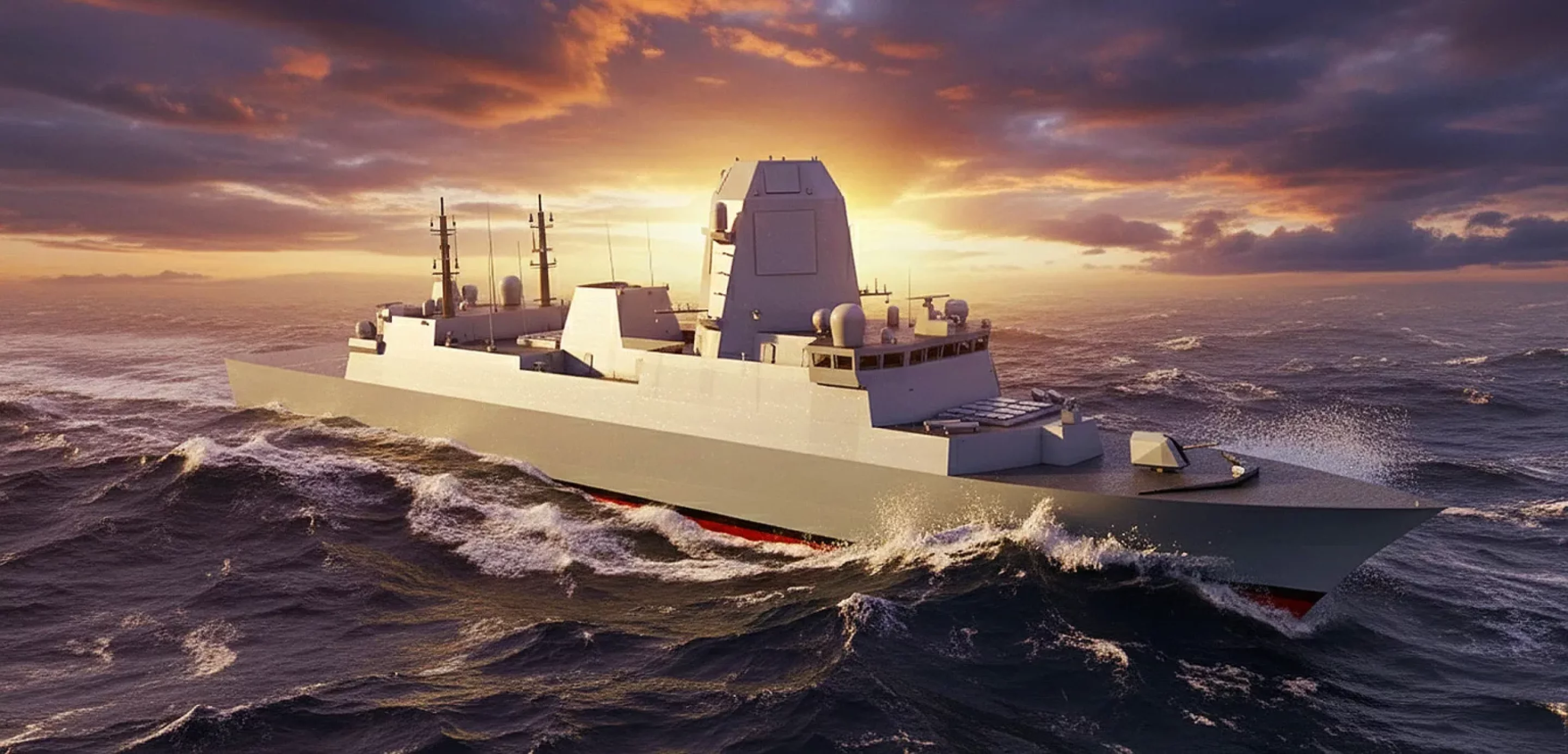
💡Military shift toward autonomous drone command hubs highlights emerging opportunities for AI swarm control software.
⚡ 30-Second TL;DR
What Changed
Cancellation of the Type 83 destroyer program
Why It Matters
This signals a major shift in military doctrine toward AI-integrated autonomous systems, increasing demand for edge computing and swarm intelligence in maritime defense.
What To Do Next
Explore military-grade edge AI frameworks and swarm coordination protocols for potential defense sector partnerships.
Key Points
- •Cancellation of the Type 83 destroyer program
- •Construction of at least six Common Combat Vessels (CCV)
- •Shift toward autonomous drone-centric naval warfare
- •CCVs will act as command hubs for unmanned systems
🧠 Deep Insight
AI-generated analysis for this event — not the original article.
🔑 Enhanced Key Takeaways
- •The CCV program is designed to integrate with the Future Air Dominance System (FADS) to manage swarms of unmanned aerial and underwater vehicles.
- •The shift follows the 'Integrated Review Refresh 2025,' which prioritized modular, scalable naval platforms over traditional, high-cost destroyer hulls.
- •The CCV design incorporates an open-architecture combat system, allowing for rapid software updates to drone control algorithms without requiring dry-dock refits.
- •The UK Ministry of Defence has partnered with BAE Systems and Thales UK to develop the 'Hive-Mind' AI interface that will reside on CCVs for autonomous coordination.
- •The program aims to reduce crew requirements by approximately 40% compared to the legacy Type 45 destroyers, focusing on remote operations and maintenance.
📊 Competitor Analysis▸ Show
| Feature | UK Common Combat Vessel (CCV) | US Navy DDG(X) | Chinese Type 055 Destroyer |
|---|---|---|---|
| Primary Role | Autonomous Command Hub | Multi-Mission Combatant | Heavy Surface Combatant |
| Drone Integration | Native/Centralized | Modular/Add-on | Limited/Traditional |
| Crew Size | Low (Automated) | Medium | High |
| Architecture | Open/Modular | Evolving | Closed/Proprietary |
🛠️ Technical Deep Dive
- Combat Management System: Utilizes a distributed AI-mesh network capable of managing up to 50 concurrent unmanned assets.
- Propulsion: Integrated Electric Propulsion (IEP) system optimized for high-energy output to support directed-energy weapons and drone charging.
- Sensor Suite: Features a multi-static radar array designed to detect low-observable drone signatures and stealthy underwater vehicles.
- Data Link: Employs a secure, low-probability-of-intercept (LPI) satellite and laser-comms backbone for real-time drone telemetry.
🔮 Future ImplicationsAI analysis grounded in cited sources
⏳ Timeline
Weekly AI Recap
Read this week's curated digest of top AI events →
👉Related Updates




AI-curated news aggregator. All content rights belong to original publishers.
Original source: cnBeta (Full RSS) ↗
This is a summary, not the original. Read the source, or get the weekly briefing.
Weekly AI briefing
One email a week. Unsubscribe anytime.