UK deploys flawed facial recognition for asylum age checks
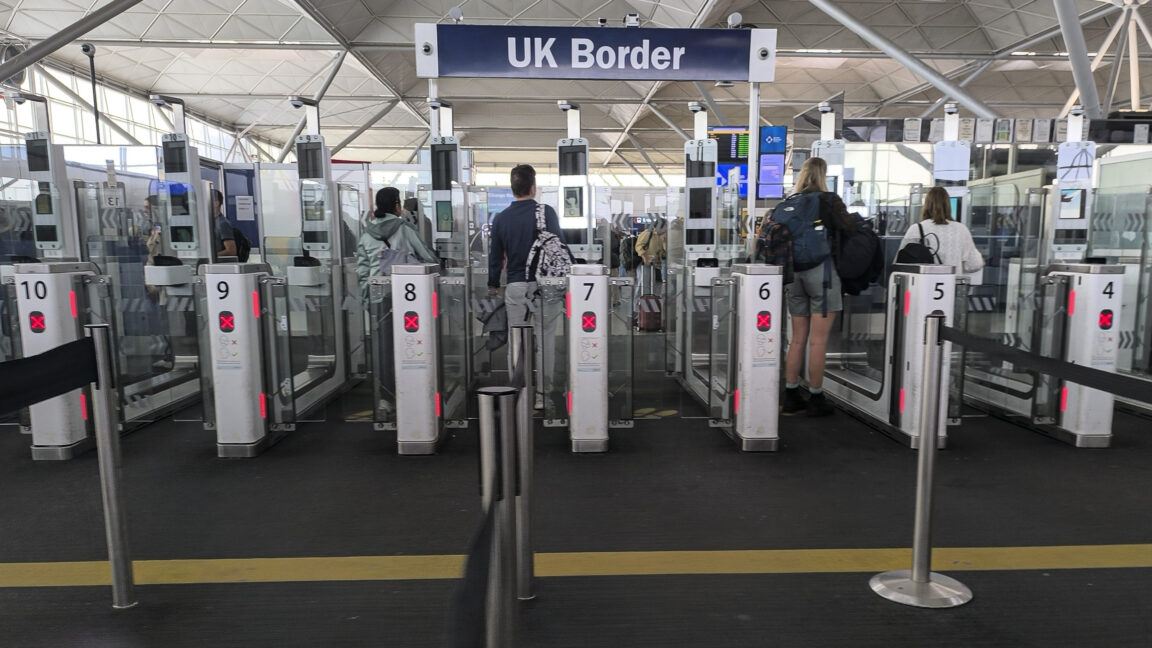
💡A cautionary tale on the ethical risks and failure rates of deploying unproven AI in high-stakes legal environments.
⚡ 30-Second TL;DR
What Changed
UK government is using facial scanning to determine the age of asylum-seekers.
Why It Matters
This case serves as a critical warning for AI practitioners regarding the dangers of 'automation bias' in government and legal sectors. It underscores the necessity for rigorous, transparent validation protocols before deploying AI in life-impacting scenarios.
What To Do Next
If building high-stakes classification models, implement a 'human-in-the-loop' fallback mechanism and publish a transparent error-rate report to mitigate liability.
Key Points
- •UK government is using facial scanning to determine the age of asylum-seekers.
- •Internal tests confirm the technology is prone to significant, life-altering errors.
- •The deployment raises serious concerns regarding algorithmic bias and human rights in public sector AI.
- •Critics argue that relying on flawed AI for legal status decisions is fundamentally unsafe.
🧠 Deep Insight
AI-generated analysis for this event — not the original article.
🔑 Enhanced Key Takeaways
- •The UK Home Office has faced intense scrutiny from the Ada Lovelace Institute and other human rights organizations regarding the lack of transparency in the system's training datasets.
- •Legal challenges have been initiated by advocacy groups arguing that the use of facial analysis for age assessment violates the UK's Equality Act 2010 due to potential racial and ethnic bias.
- •The technology in question is often referred to as 'facial age estimation' rather than 'facial recognition,' as it aims to predict a biological age range rather than identify a specific individual.
- •Government procurement documents indicate that the contract for these services was awarded to private biometric firms without a full public consultation process.
- •Independent scientific reviews commissioned by NGOs have suggested that the margin of error in these systems is significantly higher for individuals from non-European ethnic backgrounds.
🛠️ Technical Deep Dive
- The technology typically utilizes deep convolutional neural networks (CNNs) trained on large-scale datasets of facial images labeled with chronological age.
- Systems often employ a regression-based approach to output a continuous age estimate, which is then binned into categories (e.g., under 18 vs. over 18).
- Implementation involves pre-processing steps such as face alignment, normalization of lighting conditions, and head pose correction to improve estimation accuracy.
- The models are susceptible to 'covariate shift' where the training data distribution (often Western-centric) does not match the demographic distribution of the asylum-seeking population.
- Performance is frequently measured using Mean Absolute Error (MAE), though critics argue this metric obscures the high-variance errors that lead to false positives in age classification.
🔮 Future ImplicationsAI analysis grounded in cited sources
⏳ Timeline
Weekly AI Recap
Read this week's curated digest of top AI events →
👉Related Updates
AI-curated news aggregator. All content rights belong to original publishers.
Original source: Ars Technica ↗
This is a summary, not the original. Read the source, or get the weekly briefing.
Weekly AI briefing
One email a week. Unsubscribe anytime.