UBTech Offers $18M for AI Chief Scientist
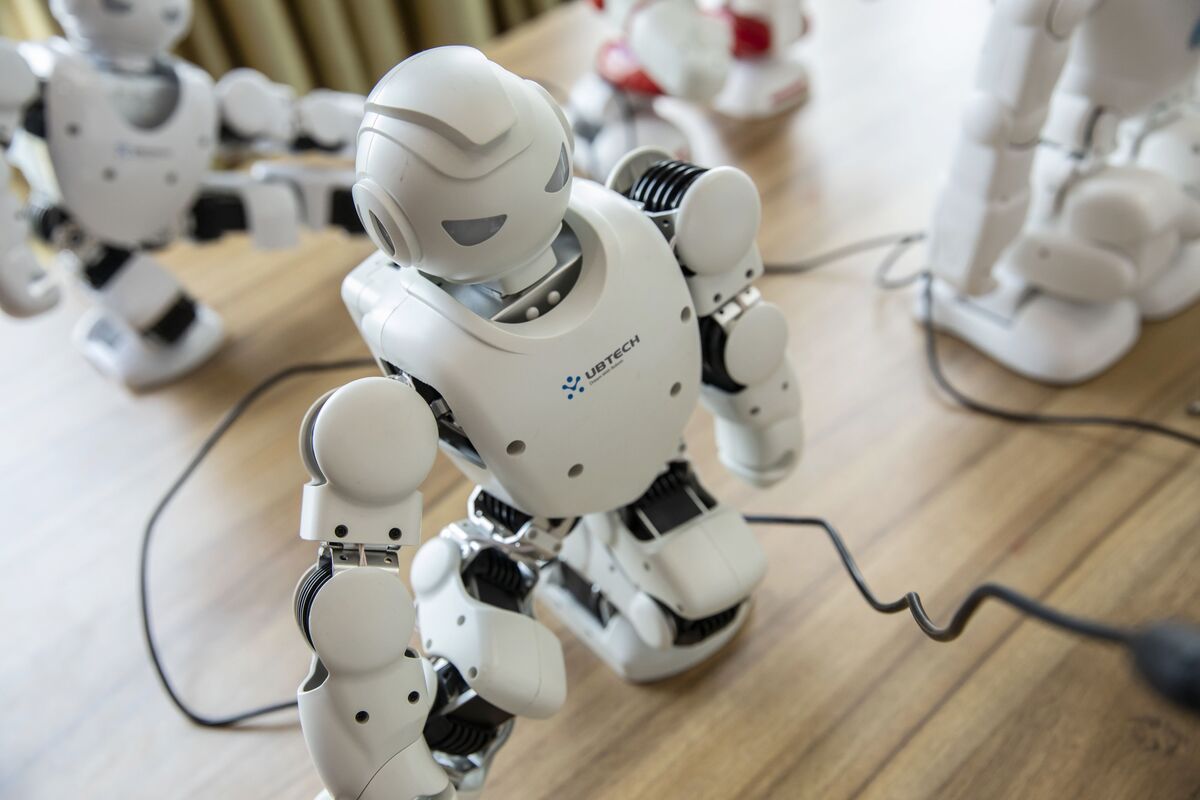
💡$18M AI scientist salary at UBTech reveals robotics talent war intensity
⚡ 30-Second TL;DR
What Changed
UBTech seeking chief scientist for humanoid robots
Why It Matters
This signals escalating talent competition in embodied AI, potentially speeding UBTech's innovation. AI researchers may see rising salary benchmarks in robotics.
What To Do Next
Update your resume and apply to UBTech's chief scientist role via their careers page if expert in robotics AI.
Key Points
- •UBTech seeking chief scientist for humanoid robots
- •Annual pay up to 124M yuan ($18M)
- •Aggressive bet on early-stage robotics industry
🧠 Deep Insight
AI-generated analysis for this event — not the original article.
🔑 Enhanced Key Takeaways
- •The $18 million compensation package is part of a broader strategic pivot by UBTech to transition from consumer-grade educational robots to high-end industrial and household humanoid applications.
- •UBTech is specifically targeting talent with expertise in Embodied AI and Large World Models (LWMs) to bridge the gap between robotic motor control and cognitive reasoning.
- •This recruitment drive follows a series of successful pilot deployments of the Walker S humanoid robot in automotive manufacturing environments, signaling a shift toward B2B commercialization.
📊 Competitor Analysis▸ Show
| Feature | UBTech (Walker S) | Tesla (Optimus) | Figure AI (Figure 02) |
|---|---|---|---|
| Primary Focus | Industrial/Manufacturing | Mass-market/Household | General Purpose/Industrial |
| AI Approach | Embodied AI/LWM | End-to-end Neural Nets | OpenAI-integrated Models |
| Market Stage | Pilot/Commercial Deployment | Prototype/Internal Testing | Pilot/Commercial Deployment |
🛠️ Technical Deep Dive
- •Focus on 'Embodied AI' architecture: Integrating Large Language Models (LLMs) as the cognitive layer for high-level task planning.
- •Development of proprietary 'U-OS' operating system designed to handle real-time sensor fusion from LiDAR, depth cameras, and force-torque sensors.
- •Implementation of Whole-Body Control (WBC) algorithms to enable dynamic balance and manipulation in unstructured human environments.
- •Utilization of sim-to-real reinforcement learning pipelines to accelerate the training of fine-motor skills for humanoid manipulators.
🔮 Future ImplicationsAI analysis grounded in cited sources
⏳ Timeline
📰 Event Coverage
Weekly AI Recap
Read this week's curated digest of top AI events →
👉Related Updates
AI-curated news aggregator. All content rights belong to original publishers.
Original source: Bloomberg Technology ↗
This is a summary, not the original. Read the source, or get the weekly briefing.
The weekly digest
One email a week. Unsubscribe anytime.