Uber pivots to lobbying for robotaxi regulations
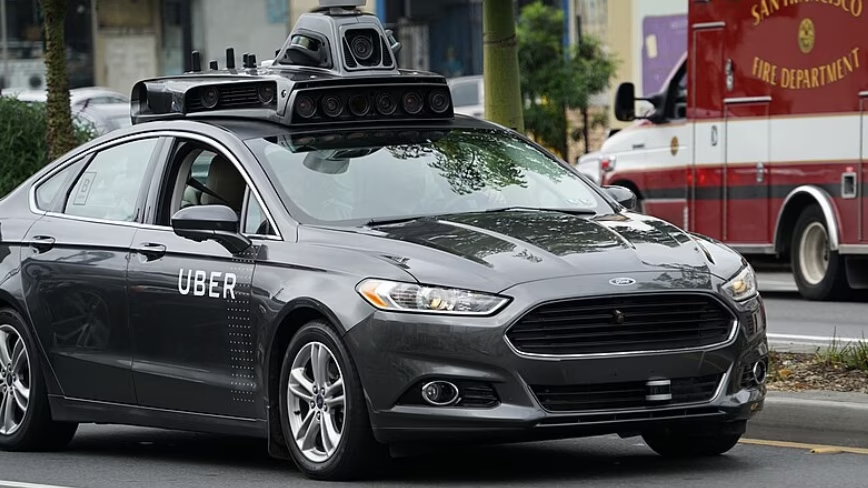
💡See how Uber is attempting to dominate the robotaxi market through policy and platform control rather than R&D.
⚡ 30-Second TL;DR
What Changed
Uber is lobbying for laws to force robotaxi integration into its app
Why It Matters
This shift signals a consolidation phase in the autonomous vehicle market where platform aggregators may become more powerful than the technology developers themselves.
What To Do Next
If building autonomous systems, prioritize building open API standards to ensure compatibility with future ride-hailing aggregators.
Key Points
- •Uber is lobbying for laws to force robotaxi integration into its app
- •The company is shifting strategy from building to platform orchestration
- •Uber aims to maintain market dominance by controlling the deployment interface
🧠 Deep Insight
AI-generated analysis for this event — not the original article.
🔑 Enhanced Key Takeaways
- •Uber has established strategic partnerships with autonomous vehicle developers like Waymo and Aurora to facilitate the integration of their fleets into the Uber network.
- •The lobbying efforts specifically target 'open access' legislation, which would prevent robotaxi operators from creating walled-garden ecosystems that exclude third-party ride-hailing platforms.
- •Uber's shift follows the 2020 divestment of its Advanced Technologies Group (ATG) to Aurora, marking the formal end of its internal self-driving hardware development.
- •Regulatory filings indicate Uber is advocating for standardized data-sharing protocols between autonomous fleet operators and ride-hailing platforms to ensure safety and traffic management compliance.
- •The company is leveraging its massive existing user base and demand-prediction algorithms as a 'liquidity moat' to incentivize autonomous operators to prioritize the Uber platform over their own standalone apps.
📊 Competitor Analysis▸ Show
| Feature | Uber (Platform Orchestrator) | Waymo (Vertically Integrated) | Lyft (Hybrid/Partner) |
|---|---|---|---|
| Business Model | Aggregator/Marketplace | Fleet Operator/Owner | Aggregator/Partner |
| Hardware Control | None (Third-party) | Full (In-house) | None (Third-party) |
| Market Strategy | Platform Dominance | Service Quality/Safety | Regional Partnerships |
| Pricing Power | High (Dynamic/Surge) | Moderate (Fleet-limited) | Moderate (Dynamic) |
🛠️ Technical Deep Dive
- Uber's integration architecture utilizes a standardized API layer designed to ingest real-time telemetry, vehicle availability, and safety status from heterogeneous autonomous fleets.
- The platform employs a multi-objective optimization engine that balances rider wait times, vehicle battery/fuel status, and autonomous system health metrics.
- Integration requires compliance with Uber's 'Safety Data Exchange' protocol, which mandates the transmission of disengagement logs and sensor-based incident reports to a centralized compliance dashboard.
- The routing engine has been updated to include 'AV-friendly' navigation parameters, accounting for autonomous vehicle limitations such as restricted turn types, loading zone requirements, and weather-based operational domain constraints.
🔮 Future ImplicationsAI analysis grounded in cited sources
⏳ Timeline
Weekly AI Recap
Read this week's curated digest of top AI events →
👉Related Updates


AI-curated news aggregator. All content rights belong to original publishers.
Original source: The Next Web (TNW) ↗
This is a summary, not the original. Read the source, or get the weekly briefing.
The weekly digest
One email a week. Unsubscribe anytime.