Uber-Nissan Robotaxi Tests in Japan from 2026
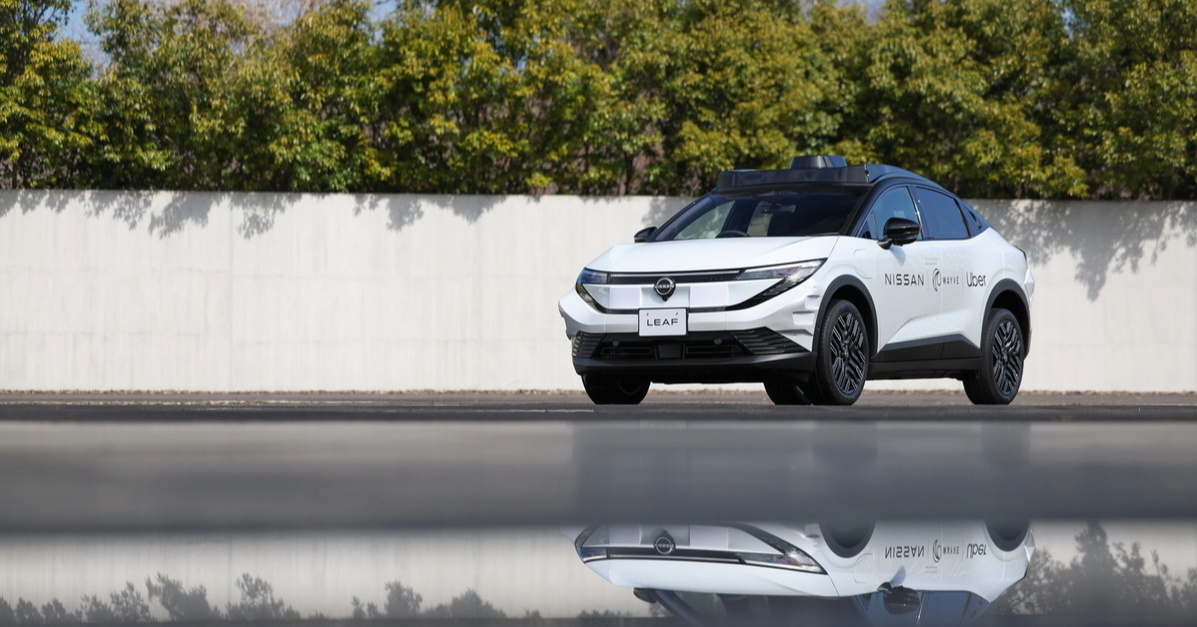
💡Uber's Japan robotaxi push with Nissan/Wayve—embodied AI expansion in Asia
⚡ 30-Second TL;DR
What Changed
Uber, Nissan, and Wayve collaborate on Japan robotaxi rollout
Why It Matters
Expands robotaxi market to Asia, accelerating AV adoption via established partners. Could influence global standards for urban autonomous transport.
What To Do Next
Monitor Wayve's AV APIs for integration opportunities in your robotics projects.
Key Points
- •Uber, Nissan, and Wayve collaborate on Japan robotaxi rollout
- •Tokyo testing scheduled for second half of 2026
- •Wayve provides the autonomous driving system technology
🧠 Deep Insight
Background and context from public sources — not the original article. 6 sources cited.
🔑 Enhanced Key Takeaways
- •Wayve secured $1.5B in Series D funding (February 2026) with participation from Microsoft, NVIDIA, Uber, and automakers including Nissan, positioning the company to scale robotaxi deployments across 10+ global markets with London launching first in 2026[5].
- •Wayve's end-to-end AI system operates without preprogrammed maps, navigating in real-time—a technical differentiator from traditional autonomous driving approaches that rely on HD mapping infrastructure[3].
- •The Nissan partnership extends beyond robotaxis: Wayve's AI Driver will power Nissan's next-generation ProPILOT system beginning in fiscal year 2027 as an SAE Level 2 product, with a clear pathway toward personally-owned autonomous vehicles for consumers and fleets[4].
- •Tokyo represents a strategically challenging market for autonomous deployment due to dense traffic patterns, complex road layouts, and high safety standards, making it a critical validation ground for global scaling[1].
📊 Competitor Analysis▸ Show
| Aspect | Wayve-Uber-Nissan | Waymo (Tokyo) | Tesla |
|---|---|---|---|
| Technology Approach | End-to-end AI, no HD maps required | HD mapping-dependent | Vision-based, proprietary |
| Deployment Model | Robotaxi (Uber fleet) + consumer vehicles (Nissan) | Robotaxi focus | Consumer vehicles |
| Japan Timeline | Tokyo pilot by end of 2026 | Mapping phase (25 vehicles) | No announced Japan robotaxi service |
| Funding Status | $1.5B Series D (Feb 2026) | Alphabet-backed | Self-funded |
| OEM Partners | Nissan, Mercedes-Benz, Stellantis | Multiple (undisclosed) | None (proprietary hardware) |
🛠️ Technical Deep Dive
- AI Architecture: Wayve uses end-to-end AI that learns from real-world driving data rather than relying on preprogrammed HD maps, enabling deployment across diverse geographies without extensive mapping infrastructure[3][5]
- Vehicle Platform: Nissan LEAF (electric vehicle) serves as the base platform for the robotaxi prototype, with Wayve's AI Driver integrated into the vehicle's systems[1][2]
- Autonomy Level: Initial deployment targets SAE Level 2 (supervised autonomy) in consumer vehicles via ProPILOT (FY 2027), with L4-capable vehicles for robotaxi operations[4][5]
- Safety Operations: During pilot phase, trained safety operators remain in vehicles to monitor autonomous performance and intervene if necessary[1]
- Real-Time Navigation: Wayve's system navigates complex urban environments (Tokyo's dense traffic, complex road layouts) without relying on pre-downloaded maps[3]
🔮 Future ImplicationsAI analysis grounded in cited sources
⏳ Timeline
📎 Sources (6)
Factual claims are grounded in the sources below. Forward-looking analysis is AI-generated interpretation.
- barchart.com — Wayve Uber and Nissan Announce Collaboration on Robotaxis
- gurufocus.com — Nissan Uber and Wayve Collaborate on Robotaxi Development
- japantimes.co.jp — Nissan AI Wave
- roadtoautonomy.com — Wayve Catches Big Nissan Wave
- wayve.ai — Series D
- tipranks.com — Uber Wayve Nissan Announce Robotaxi Mou Thefly News
Weekly AI Recap
Read this week's curated digest of top AI events →
👉Related Updates
AI-curated news aggregator. All content rights belong to original publishers.
Original source: ITmedia AI+ (日本) ↗
This is a summary, not the original. Read the source, or get the weekly briefing.
Weekly AI briefing
One email a week. Unsubscribe anytime.