TV Time pivots to AI-powered app Bingers
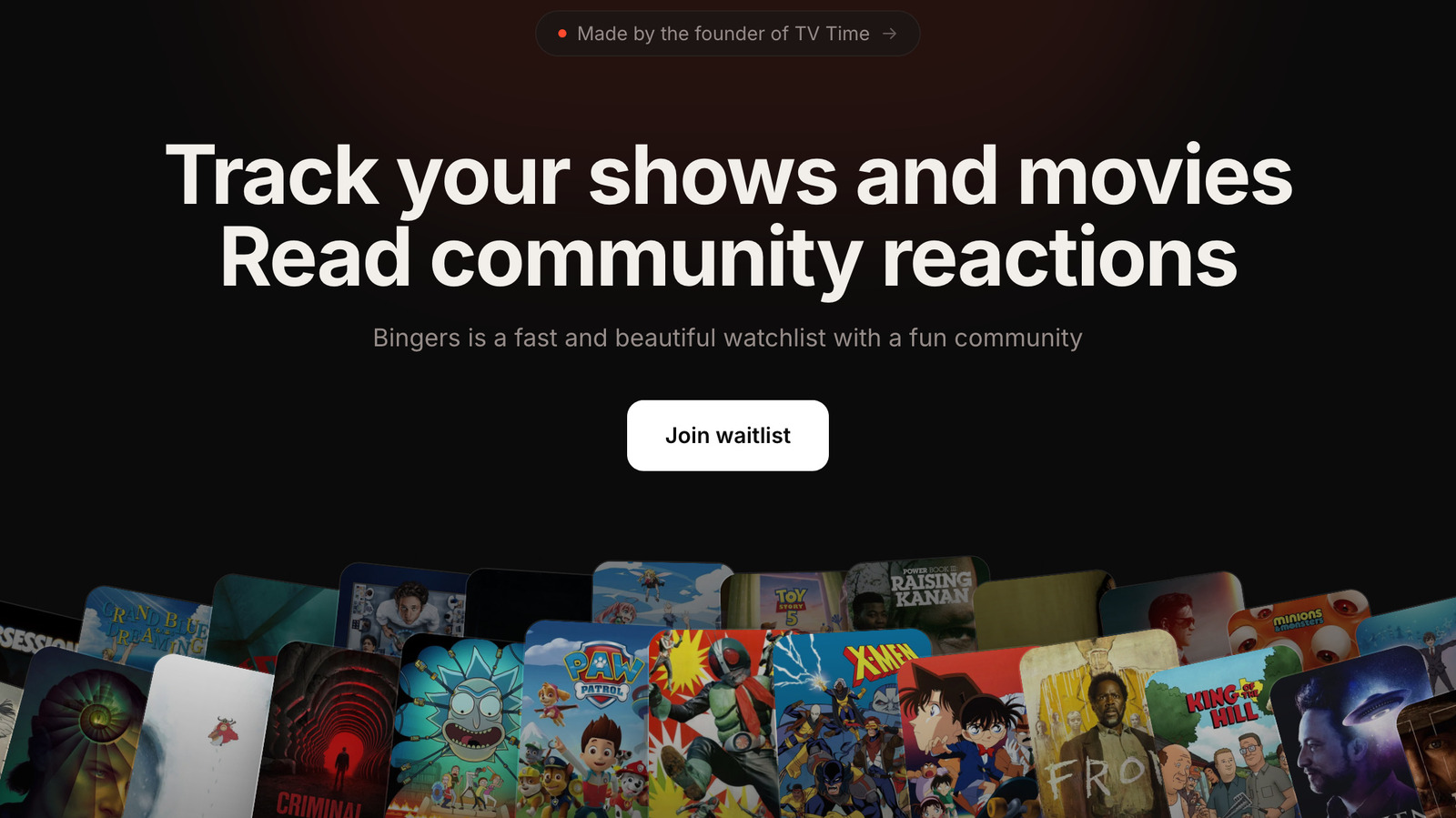
💡See how a legacy consumer app pivots its entire business model to AI-first architecture.
⚡ 30-Second TL;DR
What Changed
TV Time will be replaced by the new app Bingers by the end of July.
Why It Matters
This move highlights how established consumer platforms are leveraging AI to remain competitive. It suggests a shift in user experience design from manual logging to AI-driven recommendation and discovery.
What To Do Next
Monitor the Bingers launch to analyze how they integrate AI into user-generated content and recommendation engines.
Key Points
- •TV Time will be replaced by the new app Bingers by the end of July.
- •The relaunch signifies a major strategic pivot toward AI integration.
- •The transition reflects a broader industry trend of legacy consumer apps adopting AI-first architectures.
🧠 Deep Insight
AI-generated analysis for this event — not the original article.
🔑 Enhanced Key Takeaways
- •The transition involves the migration of user watch history and social data from TV Time's legacy database to the new Bingers infrastructure, which utilizes a vector database for personalized recommendations.
- •Bingers introduces a generative AI chatbot named 'BingeBot' that allows users to query content availability across streaming services using natural language processing.
- •The parent company, Whip Media, is leveraging its proprietary B2B data sets regarding content performance to train the AI models powering the Bingers discovery engine.
- •The rebranding effort includes a shift in monetization strategy, moving from traditional display advertising to a freemium model that offers AI-driven 'predictive viewing' insights for premium subscribers.
- •The app's new architecture utilizes a modular microservices approach, allowing for faster integration of real-time streaming metadata compared to the monolithic structure of the original TV Time app.
📊 Competitor Analysis▸ Show
| Feature | Bingers | Letterboxd | Trakt.tv |
|---|---|---|---|
| AI Discovery | Generative AI Chatbot | Community-driven | Algorithmic/Manual |
| Monetization | Freemium/AI Insights | Subscription/Ads | Subscription/API |
| Primary Focus | Predictive Streaming | Film Criticism | Data Tracking/API |
🛠️ Technical Deep Dive
- The platform utilizes a RAG (Retrieval-Augmented Generation) architecture to ground AI responses in real-time streaming availability data.
- Recommendation engine transition from collaborative filtering to a hybrid model incorporating LLM-based semantic analysis of user watch history.
- Implementation of a vector-based embedding system to map content relationships, allowing for 'mood-based' discovery rather than just genre-based filtering.
- API integration with major streaming service metadata providers to ensure sub-second latency for availability queries.
🔮 Future ImplicationsAI analysis grounded in cited sources
⏳ Timeline
Weekly AI Recap
Read this week's curated digest of top AI events →
👉Related Updates
AI-curated news aggregator. All content rights belong to original publishers.
Original source: Engadget ↗
This is a summary, not the original. Read the source, or get the weekly briefing.
The weekly digest
One email a week. Unsubscribe anytime.