Turn Empty Sandboxes Into Productive Dev Environments
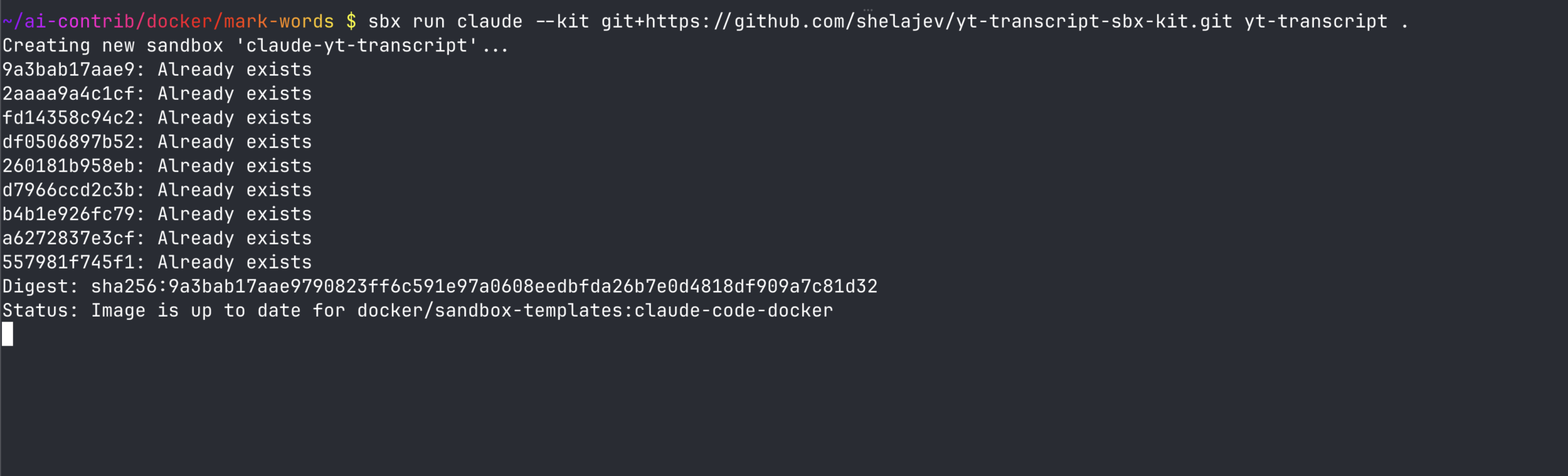
See how Docker Sandbox kits replace blank environments with repeatable developer setups.
30-Second TL;DR
What Changed
Converts an initially empty sandbox into a usable development environment
Why It Matters
Standardized sandbox setup can shorten onboarding and reduce inconsistencies between developers and projects. For AI teams, this may make it easier to reproduce agent, model, or application development environments.
What To Do Next
Create a Docker Sandbox kit for one AI project and verify that its tooling, credentials, and configuration can reproduce the team’s baseline environment.
Key Points
- •Converts an initially empty sandbox into a usable development environment
- •Packages repeatable tooling for more consistent developer setup
- •Carries credentials and configuration needed for development workflows
Deep Insight
AI-generated analysis for this event — not the original article.
Enhanced Key Takeaways
- •Docker Sandbox kits leverage OCI-compliant container images to ensure environment parity between local development and production stages.
- •The solution integrates with Docker Desktop's 'Dev Environments' feature, allowing developers to share environment states via Git repositories.
- •Security is enhanced through automated secret injection, preventing hardcoded credentials from being committed to version control systems.
- •These kits support ephemeral infrastructure patterns, enabling developers to spin up and tear down isolated environments in seconds to avoid configuration drift.
- •The architecture utilizes Docker Compose under the hood to orchestrate multi-container dependencies within the sandbox, simplifying complex microservices setup.
Competitor Analysis
- Docker Sandbox Kits
- Local/Hybrid
- GitHub Codespaces
- Cloud-based
- DevPod (Loft)
- Local/Remote/K8s
- Docker Sandbox Kits
- Included in Docker Subscription
- GitHub Codespaces
- Pay-per-use/Enterprise
- DevPod (Loft)
- Open Source/Commercial
- Docker Sandbox Kits
- Docker Compose/Images
- GitHub Codespaces
- devcontainer.json
- DevPod (Loft)
- devcontainer.json
- Docker Sandbox Kits
- High (OCI standard)
- GitHub Codespaces
- Medium (GitHub specific)
- DevPod (Loft)
- High (Platform agnostic)
| Feature | Docker Sandbox Kits | GitHub Codespaces | DevPod (Loft) |
|---|---|---|---|
| Hosting | Local/Hybrid | Cloud-based | Local/Remote/K8s |
| Pricing | Included in Docker Subscription | Pay-per-use/Enterprise | Open Source/Commercial |
| Environment Definition | Docker Compose/Images | devcontainer.json | devcontainer.json |
| Portability | High (OCI standard) | Medium (GitHub specific) | High (Platform agnostic) |
Technical Deep Dive
- Utilizes OCI (Open Container Initiative) image specifications to package the entire development toolchain.
- Implements secret management via Docker Contexts and environment variable injection at runtime.
- Leverages Docker Desktop's volume mounting capabilities to sync local source code with the containerized environment in real-time.
- Supports multi-platform builds (ARM64/AMD64) to ensure compatibility across different developer workstations.
- Integrates with VS Code and JetBrains IDEs via the Docker extension to provide seamless remote development experiences.
Future ImplicationsAI analysis grounded in cited sources
Timeline
- 2021-05Docker introduces 'Docker Dev Environments' to simplify collaboration.
- 2022-09Docker Desktop adds support for remote development containers.
- 2024-03Docker expands enterprise features for standardized environment templates.
- 2025-11Docker releases enhanced Sandbox kits for streamlined developer onboarding.
Weekly AI Recap
Read this week's curated digest of top AI events →
AI-curated news aggregator. All content rights belong to original publishers.
Original source: Docker Blog ↗
This is a summary, not the original. Read the source, or get the weekly briefing.
The weekly digest
One email a week. Unsubscribe anytime.