Turing Laureates Address Theoretical Challenges in AGI Development
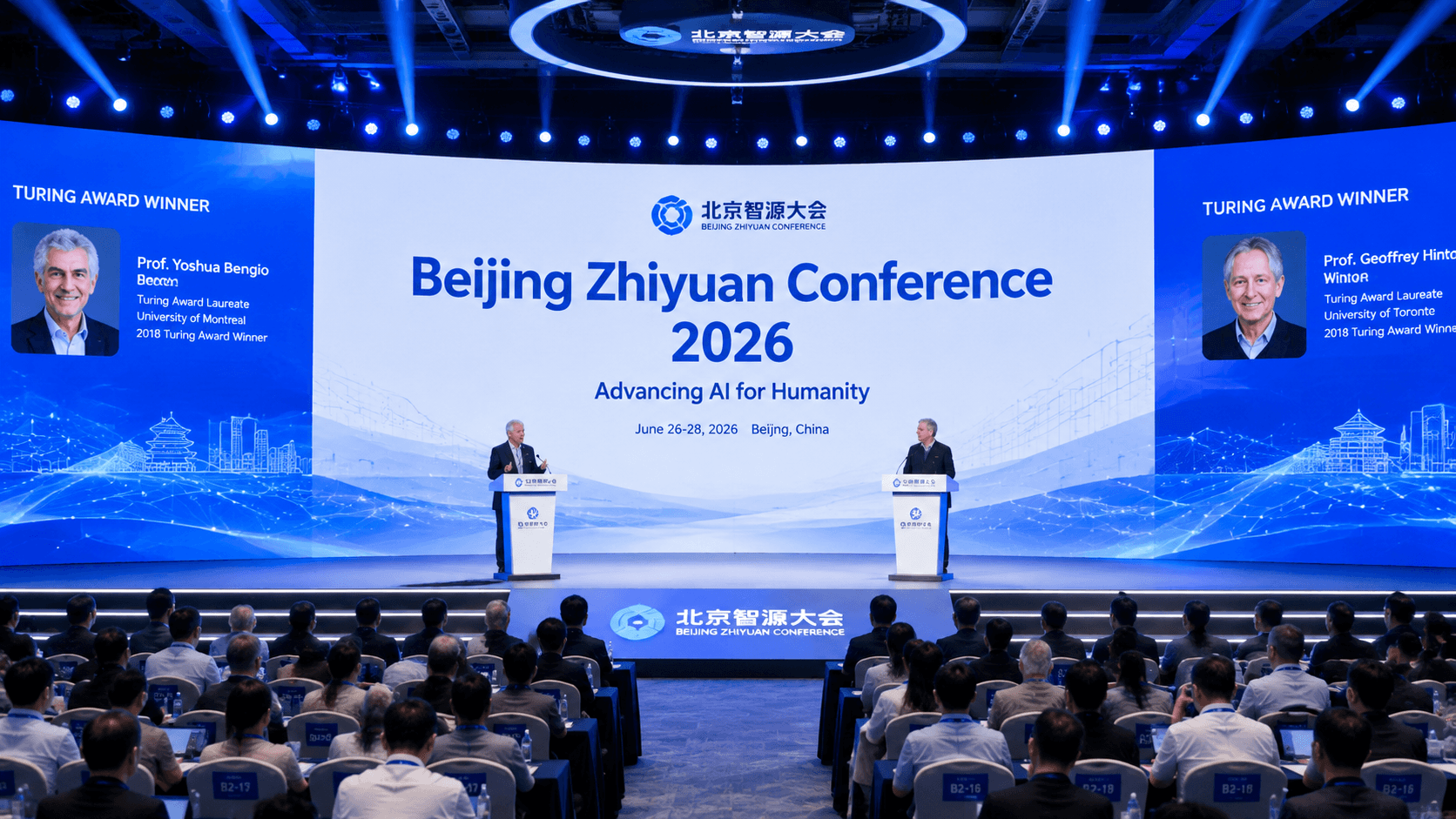
💡Understand the fundamental theoretical bottlenecks that top Turing laureates believe are stalling AGI progress.
⚡ 30-Second TL;DR
What Changed
Whitfield Diffie and Andrew Barto identified fundamental theoretical gaps in AGI.
Why It Matters
This discourse signals a shift in focus from scaling laws to fundamental architectural and theoretical research, which may influence future R&D directions for AI labs.
What To Do Next
Review the latest papers from the Beijing Zhiyuan Conference to understand the current theoretical constraints on AGI architecture.
Key Points
- •Whitfield Diffie and Andrew Barto identified fundamental theoretical gaps in AGI.
- •The Beijing Zhiyuan Conference served as a platform for high-level discourse on AI limitations.
- •Experts are focusing on the 'theoretical black hole' preventing current models from reaching true AGI.
🧠 Deep Insight
Background and context from public sources — not the original article. 12 sources cited.
🔑 Enhanced Key Takeaways
- •Whitfield Diffie, a pioneer in public-key cryptography, argued that the general nature of AGI makes it impossible to write formal specifications for safety, such as defining what 'not hallucinating' means, contrasting this with the success of cryptography which relies on clearly defined specifications.
- •Andrew Barto, a pioneer of reinforcement learning, identified the reward function as a fundamental bottleneck in AGI development, explaining that while simple environments allow for definable reward functions, complex real-world scenarios do not, leading to potential unintended consequences (the 'Midas Touch' problem).
- •Both Turing laureates concluded that the theoretical foundations necessary for AGI safety and control are currently missing and will require a multi-decade process to develop, drawing parallels to the half-century it took for cryptography to mature from theory to standardized protocols.
- •The 8th Beijing Zhiyuan Conference, where these discussions took place, is characterized as an 'academically hardcore' event focused on brain-inspired intelligence and next-generation AI paths, aiming to foster foundational ideas rather than industry hype.
🛠️ Technical Deep Dive
- Whitfield Diffie highlighted the challenge of formally specifying AGI behavior, particularly for safety aspects like preventing 'hallucinations' or 'loss of control,' due to the broad and undefined nature of general intelligence, unlike the narrow-domain success of cryptography.
- Andrew Barto pinpointed the reward function design as a core bottleneck in reinforcement learning for AGI, especially in complex, real-world environments where creating a perfect reward function is fundamentally impossible.
- Barto invoked Norbert Wiener's 'Midas Touch' problem, warning that literal optimization based on poorly formulated objective functions can lead to catastrophic, unintended consequences, emphasizing the need for robust, dynamic guardrails instead of single reward functions.
- The discussions implicitly underscore the limitations of current AI models, such as large language models (LLMs), in achieving true AGI due to these theoretical gaps in formal specification and reward design, suggesting that current LLM security is in an 'early, disorderly phase.'
🔮 Future ImplicationsAI analysis grounded in cited sources
⏳ Timeline
📎 Sources (12)
Factual claims are grounded in the sources below. Forward-looking analysis is AI-generated interpretation.
Weekly AI Recap
Read this week's curated digest of top AI events →
👉Related Updates



AI-curated news aggregator. All content rights belong to original publishers.
Original source: Pandaily ↗
This is a summary, not the original. Read the source, or get the weekly briefing.
The weekly digest
One email a week. Unsubscribe anytime.