Tujian Tech Tactile Gloves Mass Produce Soon
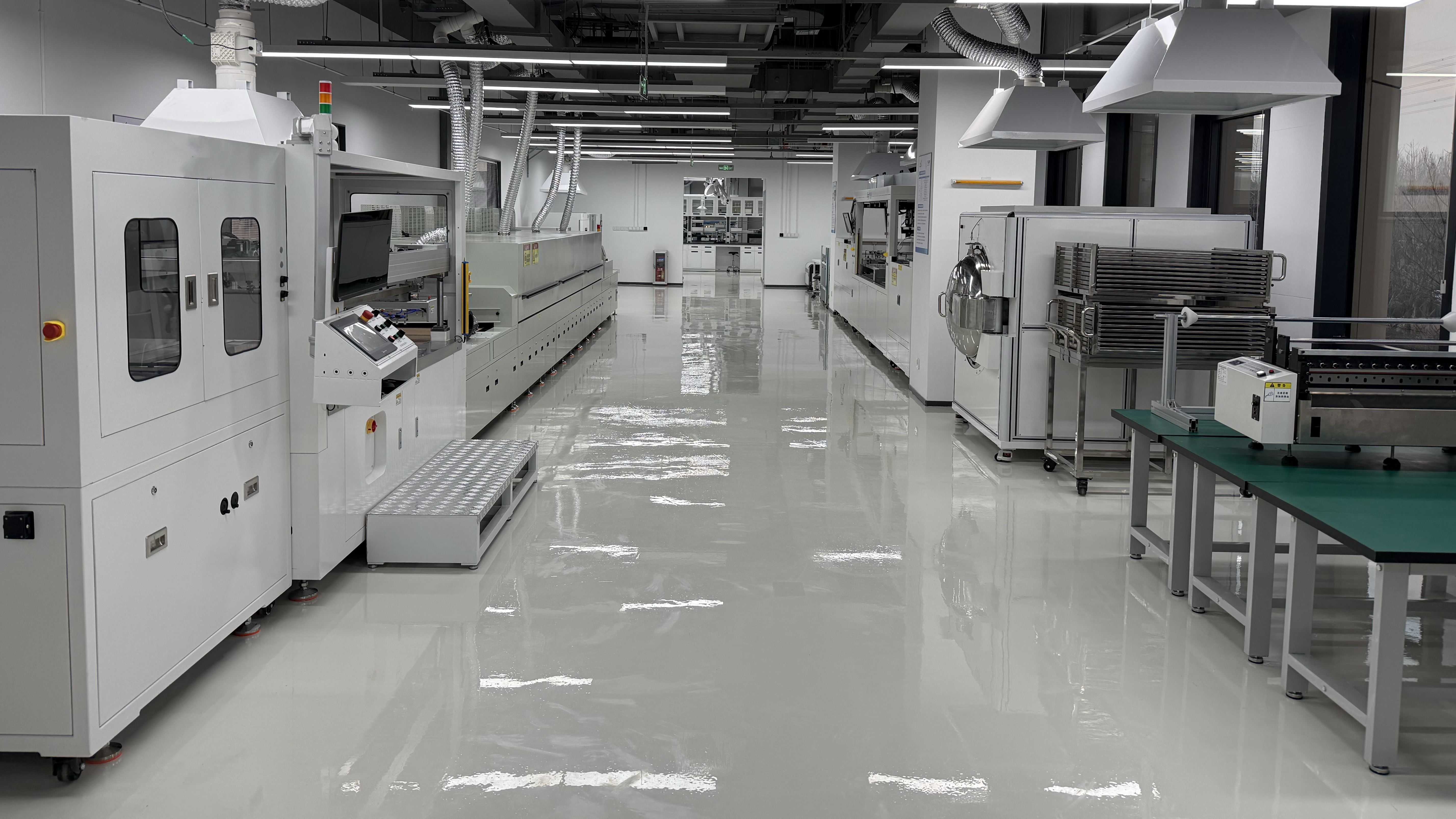
Stretchable robot skins + gloves unlock touch data for embodied AI training
30-Second TL;DR
What Changed
Pre-A/Pre-A+ funding >100M RMB from Lenovo Star, Yuanhua, etc.
Why It Matters
Closes embodied AI data loop via human-robot touch feedback, boosting robot dexterity and safety in real-world tasks.
What To Do Next
Evaluate Tujian Tech tactile gloves for collecting high-fidelity touch datasets in your robot sim-to-real pipeline.
Key Points
- •Pre-A/Pre-A+ funding >100M RMB from Lenovo Star, Yuanhua, etc.
- •>100% stretch e-skin with 400 sensors/cm², proximity detection to 20cm
- •Tactile gloves capture real-touch data for robot training; orders secured
Deep Insight
AI-generated analysis for this event — not the original article.
Enhanced Key Takeaways
- •Tujian Tech (TuJian Technology) utilizes a proprietary 'ion-tronic' sensing mechanism that allows for high-sensitivity pressure detection while maintaining the mechanical flexibility required for robotic integration.
- •The company's business model pivots from pure R&D to a 'data-as-a-service' approach, where the tactile gloves serve as a hardware bridge to generate high-fidelity datasets for training humanoid robot dexterity.
- •The production strategy leverages a roll-to-roll manufacturing process, which is critical for achieving the cost reduction necessary to scale e-skin deployment beyond laboratory prototypes.
Competitor Analysis
- Technology Focus
- Bio-mimetic tactile sensors
- Key Advantage
- Established industry standard for texture sensing
- Pricing/Benchmark
- High-end, research-focused
- Technology Focus
- Optical-based tactile sensing
- Key Advantage
- Extremely high spatial resolution
- Pricing/Benchmark
- Requires camera integration
- Technology Focus
- Magnetic-based tactile sensors
- Key Advantage
- Robustness and durability
- Pricing/Benchmark
- Industrial-grade pricing
| Competitor | Technology Focus | Key Advantage | Pricing/Benchmark |
|---|---|---|---|
| SynTouch | Bio-mimetic tactile sensors | Established industry standard for texture sensing | High-end, research-focused |
| GelSight | Optical-based tactile sensing | Extremely high spatial resolution | Requires camera integration |
| Xela Robotics | Magnetic-based tactile sensors | Robustness and durability | Industrial-grade pricing |
Technical Deep Dive
- Sensing Principle: Employs ion-tronic sensing, which converts mechanical deformation into electrical signals via the movement of ions within a flexible polymer matrix.
- Sensor Density: Achieves 400 sensors/cm² through a multi-layer flexible circuit board (FPCB) integration process.
- Proximity Sensing: Utilizes capacitive coupling to detect objects at distances up to 20cm, enabling pre-contact trajectory adjustment for robotic manipulators.
- Material Composition: Uses stretchable conductive hydrogels and elastomers capable of >100% strain without significant signal degradation.
Future ImplicationsAI analysis grounded in cited sources
Timeline
- 2023-05Tujian Tech founded by Stanford postdoctoral researchers focusing on flexible electronics.
- 2024-09Company completes Pre-A funding round led by Lenovo Star and Yuanhua.
- 2025-11Successful pilot testing of tactile gloves for remote robot teleoperation.
Weekly AI Recap
Read this week's curated digest of top AI events →
AI-curated news aggregator. All content rights belong to original publishers.
Original source: 36氪 ↗
This is a summary, not the original. Read the source, or get the weekly briefing.
The weekly digest
One email a week. Unsubscribe anytime.