Tsinghua Hackathon Unveils 9 Rebellious OpenClaw Apps
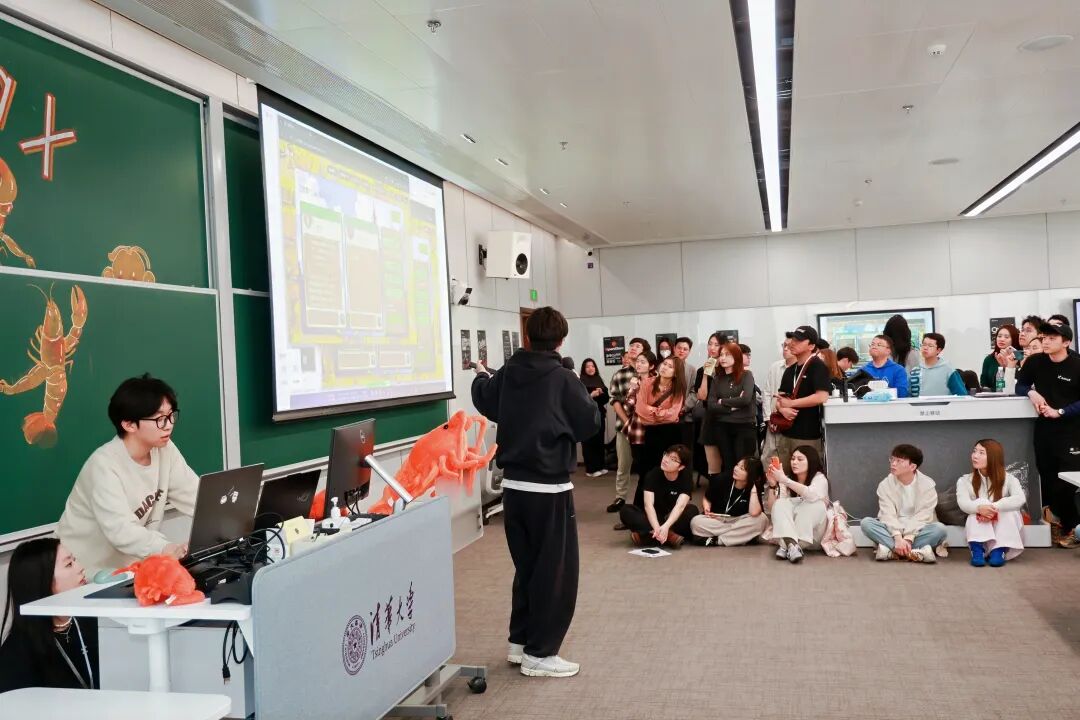
💡9 wild OpenClaw projects from Tsinghua hackathon reveal agent fun in games, care, social (500+ attendees)
⚡ 30-Second TL;DR
What Changed
虾虾侦探社: Robotic arm acts as DM for script-killing games with physical interactions.
Why It Matters
Highlights OpenClaw's versatility for creative, real-world AI applications, inspiring builders to explore agent frameworks in non-enterprise domains like gaming and caregiving. Could accelerate community-driven innovations despite commercialization challenges.
What To Do Next
Install OpenClaw locally and prototype the ClawSight multi-agent news verifier.
Key Points
- •虾虾侦探社: Robotic arm acts as DM for script-killing games with physical interactions.
- •Beiketown: AI avatars in pixel campus for social ice-breaking and NFC physical triggers.
- •ClawSight: Multi-agent system for news fact-checking and event prediction.
- •Mira: Real-time AI companion integrating wearables and smart home for vulnerable users.
- •LingSoul: AI doll for child care with emotion recognition and proactive engagement.
🧠 Deep Insight
Background and context from public sources — not the original article. 9 sources cited.
🔑 Enhanced Key Takeaways
- •OpenClaw's architecture uses a 'Lane Queue' system that defaults to serial execution to prevent race conditions, a critical design choice for reliable multi-agent coordination in hardware-integrated applications like the robotic DM and companion doll projects[3].
- •OpenClaw supports over 50 third-party integrations including smart home hardware, productivity suites, and music platforms[4], enabling the Mira wearables integration and LingSoul smart home connectivity demonstrated at the hackathon.
- •The framework stores persistent memory as editable local Markdown files and JSONL transcripts rather than opaque vector databases[3], allowing hackathon projects to maintain structured context across child interactions (LingSoul) and user preferences (Mira) with transparency and manual auditability.
🛠️ Technical Deep Dive
Architecture
- •Hub-and-spoke architecture centered on a Gateway control plane that routes messages from multiple channels (WhatsApp, Telegram, Discord, CLI, Web UI, mobile apps) through a unified execution pipeline[2]
- •Six-stage execution pipeline: Ingestion → Access Control & Routing → Context Assembly → Model Invocation → Tool Execution → Response Delivery[2]
- •Lane Queue system enforces serial execution by default to prevent race conditions, contrasting with traditional async/await approaches that risk concurrent conflicts[3]
Memory_system
- •Hybrid memory architecture combining short-term conversation context with long-term persistent storage (vector store, file-based JSONL, editable Markdown)[1]
- •Session History Loader pulls previous interactions from JSONL transcripts to provide context; System Prompt Builder dynamically merges system instructions, available tools, skills, and relevant memories[3]
Tool_ecosystem
- •Built-in tools: File system operations, sandboxed code execution (Python, JavaScript, Bash), web browsing via Semantic Snapshots (accessibility tree parsing instead of screenshots to reduce token costs)[1][3]
- •API calls with authentication handling, SQL/NoSQL database queries, Git repository management[1]
Model_support
- •Model-agnostic framework supporting OpenAI (GPT-4o, GPT-4.1, o3), Anthropic (Claude Opus, Sonnet, Haiku), Google (Gemini 2.5 Pro, Flash), and local models via Ollama (Llama, Mistral, DeepSeek)[1]
- •Model Resolver automatically manages failover: if a primary model fails or key is rate-limited, it cools down that key and switches to a backup[3]
Security
- •Allowlist-based security with Shell Structure Blocking, contrasting with prompt-based 'please be safe' instructions in traditional frameworks[3]
- •Token/password authentication for non-loopback bindings; pairing system for direct messages; dmScope settings isolate sessions per channel or peer to prevent context leakage[2][5]
🔮 Future ImplicationsAI analysis grounded in cited sources
⏳ Timeline
📎 Sources (9)
Factual claims are grounded in the sources below. Forward-looking analysis is AI-generated interpretation.
- anotherwrapper.com — What Is Openclaw
- ppaolo.substack.com — Openclaw System Architecture Overview
- vertu.com — Openclaw Clawdbot Architecture Engineering Reliable and Controllable AI Agents
- digitalocean.com — What Is Openclaw
- clarifai.com — What Is Openclaw
- kumohq.co — What Is Openclaw AI Agent Framework Guide
- openclaw.im
- advenboost.com — Openclaw Requirements
- GitHub — Explain Openclaw
Weekly AI Recap
Read this week's curated digest of top AI events →
👉Related Updates
AI-curated news aggregator. All content rights belong to original publishers.
Original source: 36氪 ↗
This is a summary, not the original. Read the source, or get the weekly briefing.
Weekly AI briefing
One email a week. Unsubscribe anytime.