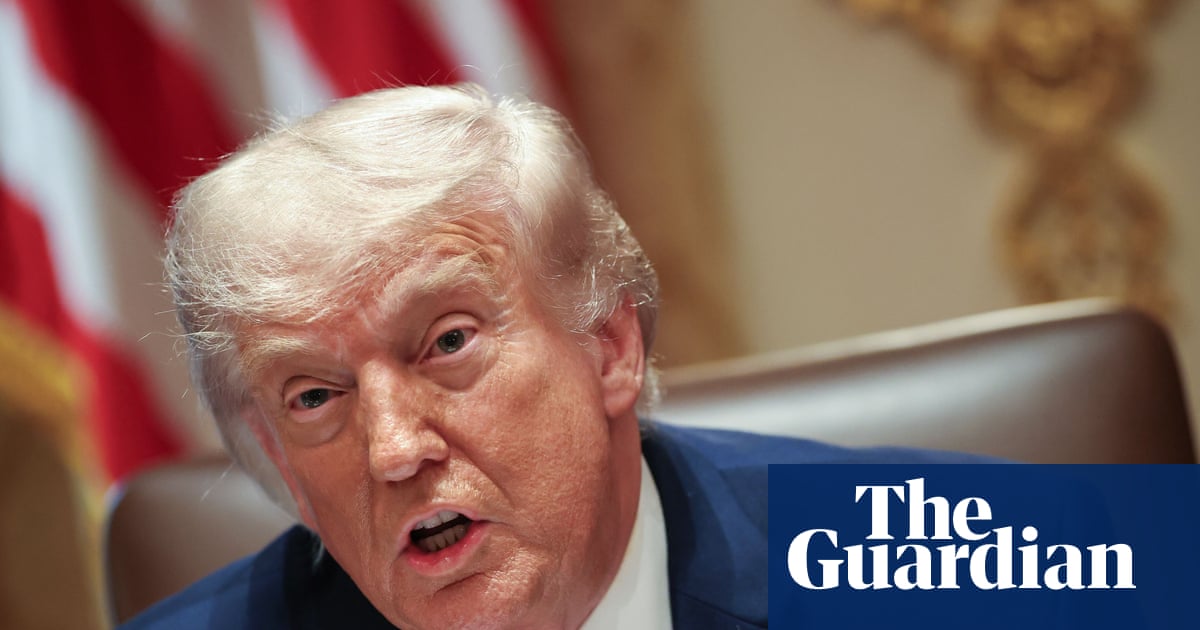
Trump signs executive order for early AI model review
💡New federal mandate requires pre-release AI model sharing; learn how this impacts your deployment timeline.
⚡ 30-Second TL;DR
What Changed
Establishes a voluntary framework for federal vetting of powerful AI models.
Why It Matters
This policy may slow down the release cycle for frontier models and increase compliance burdens for AI labs. Practitioners should prepare for potential delays in product roadmaps due to mandatory government review periods.
What To Do Next
Review your internal release pipeline to account for a 30-day buffer period for potential federal security vetting.
Key Points
- •Establishes a voluntary framework for federal vetting of powerful AI models.
- •Requires tech companies to share models for review up to 30 days before public release.
- •Focuses on mitigating cybersecurity and national security threats posed by AI.
- •Marks a shift in the administration's approach toward AI oversight.
🧠 Deep Insight
Background and context from public sources — not the original article. 22 sources cited.
🔑 Enhanced Key Takeaways
- •The executive order, signed on June 2, 2026, is a scaled-back version of an earlier proposal that considered a 90-day review window, which was reduced to 30 days following lobbying by tech industry executives.
- •The order explicitly clarifies that it does not authorize mandatory governmental licensing, pre-clearance, or permitting requirements for the development, publication, release, or distribution of new AI models.
- •A key catalyst for this executive order was heightened concern over advanced AI models, such as Anthropic's Mythos, which demonstrated significant capabilities in discovering and exploiting cybersecurity vulnerabilities.
- •The Center for AI Standards and Innovation (CAISI), part of the Commerce Department's National Institute of Standards and Technology (NIST), is designated as a primary agency for conducting these pre-deployment evaluations. CAISI had already established voluntary review agreements with major AI labs like Google DeepMind, Microsoft, xAI, OpenAI, and Anthropic prior to this executive order.
- •This executive order marks a notable shift in the Trump administration's approach to AI oversight, moving away from an initial deregulatory stance towards increased governmental scrutiny due to growing national security concerns.
🛠️ Technical Deep Dive
- The review process involves "pre-deployment evaluations and targeted research into frontier AI capabilities and AI security" conducted by the Center for AI Standards and Innovation (CAISI).
- AI developers may provide CAISI with versions of their models that have "reduced or removed safeguards" to facilitate a more thorough evaluation of national security-related capabilities and risks.
- Evaluators from various government agencies are expected to participate in these assessments, potentially coordinating through interagency groups like the TRAINS Taskforce, which focuses on AI national security concerns.
- The executive order directs the Secretary of the Treasury, in consultation with the Director of the National Security Agency (NSA), the National Cyber Director, the Assistant to the President for Science and Technology (APST), the Director of the Cybersecurity and Infrastructure Security Agency (CISA), and other Department of War representatives, to determine which models qualify as "covered frontier models" and to design the voluntary framework.
- The framework aims to enhance AI-enabled defensive tools and facilitate access to cybersecurity tools and services, including covered frontier models, for federal agencies, state and local authorities, and operators of critical infrastructure.
- Technical discussions surrounding pre-release model review often address challenges such as defining what constitutes a "model," whether base models are included, and specifying required artifacts for submission, such as evaluation datasets, red-teaming results, and provenance metadata.
🔮 Future ImplicationsAI analysis grounded in cited sources
⏳ Timeline
📎 Sources (22)
Factual claims are grounded in the sources below. Forward-looking analysis is AI-generated interpretation.
- washingtonpost.com
- youtube.com
- dailysignal.com
- ibtimes.com
- theguardian.com
- theguardian.com
- cio.com
- startupfortune.com
- foxbusiness.com
- thenextweb.com
- washingtonexaminer.com
- secureworld.io
- techstrong.ai
- whitehouse.gov
- letsdatascience.com
- wikipedia.org
- techpolicy.press
- ace-usa.org
- whitehouse.gov
- wikipedia.org
- klgates.com
- educause.edu
Weekly AI Recap
Read this week's curated digest of top AI events →
👉Related Updates
AI-curated news aggregator. All content rights belong to original publishers.
Original source: The Guardian Technology ↗
This is a summary, not the original. Read the source, or get the weekly briefing.
The weekly digest
One email a week. Unsubscribe anytime.