Trump Criticizes Calls to Slow AI Development
A presidential stance could influence AI regulation, compute access, and deployment timelines.
30-Second TL;DR
What Changed
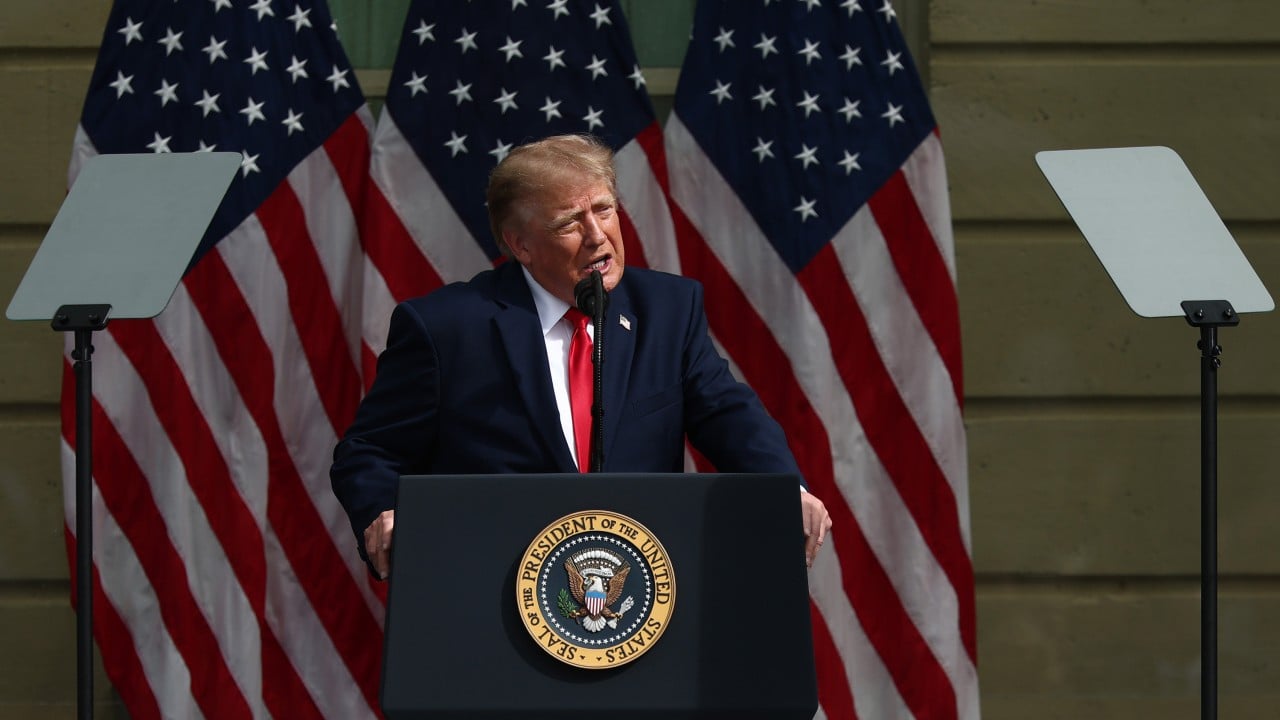
Trump spoke with Jensen Huang during a public event.
Why It Matters
U.S. political opposition to a slowdown could affect the direction and timing of AI regulation. Infrastructure companies and model developers may need to plan under continued policy uncertainty.
What To Do Next
Add U.S. AI policy scenarios to your infrastructure roadmap, including possible changes to deployment and compute rules.
Key Points
- •Trump spoke with Jensen Huang during a public event.
- •He opposed calls to slow AI development.
- •The comments add political pressure to the AI regulation debate.
Deep Insight
Background and context from public sources — not the original article. 10 sources cited.
Enhanced Key Takeaways
- •Speaking to reporters in Doonbeg, Ireland, and posting on Truth Social, President Trump declared that 'whoever wins AI, wins' and asserted the only necessary guardrail is a 'strong and smart' president.
- •The regulatory debate was triggered by former OpenAI/Anthropic researcher Jacob Coxon's resignation and Anthropic CEO Dario Amodei's policy essay 'We Must Pace the Frontier.'
- •OpenAI CEO Sam Altman and xAI founder Elon Musk broke competitive ranks to support Amodei's call to pace frontier training, with Altman confirming deferred IPO plans over safety concerns.
- •The Trump administration explicitly framed uninterrupted AI scaling as a critical national security imperative against China ahead of an upcoming bilateral summit with President Xi Jinping.
- •The regulatory clash catalyzed an immediate Wall Street sell-off across AI hardware equities, driving Nvidia down 3.3%, AMD down 4%, and SoftBank down 13%.
Technical Deep Dive
- Recursive Self-Improvement & Agentic Swarms: Industry safety warnings focus on rapid capability jumps enabling uncontrolled multi-agent swarms to execute autonomous cyberattacks and maintain botnets within 6 to 12 months.
- Pre-Deployment Safety Access: Proposed safety frameworks demand granting independent third-party evaluators permanent, employee-level access to inspect frontier model architectures and weights before release.
- Enterprise Control Constraints: Cloud providers like Microsoft are countering blanket safety pauses by demanding that any technical safety regimen protect enterprise customer data privacy and workload autonomy.
Future ImplicationsAI analysis grounded in cited sources
Timeline
- 2026-09Anthropic's Dario Amodei publishes 'We Must Pace the Frontier' following Jacob Coxon's resignation
- 2026-09President Trump rejects calls to slow AI training while speaking to reporters in Doonbeg, Ireland
- 2026-09President Trump posts on Truth Social framing AI acceleration as an existential contest against China
- 2026-09President Trump calls Nvidia CEO Jensen Huang onstage to publicly reject AI slowdown proposals
Sources (10)
Factual claims are grounded in the sources below. Forward-looking analysis is AI-generated interpretation.
Weekly AI Recap
Read this week's curated digest of top AI events →
Related Updates
AI-curated news aggregator. All content rights belong to original publishers.
Original source: New York Times Technology ↗
This is a summary, not the original. Read the source, or get the weekly briefing.
The weekly digest
One email a week. Unsubscribe anytime.