Transitioning from air to liquid cooling for AI chips
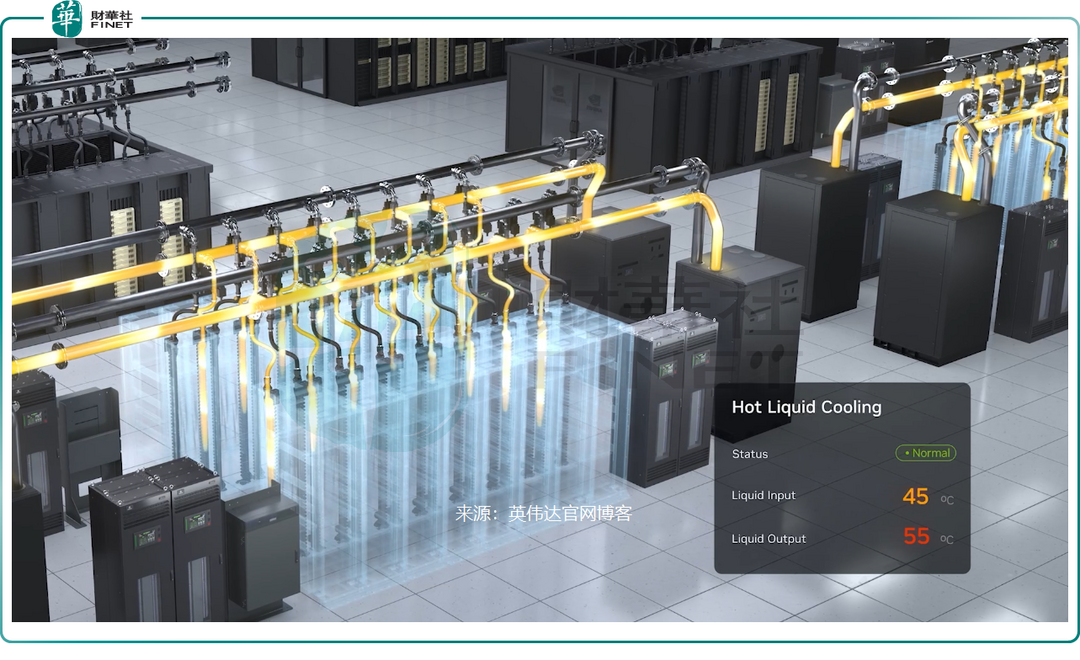
Thermal limits are the new bottleneck for AI scaling; learn why liquid cooling is the next big infrastructure shift.
30-Second TL;DR
What Changed
Air cooling is reaching its physical limit for high-density AI chips
Why It Matters
Data center infrastructure providers must invest in liquid cooling to support the next generation of high-TDP AI accelerators.
What To Do Next
If building or managing AI clusters, evaluate the TCO and thermal requirements for liquid cooling versus traditional air-cooled racks.
Key Points
- •Air cooling is reaching its physical limit for high-density AI chips
- •Liquid cooling is becoming essential for next-gen data centers
- •Thermal management is now a critical bottleneck for AI scaling
Deep Insight
AI-generated analysis for this event — not the original article.
Enhanced Key Takeaways
- •Direct-to-Chip (D2C) cooling, also known as cold plate technology, is currently the dominant liquid cooling architecture for high-TDP AI accelerators, offering significantly higher heat transfer coefficients than immersion cooling.
- •The shift to liquid cooling is driving a fundamental redesign of data center facility infrastructure, specifically the integration of Coolant Distribution Units (CDUs) and secondary cooling loops.
- •AI chip power density has surpassed 1,000W per GPU, a threshold where air-cooled heat sinks can no longer maintain junction temperatures within reliable operating ranges.
- •Standardization efforts, such as the OCP (Open Compute Project) Advanced Cooling Solutions (ACS) sub-project, are accelerating the adoption of liquid cooling by defining universal interfaces for rack-level cooling.
- •Liquid cooling systems are enabling higher rack power densities, often exceeding 100kW per rack, which allows for smaller data center footprints and reduced total cost of ownership (TCO) despite higher initial capital expenditure.
Technical Deep Dive
- Cold Plate Architecture: Utilizes a copper or aluminum plate mounted directly onto the GPU/CPU die, circulating dielectric fluid or water-glycol mixtures to absorb heat via conduction.
- Coolant Distribution Units (CDUs): Essential infrastructure components that isolate the primary facility water loop from the secondary server-level loop, providing pressure regulation and filtration.
- Dielectric Fluids: Used primarily in immersion cooling, these fluids are non-conductive, allowing for direct submersion of electronic components without short-circuiting.
- Thermal Interface Materials (TIMs): Advanced phase-change materials or liquid metal compounds are required to bridge the microscopic gaps between the chip die and the liquid cooling cold plate to minimize thermal resistance.
- PUE (Power Usage Effectiveness) Impact: Liquid cooling systems can reduce PUE to near 1.05 by eliminating the need for energy-intensive CRAC (Computer Room Air Conditioning) units.
Future ImplicationsAI analysis grounded in cited sources
Timeline
- 2022-11NVIDIA introduces H100 GPU, marking the beginning of the extreme thermal density era.
- 2023-05Open Compute Project (OCP) releases updated guidelines for rack-level liquid cooling integration.
- 2024-03NVIDIA announces Blackwell architecture with native support for liquid cooling solutions.
- 2025-09Major hyperscalers report transition of over 50% of new AI cluster deployments to liquid cooling.
Weekly AI Recap
Read this week's curated digest of top AI events →
AI-curated news aggregator. All content rights belong to original publishers.
Original source: 钛媒体 ↗
This is a summary, not the original. Read the source, or get the weekly briefing.
The weekly digest
One email a week. Unsubscribe anytime.