Tragic incident at Xi'an Saige highlights retail pressure
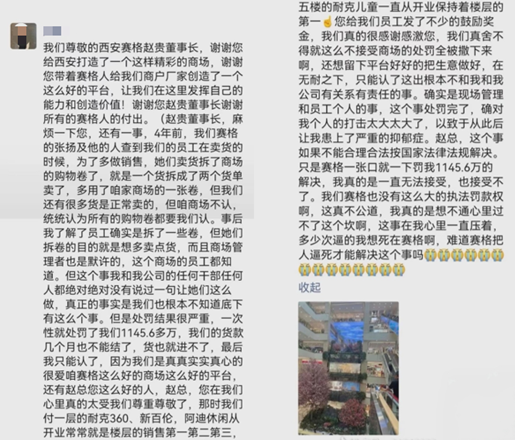
A cautionary tale on how rigid automated business rules can lead to severe real-world consequences in retail ecosystems.
30-Second TL;DR
What Changed
A major clothing distributor faced a 11.5 million RMB fine for 'order splitting' to bypass voucher rules.
Why It Matters
This incident highlights the volatility of traditional retail ecosystems and the potential for digital/automated rule enforcement to create extreme friction in business relationships.
What To Do Next
If building B2B marketplace software, ensure your platform's automated compliance rules include human-in-the-loop dispute resolution to prevent catastrophic business impact.
Key Points
- •A major clothing distributor faced a 11.5 million RMB fine for 'order splitting' to bypass voucher rules.
- •Retailers face extreme sales pressure and centralized fund management by the mall.
- •The incident has sparked public debate on the fairness of mall-tenant financial relationships.
- •The mall claims the fine was a result of contract violations, while tenants cite survival pressure.
Deep Insight
AI-generated analysis for this event — not the original article.
Enhanced Key Takeaways
- •The incident at Xi'an Saige (Saige International Shopping Center) involved a specific dispute over the misuse of government-issued consumption vouchers, which were intended to stimulate local retail spending.
- •The 'order splitting' practice involved staff artificially breaking down large transactions into smaller amounts to maximize the utilization of voucher subsidies, a practice the mall categorized as fraudulent activity.
- •Centralized fund management systems in large Chinese malls often require all tenant payments to pass through the mall's proprietary POS systems, giving the mall total visibility and control over cash flow.
- •The 11.5 million RMB penalty was reportedly calculated based on a 'triple damages' clause within the lease agreement, which the tenant claims is an unconscionable penalty for administrative non-compliance.
- •Local regulatory bodies in Xi'an have initiated a review of mall-tenant contract standards following this incident to determine if 'centralized management' clauses violate fair competition laws.
Future ImplicationsAI analysis grounded in cited sources
Timeline
- 2026-05Xi'an municipal government launches a new round of consumption vouchers to boost retail.
- 2026-06Xi'an Saige mall management identifies irregularities in transaction patterns linked to the voucher program.
- 2026-06Mall management imposes an 11.5 million RMB fine on the clothing distributor citing contract breach.
- 2026-07Public and media discourse intensifies regarding the incident, leading to the reported coverage by Hu-Xiu.
Weekly AI Recap
Read this week's curated digest of top AI events →
AI-curated news aggregator. All content rights belong to original publishers.
Original source: 虎嗅 ↗
This is a summary, not the original. Read the source, or get the weekly briefing.
The weekly digest
One email a week. Unsubscribe anytime.