Toyota Targets 2028 With FSD-Like Driving
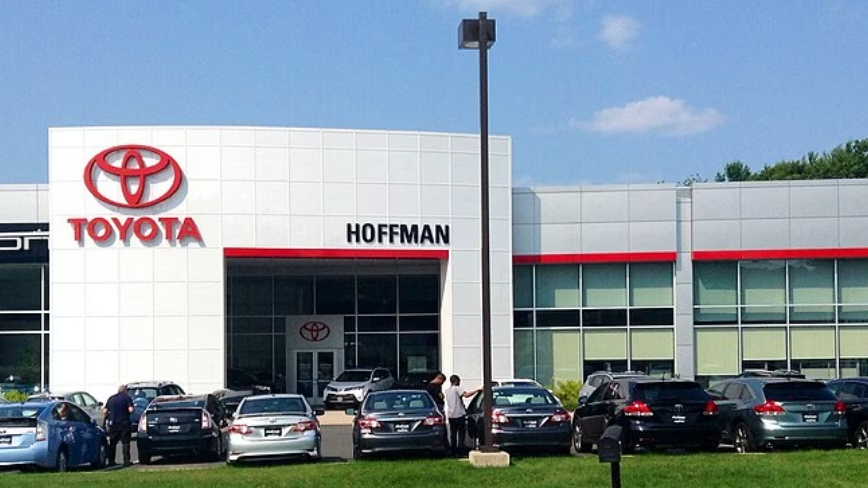
💡Toyota’s 2028 autonomy plan shows how driving AI advances while liability stays with humans.
⚡ 30-Second TL;DR
What Changed
Toyota’s FSD-like system is planned for 2028 model-year vehicles.
Why It Matters
Toyota’s approach highlights the gap between increasingly capable driving AI and systems that remain legally classified as driver assistance. AI developers entering automotive markets will need to treat safety guardrails, human handoff, and liability allocation as core product requirements.
What To Do Next
Review UN Regulation 171 and prototype explicit neural-network guardrails and driver-handoff monitoring before targeting automotive deployments.
Key Points
- •Toyota’s FSD-like system is planned for 2028 model-year vehicles.
- •The system will be marketed as “Level 2++,” keeping the driver in charge.
- •A guardrail layer will be added over the underlying neural network.
- •Europe permits this class of driving system under UN Regulation 171.
- •Product liability rules may increase legal exposure for automated-driving deployments.
Weekly AI Recap
Read this week's curated digest of top AI events →
👉Related Updates
AI-curated news aggregator. All content rights belong to original publishers.
Original source: The Next Web (TNW) ↗
This is a summary, not the original. Read the source, or get the weekly briefing.
Weekly AI briefing
One email a week. Unsubscribe anytime.