Touch Bar Finds Its Agent-Era Purpose
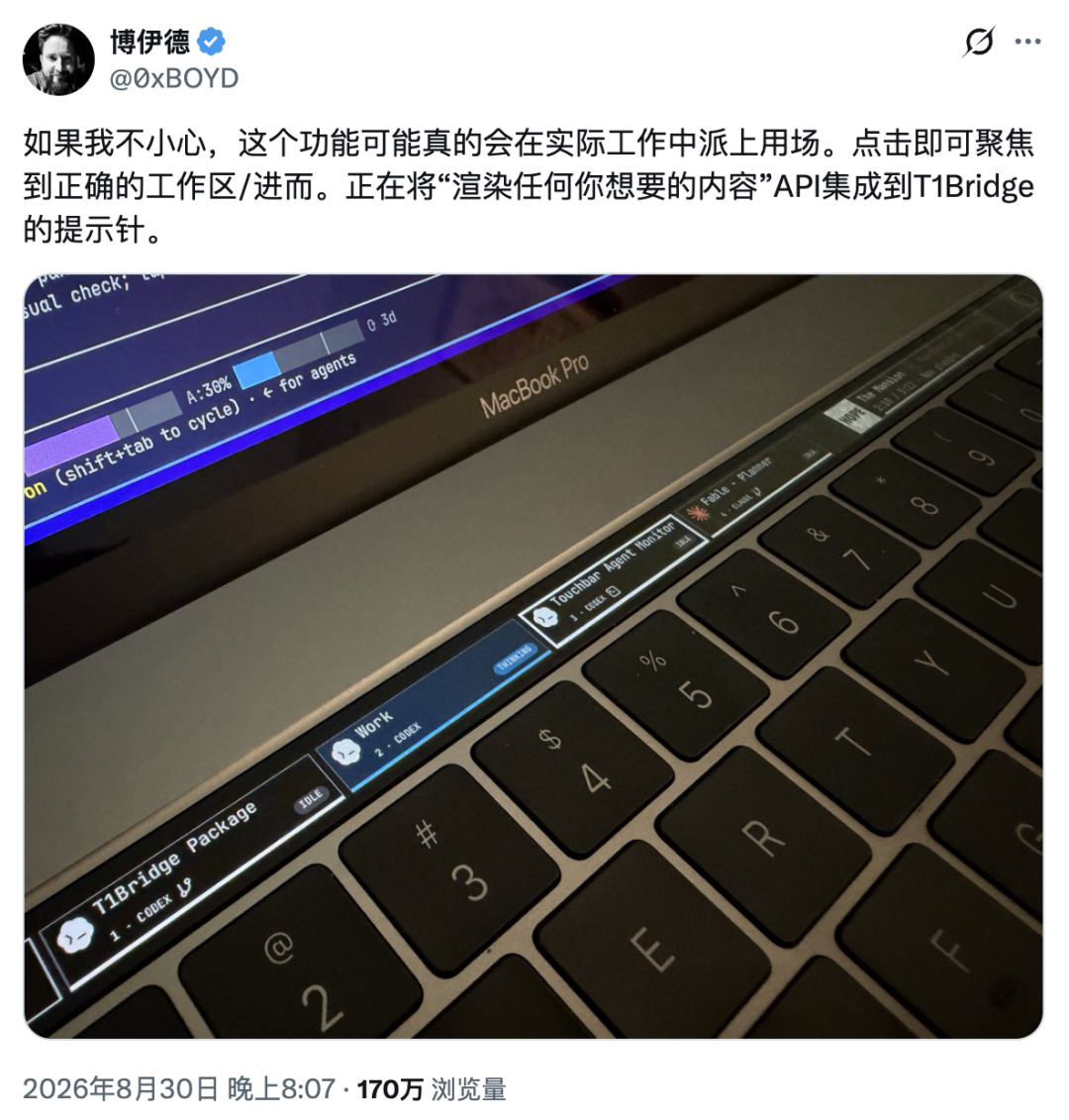
💡A failed Apple interface may reveal the ideal status layer for asynchronous coding agents.
⚡ 30-Second TL;DR
What Changed
Boyd’s T1Bridge customization renders workspaces and split panes as persistent Agent cards on the Touch Bar.
Why It Matters
The article suggests a broader interface pattern for Agent products: use lightweight ambient surfaces to communicate task health, completion, and required user intervention. This could influence desktop, mobile, wearable, and developer-tool designs where agents operate asynchronously.
What To Do Next
Prototype an ambient Agent-status surface using Codex CLI lifecycle events, showing only running, blocked, completed, and needs-input states instead of full logs.
Key Points
- •Boyd’s T1Bridge customization renders workspaces and split panes as persistent Agent cards on the Touch Bar.
- •Agent Status for Pock supports Claude Code, Codex CLI, and OpenCode, displaying states such as thinking, editing, command execution, and questions.
- •The 2,170×60-pixel OLED strip is used for compressed status signals rather than full task logs.
- •The new use case separates ambient Agent monitoring from the main screen, which is increasingly valuable when tasks continue unattended.
- •Touch Bar’s original app-specific controls failed because they duplicated information already visible in the main interface.
Weekly AI Recap
Read this week's curated digest of top AI events →
👉Related Updates




AI-curated news aggregator. All content rights belong to original publishers.
Original source: 虎嗅 ↗
This is a summary, not the original. Read the source, or get the weekly briefing.
Weekly AI briefing
One email a week. Unsubscribe anytime.