Toshifumi Suzuki, retail legend, passes away
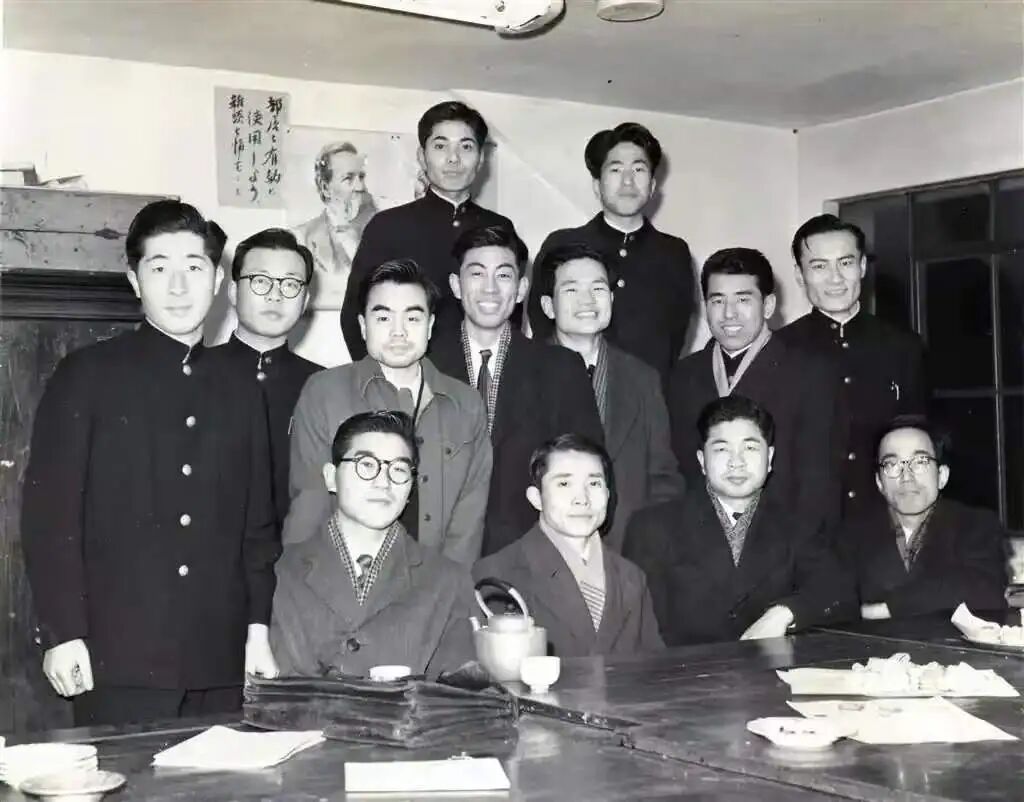
Learn from the pioneer of data-driven retail to improve your predictive AI models.
30-Second TL;DR
What Changed
Toshifumi Suzuki transformed the retail industry through data-centric decision making.
Why It Matters
Suzuki's methodologies laid the groundwork for modern supply chain AI. His work proves that data-driven retail is the foundation of scalable business models.
What To Do Next
Study the 'Single Item Management' philosophy to better design your demand-forecasting AI models.
Key Points
- •Toshifumi Suzuki transformed the retail industry through data-centric decision making.
- •He pioneered the 'Single Item Management' system, a precursor to modern predictive analytics.
- •His management philosophy emphasized deep consumer insight and operational efficiency.
Deep Insight
Background and context from public sources — not the original article. 15 sources cited.
Enhanced Key Takeaways
- •Toshifumi Suzuki spearheaded Seven-Eleven Japan's acquisition of its struggling American parent company, Southland Corporation, in 1990, transforming the Japanese licensee into a global retail powerhouse with over 85,000 stores worldwide.
- •Under Suzuki's leadership, Seven & I Holdings diversified beyond traditional convenience store operations, notably launching IY Bank (later Seven Bank) in 2001, which provided 24/7 ATM and banking services directly within stores, catering to evolving consumer lifestyles.
- •Suzuki's vision transformed Japanese convenience stores, known as 'conbini,' from basic grocery outlets into essential, multi-functional lifestyle platforms offering a wide array of services including bill payments, ATM access, ticket bookings, parcel deliveries, and fresh prepared meals.
- •He implemented a 'dominant strategy' for market expansion, concentrating stores in specific geographical areas supported by local distribution centers to significantly improve delivery efficiency and enhance brand awareness.
- •Suzuki revolutionized product offerings by emphasizing fresh, ready-to-eat meals and localized products, such as replacing traditional American sandwiches with Japanese rice balls, which became a highly successful staple.
Technical Deep Dive
- Tanpin Kanri (Single-Item Management): This system involves analyzing individual products rather than broad categories, tracking specific attributes like flavor, time of sale, store location, weather impact, and customer demographics to discern subtle patterns in consumer behavior.
- Hypothesis Testing and Continuous Improvement (Kaizen): Retailers formulate hypotheses (e.g., anticipating demand for lighter meals on warmer days), test these assumptions using real-time sales data, and apply the verified insights to refine future ordering and merchandising strategies in a continuous improvement cycle.
- POS (Point-of-Sale) Systems: Introduced in 1982, these systems were utilized beyond simple transaction processing for real-time sales data analysis, precise product ordering, and identifying granular consumption patterns.
- Integrated Store Information System: This comprehensive system linked graphic order terminals, scanner terminals for managing deliveries, store computers, and POS registers via an ISDN network, facilitating efficient data collection and analysis across the network.
- Just-in-Time Supply Chain Management: Seven-Eleven Japan achieved this by minimizing on-hand inventory and ensuring multiple daily deliveries (at least three for fresh food) to meet fluctuating demand, supported by a combined delivery system that consolidated products from various suppliers onto single trucks.
- Decentralized Ordering: Local store managers retained ultimate responsibility for inventory management, leveraging POS data and their intimate knowledge of local customer dynamics to place orders, enabling highly tailored product assortments and optimized operating costs.
Future ImplicationsAI analysis grounded in cited sources
Timeline
- 1963Joined Ito-Yokado Co.
- 1973Established Seven-Eleven Japan and secured licensing rights for 7-Eleven.
- 1974Opened the first Japanese 7-Eleven store, revolutionizing local retail.
- 1982Introduced POS (point-of-sale) systems for advanced sales data analysis.
- 1990Seven-Eleven Japan acquired its struggling U.S. parent, Southland Corporation.
- 2001Launched IY Bank (later Seven Bank), diversifying into financial services.
Sources (15)
Factual claims are grounded in the sources below. Forward-looking analysis is AI-generated interpretation.
Weekly AI Recap
Read this week's curated digest of top AI events →
AI-curated news aggregator. All content rights belong to original publishers.
Original source: 钛媒体 ↗
This is a summary, not the original. Read the source, or get the weekly briefing.
The weekly digest
One email a week. Unsubscribe anytime.