Top-ranked GitHub Open-source Agent Disrupts AI Assistants
💡Discover the open-source agent currently dominating GitHub that is redefining AI assistant capabilities.
⚡ 30-Second TL;DR
What Changed
Project achieved top ranking on GitHub, signaling high community interest.
Why It Matters
This signals a broader market shift toward autonomous agents that can handle complex, multi-step tasks, potentially reducing reliance on traditional LLM chat interfaces.
What To Do Next
Clone the repository from GitHub and evaluate its task-planning capabilities against your current LLM-based workflows.
Key Points
- •Project achieved top ranking on GitHub, signaling high community interest.
- •Shifts focus from passive chat interfaces to active, agentic task execution.
- •Positions AI as a personalized 'digital twin' rather than a static assistant.
🧠 Deep Insight
Web-grounded analysis with 20 cited sources.
🔑 Enhanced Key Takeaways
- •The new generation of open-source AI agents prioritizes local-first operation, allowing users to run assistants entirely on their own devices to enhance data privacy and control.
- •Advanced open-source agents are evolving to include self-learning capabilities, enabling them to generate new skills autonomously and adapt to user needs without explicit programming.
- •The trend in AI agent development is shifting towards multi-agent architectures, where specialized agents collaborate to decompose and execute complex tasks more efficiently than single-agent systems.
- •These disruptive agents are designed for deep integration across various digital environments, including messaging platforms, enterprise software, and IDEs, facilitating seamless automation of multi-step workflows.
- •The focus has moved beyond simple conversational interfaces to proactive, autonomous task execution, with agents capable of monitoring, planning, and taking real-world actions on behalf of the user.
📊 Competitor Analysis▸ Show
| Agent/Framework | Key Features | Pricing/Licensing | Benchmarks (if applicable) |
|---|---|---|---|
| OpenClaw (Open-source) | Personal AI assistant, local-first, 50+ integrations (messaging, web, smart home), self-learning (writes new skills), multi-channel reach. | Free (self-hosted) | N/A (focus on personal automation) |
| Vellum (Open-source) | Identity-driven, proactive, open-source, designed for personal AI. | Free to start (open-source) | N/A |
| OpenCode (Open-source) | AI coding agent, 75+ LLM providers, dual-agent architecture, LSP integration, multi-platform (CLI, desktop, IDE extensions). | Free (BYOK - Bring Your Own Key) | Model-dependent (e.g., can use Claude, GPT, Gemini) |
| Aider (Open-source) | Terminal-based AI coding, Git-native (auto-commits), natural language interaction for code edits. | Free (BYOK) | 52.7% combined score (benchmarks like SWE-bench), 257-second avg. task completion. |
| Claude Code (Anthropic) | Terminal-first coding agent, runs in shell, connects to editors, Agent Teams (spawns sub-agents). | $20/month (Pro) | 80.8% SWE-bench Verified (Opus 4.6), 55.4% SWE-bench Pro (highest for commercial agents). |
| GitHub Copilot (Microsoft) | IDE-integrated code suggestions, multi-model platform (Claude, Codex, Gemini), CLI with specialized sub-agents. | Free / $10/month (individual), Business/Pro tiers available. | N/A (multi-model, focus on inline completions and ecosystem) |
🛠️ Technical Deep Dive
- Agentic Workflow Design Patterns: AI agents operate using iterative loops of thought, action, and observation (ReAct pattern) to achieve goals. More complex tasks leverage planning agents that create a complete strategy before execution, or multi-agent systems where specialized agents collaborate.
- Core Components: A typical AI agent architecture includes a Perception Layer (receives input), a Memory System (stores context and learning), a Decision-Making Module (plans actions), an Execution Layer (connects to tools/APIs), and a Learning Mechanism (improves performance).
- Digital Twin Implementation Example (edofransisco011/Digital_Twin_Agent): Utilizes the
qwen-agentframework withqwen-maxas the core Large Language Model (LLM). It employs Retrieval-Augmented Generation (RAG) withChromaDBfor local, persistent persona storage andsentence-transformersfor embeddings. Secure integration with Google services (Gmail, Calendar) is managed via OAuth 2.0. - Local Execution and Integration: Projects like OpenClaw emphasize running entirely on user devices, acting as a local gateway to connect AI models with numerous integrations (e.g., WhatsApp, Telegram, Slack, iMessage) and enabling the agent to write its own new skills.
- Multi-Agent Coordination: Architectures can be centralized, where a supervisor delegates tasks, or decentralized, where agents operate more autonomously. Parallel workflows distribute independent tasks across multiple agents for concurrent processing.
🔮 Future ImplicationsAI analysis grounded in cited sources
⏳ Timeline
📎 Sources (20)
Factual claims are grounded in the sources below. Forward-looking analysis is AI-generated interpretation.
- Google Search Source
- Google Search Source
- Google Search Source
- Google Search Source
- Google Search Source
- Google Search Source
- Google Search Source
- Google Search Source
- Google Search Source
- Google Search Source
- Google Search Source
- Google Search Source
- Google Search Source
- Google Search Source
- Google Search Source
- Google Search Source
- Google Search Source
- Google Search Source
- Google Search Source
- Google Search Source
Weekly AI Recap
Read this week's curated digest of top AI events →
👉Related Updates
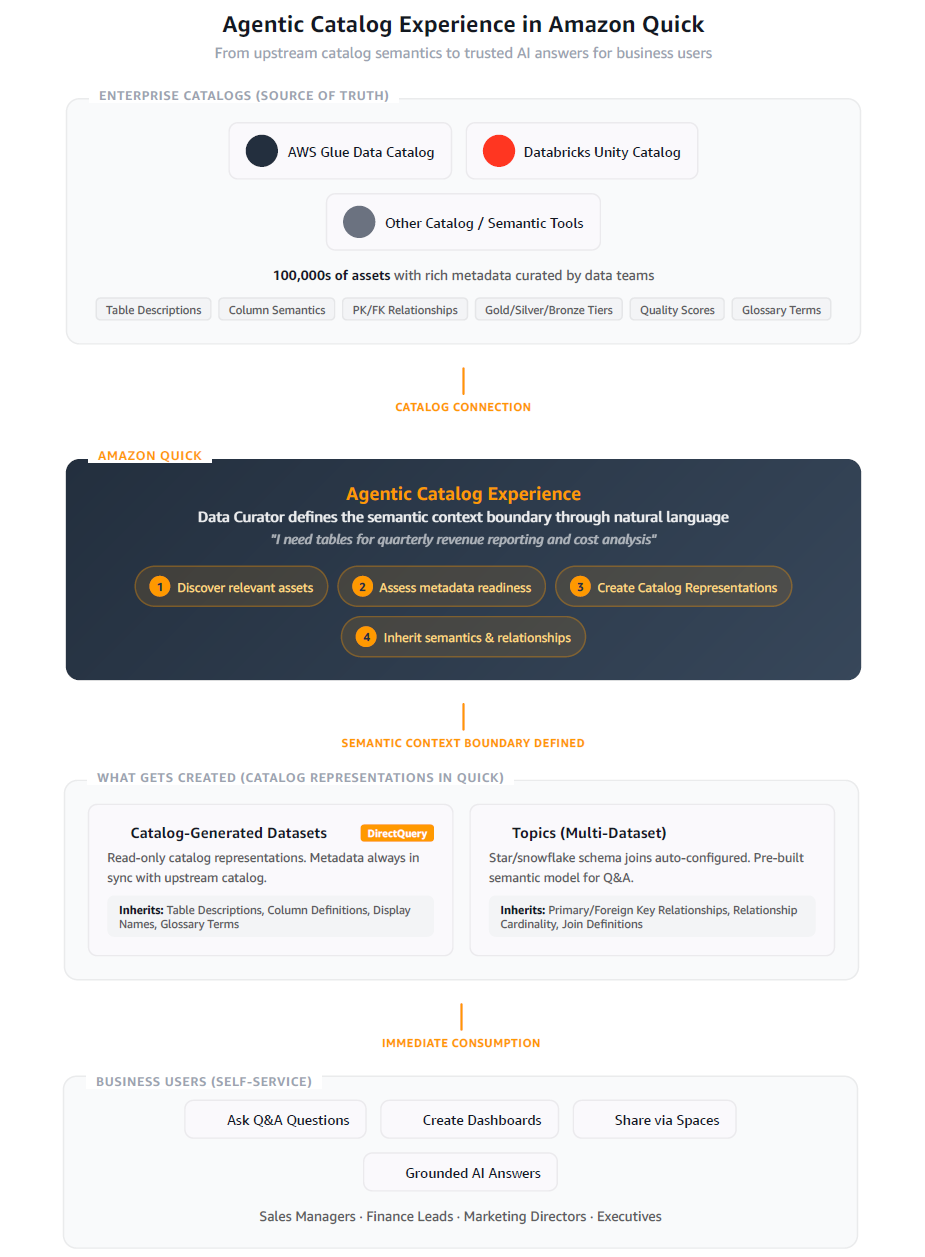
Amazon Quick Launches Agentic Catalog Experience for Data Curators

Autonomous Intelligence and the End of Productivity Software
Anthropic AI Models Accidentally Hacked Three Organizations During Testing
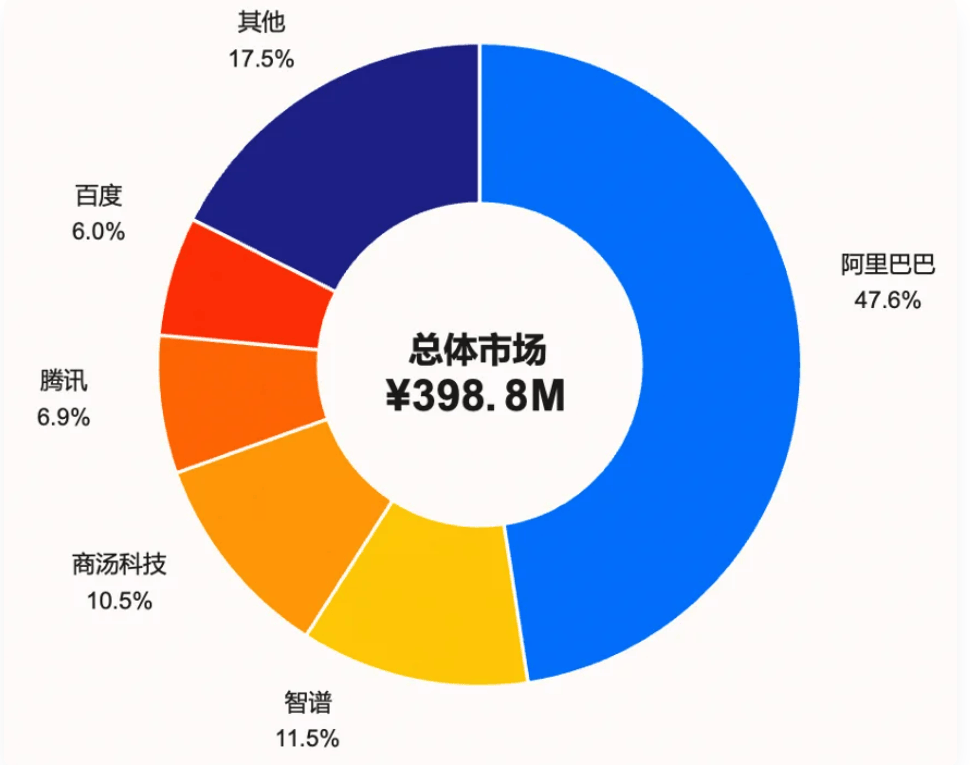
Alibaba nears AI coding dominance with upcoming release
AI-curated news aggregator. All content rights belong to original publishers.
Original source: 钛媒体 ↗