Top Domains Cited by AI Models Revealed
💡Discover which domains AI models trust most to optimize your content strategy for the AI-search era.
⚡ 30-Second TL;DR
What Changed
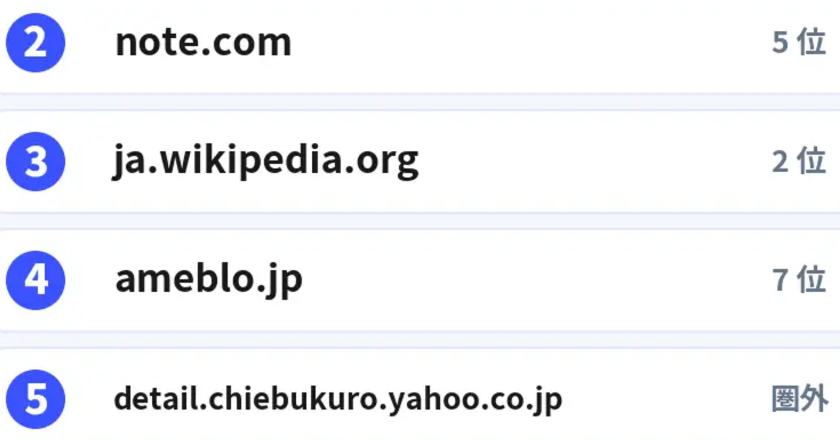
note.com moved up to the 2nd position in AI citation frequency
Why It Matters
Understanding which domains AI models prioritize for citations helps content creators and SEO strategists optimize their visibility in AI-driven search results.
What To Do Next
Audit your site's content structure to ensure it meets the quality standards required for AI model retrieval and citation.
Key Points
- •note.com moved up to the 2nd position in AI citation frequency
- •Wikipedia (ja.wikipedia.org) dropped from 2nd to 3rd place
- •The ranking reflects shifting trends in AI training data and retrieval sources
🧠 Deep Insight
AI-generated analysis for this event — not the original article.
🔑 Enhanced Key Takeaways
- •The analysis is based on data from the 'AI-Citations' dataset or similar web-crawling transparency initiatives that track source attribution in Large Language Model (LLM) responses.
- •note.com's rise is attributed to its high volume of user-generated, long-form Japanese content which provides 'human-like' context often preferred by RAG (Retrieval-Augmented Generation) systems.
- •The decline of Wikipedia in citation rankings is linked to stricter AI-crawling policies and the increasing preference of model developers for diverse, conversational, or opinion-based datasets over encyclopedic data.
- •The ranking shift highlights a broader industry trend where AI models are being tuned to prioritize 'experience-based' content over static, factual databases to improve conversational engagement.
- •Major Japanese AI developers are increasingly prioritizing domestic platforms like note.com to mitigate the 'English-centric' bias inherent in global foundation models.
🛠️ Technical Deep Dive
- The citation frequency is often measured by analyzing the 'grounding' sources used by models when they provide URLs or references in their output.
- Models utilizing RAG architectures are more likely to cite domains like note.com because these platforms contain structured, high-quality text that is easily indexed by vector databases.
- The shift in rankings suggests a change in the 'temperature' and 'top-p' sampling strategies of models, which now favor more varied, less formal linguistic patterns found on blogging platforms.
- Data weighting in fine-tuning processes is increasingly favoring domains with high 'domain authority' scores as determined by search engine optimization (SEO) metrics, which note.com has aggressively optimized.
🔮 Future ImplicationsAI analysis grounded in cited sources
⏳ Timeline
Weekly AI Recap
Read this week's curated digest of top AI events →
👉Related Updates
AI-curated news aggregator. All content rights belong to original publishers.
Original source: ITmedia AI+ (日本) ↗
This is a summary, not the original. Read the source, or get the weekly briefing.
Weekly AI briefing
One email a week. Unsubscribe anytime.