ToolSimulator Launches for Scalable AI Agent Testing
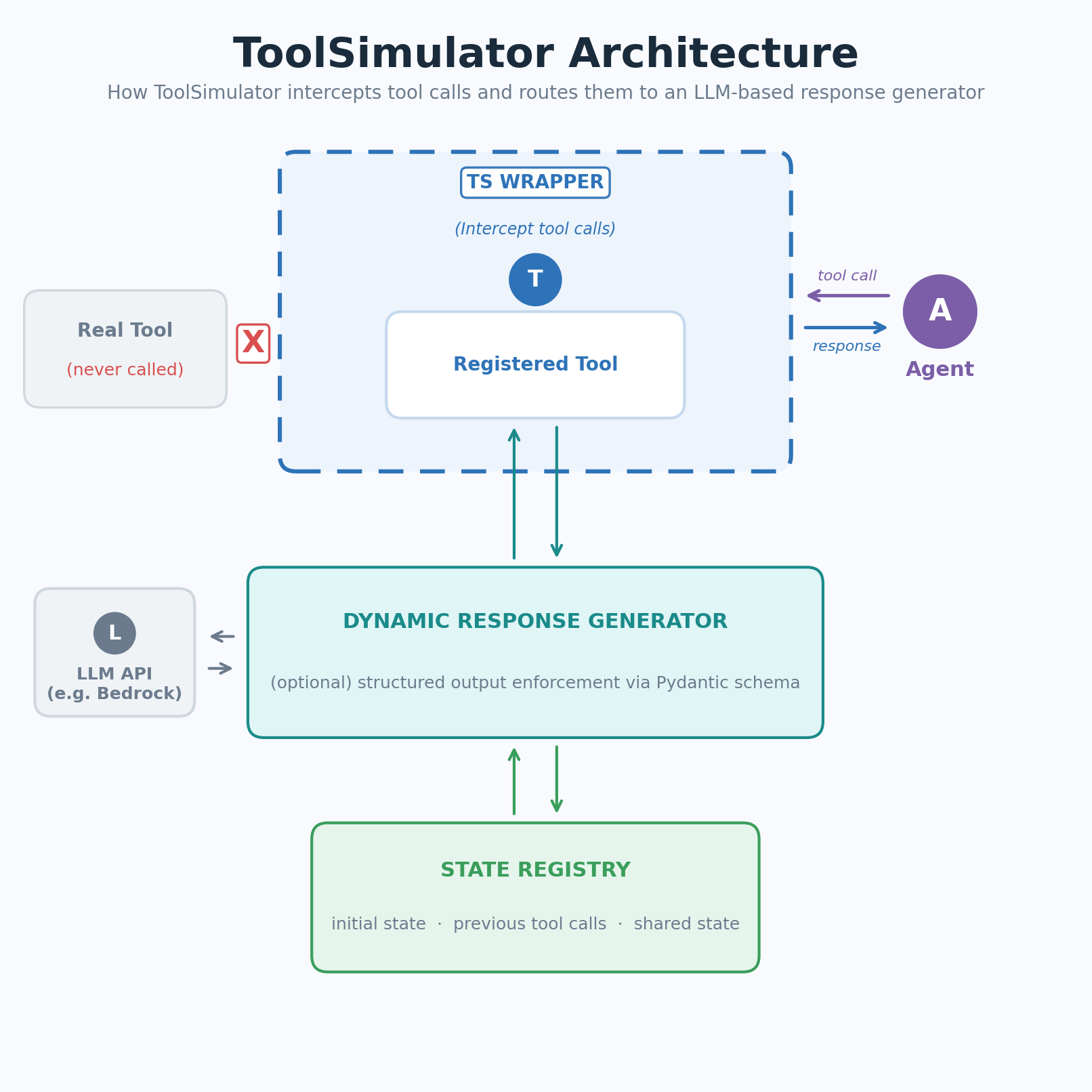
💡Scale AI agent testing safely with LLM simulations—no PII risks or live API issues.
⚡ 30-Second TL;DR
What Changed
LLM-powered simulations replace live API calls for safe testing
Why It Matters
Enables confident deployment of production-ready AI agents by minimizing risks from tool integrations. Accelerates development cycles through scalable testing without real-world side effects.
What To Do Next
Install Strands Evals SDK and add ToolSimulator to test your AI agent's tool calls safely.
Key Points
- •LLM-powered simulations replace live API calls for safe testing
- •Handles multi-turn workflows unlike static mocks
- •Catches integration bugs and tests edge cases early
- •Part of Strands Evals SDK, available now
🧠 Deep Insight
AI-generated analysis for this event — not the original article.
🔑 Enhanced Key Takeaways
- •ToolSimulator utilizes a proprietary 'State-Transition Graph' architecture that allows developers to define complex, non-linear tool interaction paths, moving beyond simple request-response mocking.
- •The framework integrates directly with AWS CloudWatch to provide real-time observability into agent reasoning traces during simulated tool execution, enabling faster debugging of hallucinated tool calls.
- •It supports 'Adversarial Input Injection' by default, allowing developers to automatically test agent robustness against malformed tool outputs or unexpected error codes without needing to configure separate fuzzing infrastructure.
📊 Competitor Analysis▸ Show
| Feature | ToolSimulator (Strands Evals) | LangSmith (LangChain) | Promptfoo |
|---|---|---|---|
| Tool Simulation | Dynamic State-Transition Graphs | Static/Dynamic Mocks | Static Mocks/LLM-based |
| Pricing | AWS Consumption-based | Tiered SaaS | Open Source/Enterprise |
| Benchmarking | Native integration with Strands Evals | Integrated via LangChain | CLI-based |
🛠️ Technical Deep Dive
- •Architecture: Built on a serverless event-driven model that triggers simulated responses based on the agent's prompt context and previous turn history.
- •State Management: Uses a persistent key-value store to maintain the 'world state' of the simulation, ensuring consistency across multi-turn agent interactions.
- •Integration: Implemented as a middleware layer within the Strands Evals SDK, intercepting tool-calling function signatures before they reach the network layer.
- •Security: Operates entirely within the user's VPC, ensuring that simulated data never leaves the AWS environment, satisfying strict compliance requirements for PII handling.
🔮 Future ImplicationsAI analysis grounded in cited sources
⏳ Timeline
Weekly AI Recap
Read this week's curated digest of top AI events →
👉Related Updates
AI-curated news aggregator. All content rights belong to original publishers.
Original source: AWS Machine Learning Blog ↗
This is a summary, not the original. Read the source, or get the weekly briefing.
The weekly digest
One email a week. Unsubscribe anytime.