Token Deflation Undermines AI Credit Cards
Token prices are collapsing fast—your inference budget, subscription strategy, and AI rewards may all need a reset.
30-Second TL;DR
What Changed
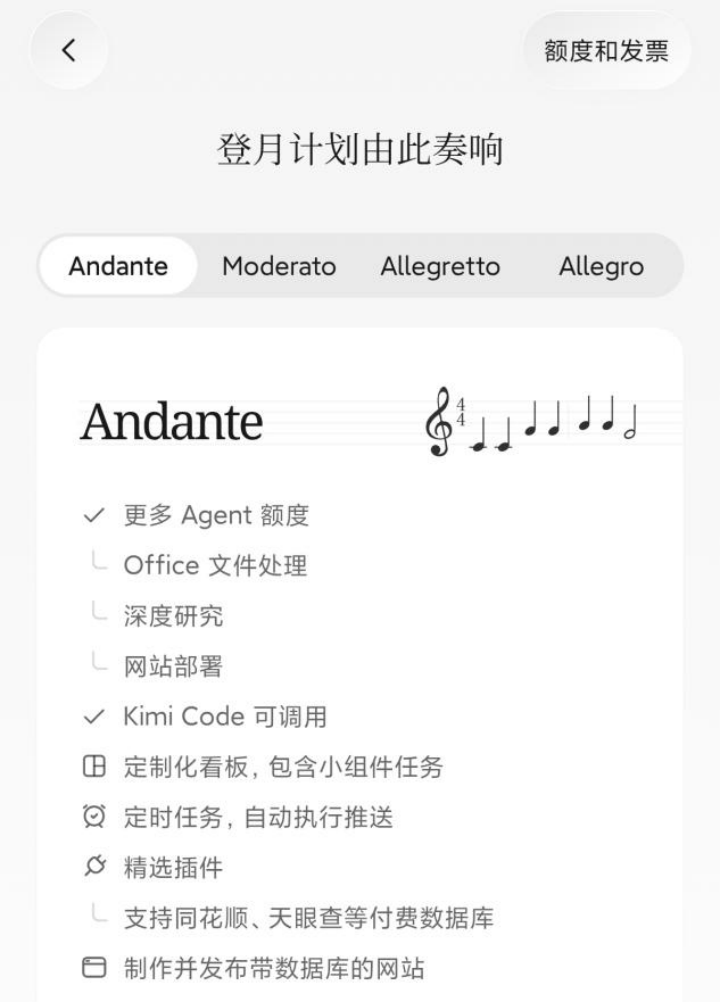
Agricultural Bank of China’s Kimi card exchanges spending points for Kimi Token quotas and membership benefits.
Why It Matters
Lower Token prices can materially reduce inference costs for developers and startups, but they also erode the perceived value of usage-based rewards and subscriptions. Teams should revisit pricing, quotas, and credit programs rather than assuming Token demand will remain expensive.
What To Do Next
Recalculate your API budget using current cached-input and output rates from DeepSeek V4 Flash, Claude Opus 5, and your existing provider before renewing usage plans.
Key Points
- •Agricultural Bank of China’s Kimi card exchanges spending points for Kimi Token quotas and membership benefits.
- •China Merchants Bank, SPD Bank, Ping An Bank, and others have launched AI-related card partnerships with MiniMax, Alibaba Cloud, Zhipu, and other providers.
- •China’s credit-card count fell to 687 million in the first quarter of 2026, down from a peak of 807 million in the third quarter of 2022.
- •Anthropic, OpenAI, and DeepSeek sharply cut Token prices in late July, with DeepSeek V4 Flash offering cached input at RMB 0.02 per million Tokens.
- •Falling inference costs make Token-based rewards less attractive while intensifying competition for AI subscribers.
Deep Insight
AI-generated analysis for this event — not the original article.
Enhanced Key Takeaways
- •Chinese banks are shifting from traditional physical gift rewards (like household appliances) to 'digital equity' models to reduce logistics costs and appeal to younger, tech-savvy demographics.
- •The 'Token Deflation' phenomenon is forcing banks to renegotiate B2B procurement contracts with AI vendors, as fixed-price bulk purchase agreements signed in 2025 are now significantly above market spot rates.
- •Regulatory pressure from the People's Bank of China regarding credit card debt management has accelerated the pivot toward 'service-based' rewards that encourage active app usage rather than just transaction volume.
- •AI vendors are increasingly offering 'tiered access' models to banks, where premium credit card tiers receive priority inference latency (QoS) rather than just higher token quotas.
- •The decline in credit card circulation is partially attributed to the rise of 'Super Apps' like Alipay and WeChat Pay, which have integrated AI-driven financial services, making standalone credit cards less essential for digital payments.
Competitor Analysis
- DeepSeek V4 Flash
- RMB 0.02 (Cached)
- OpenAI GPT-4o-mini
- ~$0.15
- Anthropic Claude 3.5 Haiku
- ~$0.25
- DeepSeek V4 Flash
- Extreme cost efficiency
- OpenAI GPT-4o-mini
- Ecosystem integration
- Anthropic Claude 3.5 Haiku
- Coding/Reasoning speed
- DeepSeek V4 Flash
- High-volume enterprise
- OpenAI GPT-4o-mini
- General consumer/Dev
- Anthropic Claude 3.5 Haiku
- Enterprise/Developer
| Feature | DeepSeek V4 Flash | OpenAI GPT-4o-mini | Anthropic Claude 3.5 Haiku |
|---|---|---|---|
| Pricing (Input/M Tokens) | RMB 0.02 (Cached) | ~$0.15 | ~$0.25 |
| Primary Advantage | Extreme cost efficiency | Ecosystem integration | Coding/Reasoning speed |
| Target Market | High-volume enterprise | General consumer/Dev | Enterprise/Developer |
Technical Deep Dive
- DeepSeek V4 Flash utilizes a Mixture-of-Experts (MoE) architecture optimized for low-latency inference on domestic Chinese hardware clusters.
- The RMB 0.02 pricing for cached input tokens is achieved through a multi-layer KV (Key-Value) cache compression technique that reduces memory overhead during long-context processing.
- AI-Credit Card integrations typically use OAuth 2.0 or proprietary API gateways to map bank loyalty points to vendor-specific API keys, allowing real-time quota top-ups without manual intervention.
Future ImplicationsAI analysis grounded in cited sources
Timeline
- 2022-09China's credit card market reaches historical peak of 807 million cards.
- 2024-03Initial wave of AI-credit card partnerships begins with early LLM API integrations.
- 2025-01Banks begin aggressive marketing of 'AI Membership' rewards to combat declining card usage.
- 2026-03Credit card circulation drops to 687 million, prompting a strategic shift toward digital service rewards.
- 2026-07Major AI providers implement drastic token price cuts, destabilizing existing bank reward economics.
Weekly AI Recap
Read this week's curated digest of top AI events →
AI-curated news aggregator. All content rights belong to original publishers.
Original source: 虎嗅 ↗
This is a summary, not the original. Read the source, or get the weekly briefing.
The weekly digest
One email a week. Unsubscribe anytime.