The volatility of AI-driven tech stocks in Korea
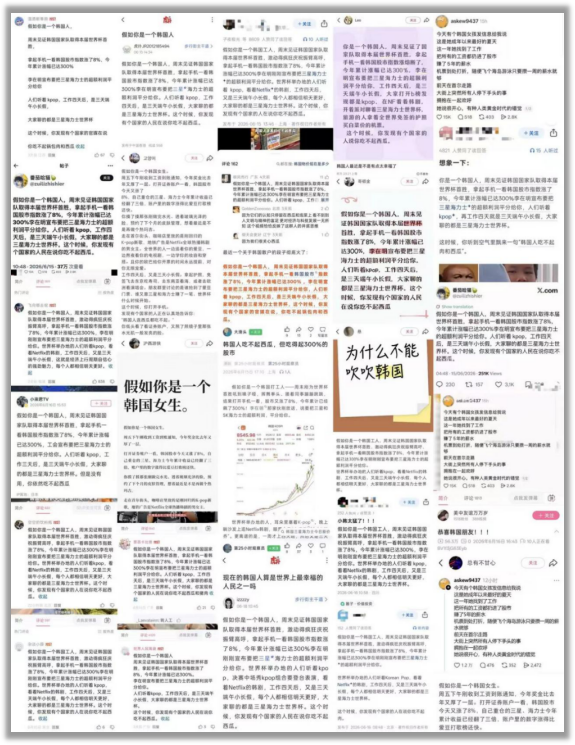
A cautionary tale on how AI market hype affects global semiconductor giants and retail investors.
30-Second TL;DR
What Changed
South Korean tech giants like Samsung and SK Hynix experienced massive market value fluctuations.
Why It Matters
Highlights the systemic risks associated with AI-related stock market speculation and the importance of fundamental analysis.
What To Do Next
Perform rigorous fundamental analysis on AI hardware suppliers before investing, avoiding reliance on market hype.
Key Points
- •South Korean tech giants like Samsung and SK Hynix experienced massive market value fluctuations.
- •Retail investors are heavily exposed to market volatility through leveraged positions.
- •The article draws parallels between current AI-driven market hype and historical economic bubbles.
Deep Insight
AI-generated analysis for this event — not the original article.
Enhanced Key Takeaways
- •The South Korean Financial Supervisory Service (FSS) has intensified monitoring of 'debt-financed' stock investments, noting a record surge in margin trading among retail investors specifically targeting semiconductor-related equities.
- •Samsung Electronics' recent volatility is exacerbated by delays in qualifying its High Bandwidth Memory (HBM3E) chips for integration into major global AI GPU supply chains, creating a performance gap compared to SK Hynix.
- •The 'Korea Value-up Program,' a government initiative aimed at boosting corporate valuations, has seen limited success in stabilizing tech stocks, as investors prioritize high-growth AI narratives over dividend-focused reforms.
- •Foreign institutional investors have been net sellers of Korean semiconductor stocks throughout Q2 2026, citing concerns over the cyclical nature of the memory chip market and potential oversupply in the AI hardware sector.
- •South Korea's National Pension Service (NPS) has adjusted its portfolio weighting, reducing exposure to domestic tech conglomerates to mitigate systemic risk arising from the concentration of AI-linked assets.
Technical Deep Dive
- HBM3E (High Bandwidth Memory 3 Extended): A critical component for AI accelerators, utilizing 8-layer or 12-layer TSV (Through-Silicon Via) stacking technology to achieve bandwidths exceeding 1 TB/s.
- Yield Challenges: Samsung has faced technical hurdles in thermal management and power efficiency during the mass production of 12-layer HBM3E, impacting its competitive standing against SK Hynix's established MR-MUF (Mass Reflow Molded Underfill) packaging process.
- AI Accelerator Integration: The volatility is fundamentally tied to the qualification process for NVIDIA's Blackwell and future-generation GPU architectures, where memory latency and power consumption are the primary technical benchmarks.
Future ImplicationsAI analysis grounded in cited sources
Timeline
- 2024-03SK Hynix begins mass production of HBM3E, securing a dominant position in the AI memory market.
- 2025-02The South Korean government officially launches the 'Corporate Value-up Program' to address the 'Korea Discount'.
- 2025-11Samsung Electronics announces a major restructuring of its semiconductor division to accelerate HBM development.
- 2026-04Market volatility peaks as retail investors aggressively buy into AI-themed tech stocks following global semiconductor index fluctuations.
Weekly AI Recap
Read this week's curated digest of top AI events →
AI-curated news aggregator. All content rights belong to original publishers.
Original source: 虎嗅 ↗
This is a summary, not the original. Read the source, or get the weekly briefing.
The weekly digest
One email a week. Unsubscribe anytime.