The verification bottleneck in the era of AI coding
💡Learn why AI coding tools make verification, not production, the new bottleneck for software projects.
⚡ 30-Second TL;DR
What Changed
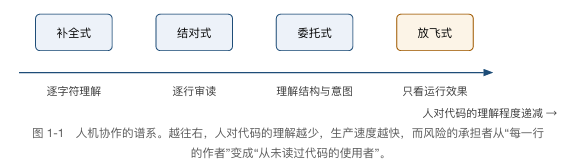
The 'Verification Gap': AI generates code faster than humans can verify it, leading to hidden technical debt.
Why It Matters
Shifting the focus from 'writing code' to 'validating code' changes the fundamental workflow of software engineering, emphasizing the need for robust automated testing.
What To Do Next
Adopt a strict 'interface-first' workflow where you define API contracts and test assertions before letting the LLM generate the implementation.
Key Points
- •The 'Verification Gap': AI generates code faster than humans can verify it, leading to hidden technical debt.
- •TDD (Test-Driven Development) is essential in the AI era; assertions must remain under human control.
- •AI is an 'accidental complexity eliminator' but not a substitute for architectural design and business logic.
- •Engineers must act as 'complexity gatekeepers' by defining interfaces and maintaining rigorous test suites.
🧠 Deep Insight
AI-generated analysis for this event — not the original article.
🔑 Enhanced Key Takeaways
- •Formal verification methods, such as model checking and static analysis, are being integrated into AI coding agents to mathematically prove code correctness, moving beyond simple unit testing.
- •The rise of 'AI-native' software engineering environments (IDEs) now includes automated regression testing suites that trigger immediately upon AI code generation to mitigate the verification gap.
- •Industry data indicates that while AI increases code velocity by 40-50%, the time spent on debugging and security auditing has increased by approximately 20% due to hallucinated dependencies.
- •Shift-left security practices are becoming mandatory, as AI-generated code often introduces 'shadow vulnerabilities' that bypass traditional perimeter security controls.
- •The concept of 'Human-in-the-loop' (HITL) verification is evolving into 'AI-in-the-loop' verification, where secondary AI models are tasked specifically with auditing the output of primary coding models.
🛠️ Technical Deep Dive
- Integration of LLM-based agents with symbolic execution engines (e.g., KLEE or Z3) to verify code paths against formal specifications.
- Implementation of RAG (Retrieval-Augmented Generation) pipelines that inject proprietary architectural constraints and coding standards into the model context window to reduce hallucinated design patterns.
- Use of AST (Abstract Syntax Tree) analysis to enforce structural boundaries and interface contracts automatically during the code generation phase.
- Deployment of multi-agent orchestration frameworks where a 'Coder' agent is monitored by a 'Verifier' agent that utilizes static analysis tools to flag non-compliant code before human review.
🔮 Future ImplicationsAI analysis grounded in cited sources
⏳ Timeline
Weekly AI Recap
Read this week's curated digest of top AI events →
👉Related Updates
AI-curated news aggregator. All content rights belong to original publishers.
Original source: 虎嗅 ↗
This is a summary, not the original. Read the source, or get the weekly briefing.
Weekly AI briefing
One email a week. Unsubscribe anytime.