The Rise of Long-Form Video Podcasts
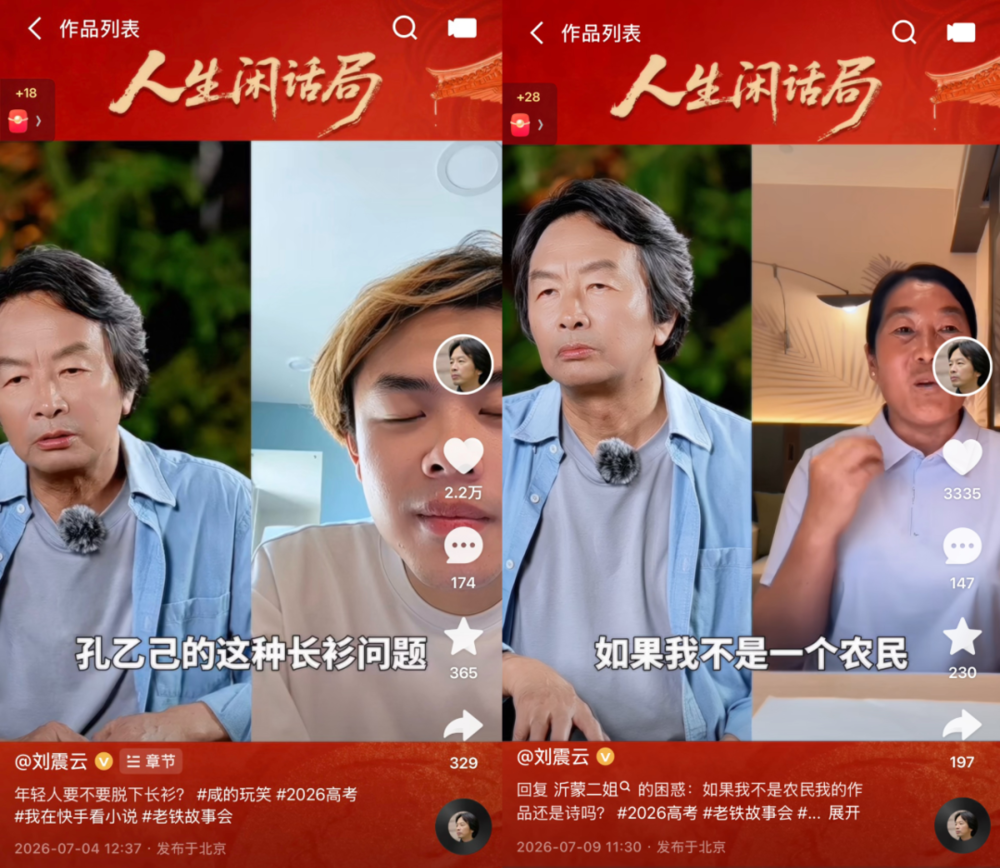
💡Learn why long-form video content is making a comeback and how it impacts digital marketing and audience retention.
⚡ 30-Second TL;DR
What Changed
Long-form interviews provide depth that short-form content lacks, meeting a growing demand for 'wisdom' and 'healing'.
Why It Matters
For AI content creators and marketers, this shift indicates that long-form, high-quality content is becoming a premium asset for audience engagement and brand building.
What To Do Next
Consider repurposing long-form technical deep-dives or founder interviews into 'wisdom-based' short clips to leverage the current demand for high-quality content.
Key Points
- •Long-form interviews provide depth that short-form content lacks, meeting a growing demand for 'wisdom' and 'healing'.
- •Platforms are optimizing for 'open duration' (time spent in app) rather than just completion rates.
- •Bilibili is successfully monetizing video podcasts through branded content like 'Shanxia Sheng'.
- •Live streaming is becoming a preferred format for authentic, unedited dialogue, often leading to secondary content licensing.
🧠 Deep Insight
AI-generated analysis for this event — not the original article.
🔑 Enhanced Key Takeaways
- •The shift toward long-form video podcasts is being driven by 'AI-assisted content discovery,' where algorithms now prioritize high-retention, long-duration sessions to train recommendation models more effectively.
- •Advertisers are increasingly favoring 'contextual integration' within long-form podcasts, moving away from traditional pre-roll ads toward host-read sponsorships that maintain viewer immersion.
- •Data indicates a demographic shift where Gen Z users in China are showing higher engagement rates with 30-60 minute intellectual discussions compared to 15-second entertainment clips, signaling a 'content fatigue' trend.
- •Cross-platform distribution strategies are evolving, with creators using short-form clips as 'trailers' to funnel traffic into full-length video podcasts hosted on platforms like Bilibili or Ximalaya.
- •The rise of 'companion viewing'—where users play long-form podcasts in the background while working or gaming—has forced platforms to optimize for audio-first playback modes within video apps.
📊 Competitor Analysis▸ Show
| Feature | Bilibili (Video Podcast) | Douyin (Long-form) | Ximalaya (Audio/Video) | YouTube (Podcasts) |
|---|---|---|---|---|
| Primary Format | Community-driven long-form | Algorithmic short-to-long | Audio-first/Hybrid | Global standard |
| Monetization | Branded content/Membership | Live commerce/Ads | Subscription/Premium | Ad-revenue sharing |
| User Intent | Intellectual/Niche | Entertainment/Impulse | Educational/Background | Search/Discovery |
🛠️ Technical Deep Dive
- Platforms are implementing 'Dynamic Ad Insertion' (DAI) specifically for long-form content, allowing for targeted ad placement based on timestamp-specific viewer sentiment analysis.
- Recommendation engines have shifted from 'Click-Through Rate' (CTR) optimization to 'Total Time Spent' (TTS) and 'Average View Duration' (AVD) to favor long-form content.
- Implementation of 'Smart Chapters' using Large Language Models (LLMs) to automatically generate timestamps and summaries, increasing discoverability for long-form videos.
- Adaptive bitrate streaming (ABR) optimizations are being deployed to reduce latency for high-definition long-form video, ensuring stability during extended playback sessions.
🔮 Future ImplicationsAI analysis grounded in cited sources
⏳ Timeline
Weekly AI Recap
Read this week's curated digest of top AI events →
👉Related Updates


AI-curated news aggregator. All content rights belong to original publishers.
Original source: 虎嗅 ↗
This is a summary, not the original. Read the source, or get the weekly briefing.
The weekly digest
One email a week. Unsubscribe anytime.