The Rise of Chinese Robotics and US Market Anxiety

💡Understand the shifting landscape of embodied AI and global robotics competition.
⚡ 30-Second TL;DR
What Changed
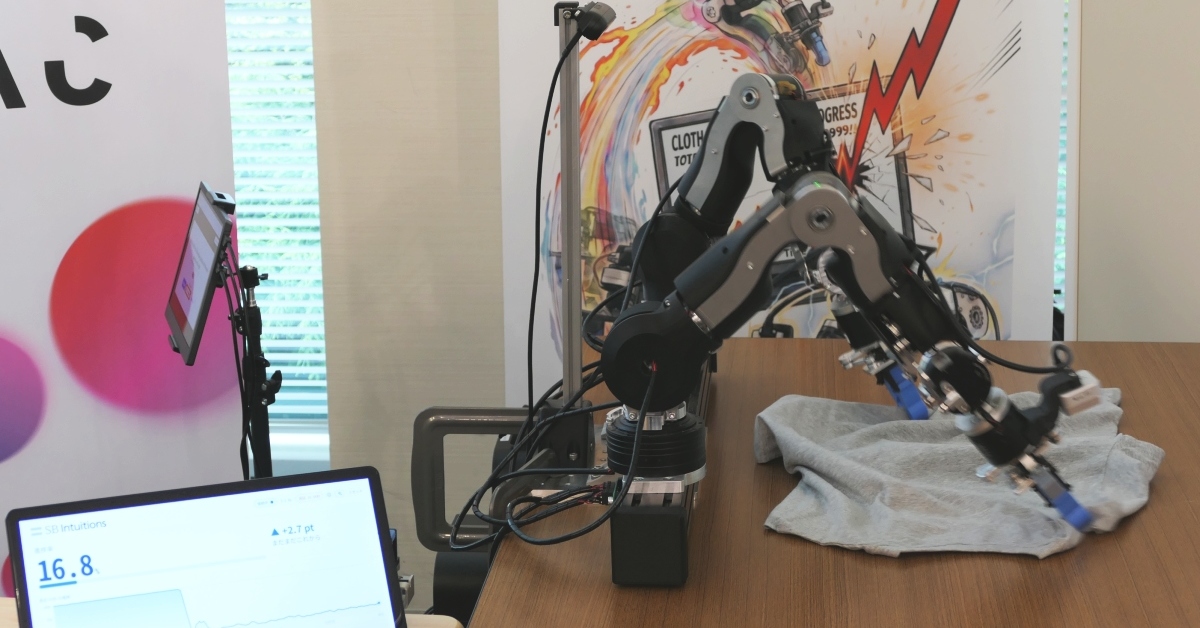
Rapid scaling of humanoid and industrial robot manufacturing in China
Why It Matters
The acceleration of Chinese robotics is forcing a re-evaluation of US industrial policy. Practitioners should track developments in open-source robotics frameworks.
What To Do Next
Experiment with ROS 2 (Robot Operating System) to understand the standard stack for modern robotics integration.
Key Points
- •Rapid scaling of humanoid and industrial robot manufacturing in China
- •Geopolitical implications of robotics leadership
- •Technological gaps and competitive advantages in embodied AI
🧠 Deep Insight
AI-generated analysis for this event — not the original article.
🔑 Enhanced Key Takeaways
- •China's Ministry of Industry and Information Technology (MIIT) has set a formal target to achieve mass production of humanoid robots by 2025, integrating them into national strategic manufacturing goals.
- •The 'Robot + Application' action plan in China is driving deep integration of robotics into sectors like agriculture, logistics, and elderly care, moving beyond traditional automotive assembly lines.
- •US-based robotics firms are increasingly relying on 'friend-shoring' and supply chain diversification to mitigate risks associated with Chinese dominance in rare earth magnets and actuator components.
- •Chinese robotics startups are leveraging massive datasets from domestic consumer electronics manufacturing to train embodied AI models, creating a 'data flywheel' effect that is difficult for Western firms to replicate.
- •Recent US export controls on high-end GPUs and advanced semiconductor manufacturing equipment are specifically targeting the compute-intensive training phases of Chinese humanoid AI models.
📊 Competitor Analysis▸ Show
| Feature | Chinese Humanoid Robotics (e.g., Unitree, Fourier) | US Humanoid Robotics (e.g., Tesla, Figure AI) |
|---|---|---|
| Primary Focus | Cost-efficiency & Rapid Iteration | General Purpose Embodied AI & Autonomy |
| Pricing Strategy | Aggressive entry-level pricing ($16k-$50k) | Premium/Enterprise-focused (TBD) |
| Hardware Benchmarks | High torque-to-weight ratio in actuators | Advanced neural network integration & safety |
🛠️ Technical Deep Dive
- Actuator Technology: Chinese manufacturers are utilizing localized, high-torque planetary roller screw actuators, significantly reducing BOM costs compared to Western harmonic drive alternatives.
- Embodied AI Architecture: Adoption of end-to-end transformer-based models that map visual-tactile sensor input directly to motor control commands, bypassing traditional hard-coded kinematics.
- Sensor Fusion: Integration of multi-modal perception systems combining LiDAR, depth cameras, and IMUs with proprietary SLAM algorithms optimized for unstructured environments.
- Compute Hardware: Shift toward domestic AI accelerators (NPU/ASIC) to circumvent reliance on restricted high-end GPUs for edge inference.
🔮 Future ImplicationsAI analysis grounded in cited sources
⏳ Timeline
Weekly AI Recap
Read this week's curated digest of top AI events →
👉Related Updates


AI-curated news aggregator. All content rights belong to original publishers.
Original source: 钛媒体 ↗
This is a summary, not the original. Read the source, or get the weekly briefing.
The weekly digest
One email a week. Unsubscribe anytime.